
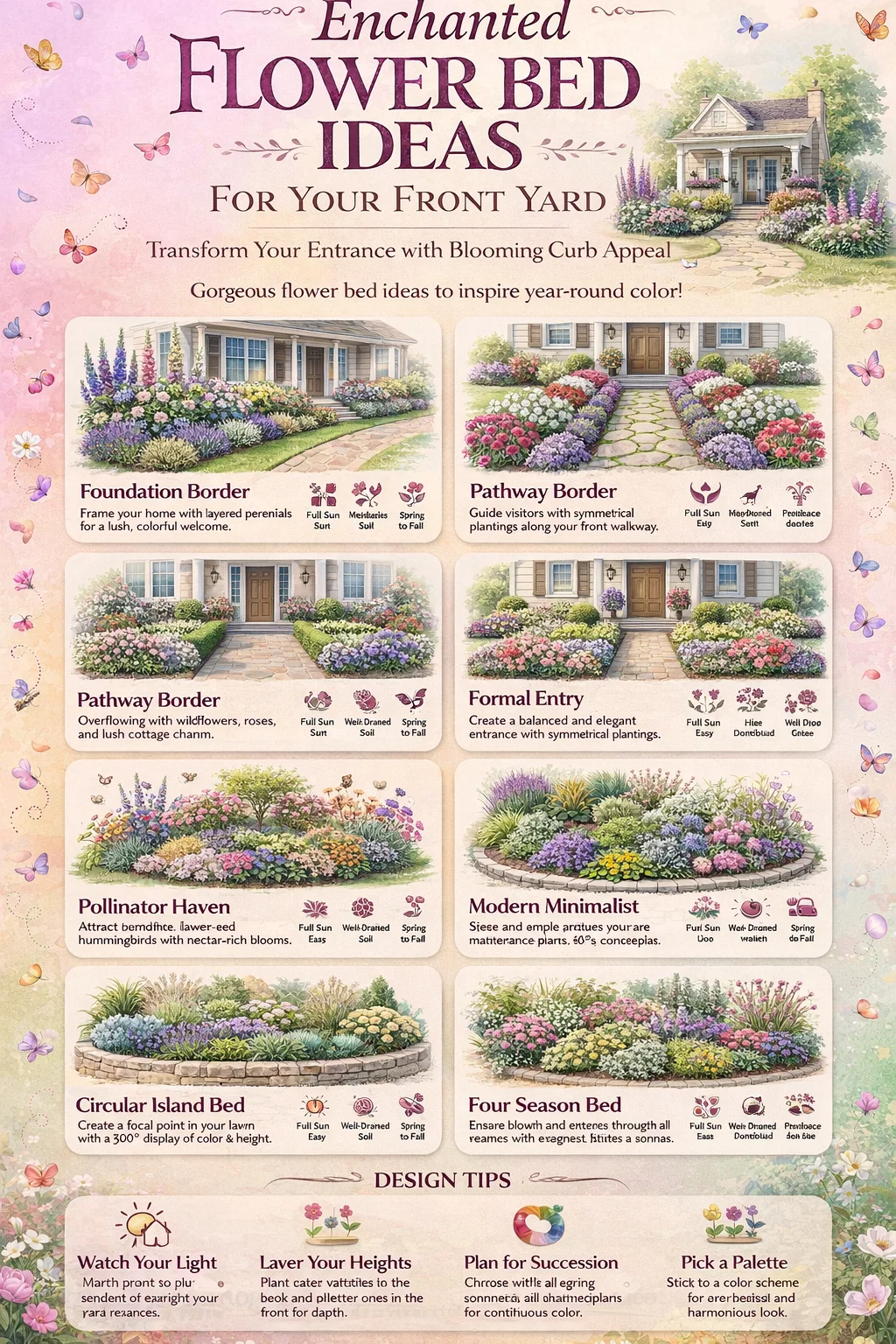
Transforming your front yard from a simple patch of grass into a breathtaking landscape is one of the most rewarding home improvement projects you can undertake. The entrance to your home serves as a handshake with the world, offering a glimpse into your personal style and creating an immediate sense of welcome. When you think about front flower beds, it is easy to get overwhelmed by the sheer variety of plants and layouts available. However, by breaking down design principles into manageable styles, you can create a professional look that blooms beautifully through every season. Whether you are looking for a romantic cottage aesthetic or a structured formal entrance, the right planning ensures your kerb appeal remains fabulous year after year.
The Essential Foundations of Front Yard Landscaping
Before you pick up a shovel, it is vital to understand the foundational principles that make a flower bed successful. A great garden is not just about the flowers you choose but how they interact with the architecture of your home and the natural environment. One of the most important factors is watching your light. Note where the sun hits your yard throughout the day, as a plant that thrives in the morning sun might wither in the harsh afternoon heat. Matching your plant selection to your specific conditions is the first step toward a low maintenance sanctuary.
Another key concept is layering heights. To ensure every plant gets its moment in the spotlight, you should follow the rule of tall at the back, medium in the middle, and low at the front. This tiered approach creates depth and prevents smaller, delicate blooms from being overshadowed by more aggressive growers. It also allows you to hide less attractive features, such as concrete foundations or utility meters, behind a lush wall of greenery.
Designing for Year Round Interest
A common mistake in front yard gardening is focusing solely on spring blooms. While those first pops of color are exciting, a well designed bed should offer something beautiful every month. This requires planning for succession. By mixing early, mid, and late season bloomers, you ensure that as one flower fades, another is ready to take its place. Incorporating evergreen shrubs and ornamental grasses provides structure during the winter months when deciduous plants go dormant, keeping your yard from looking bare and neglected during the colder seasons.
Exploring Popular Flower Bed Styles
The style of your flower bed should complement the architectural lines of your house. Selecting a theme helps narrow down your plant choices and creates a cohesive look that feels intentional rather than cluttered. Here are several design inspirations to help you find the perfect fit for your front yard.
The Romantic Cottage Garden Mix
The cottage garden is all about abundance and a relaxed, informal feel. This style celebrates a romantic jumble of flowers tumbling together, often featuring traditional favorites like roses, foxgloves, and delphiniums. The goal is to create a high impact visual that is full of pollinators. Because this style is less structured, it is perfect for homeowners who enjoy a bit of organized chaos and want to attract wildlife like butterflies and bees to their doorstep. Use a mix of textures and heights to achieve that charming, lived in atmosphere.
Formal Symmetry for Traditional Homes
If your home has a classic or Georgian style architecture, formal symmetry is often the best choice. This design uses mirror image beds to create a sense of elegance and order. Think neatly trimmed boxwood hedges, straight lines, and a limited color palette. Standardized shapes and repetitive plantings create a structured look that leads the eye directly to the front door. This style provides a high impact entrance that feels sophisticated and timeless.
The Modern Minimalist Approach
For contemporary homes, less is often more. Modern minimalist beds focus on bold drifts of just a few plant types to create a sophisticated impact. Instead of a hundred different varieties, you might choose three or four species and plant them in large, clean groups. This style emphasizes form and texture over a riot of color. Ornamental grasses combined with architectural plants like yuccas or agaves work beautifully here, offering a strong design that requires relatively low maintenance.
Practical Solutions for Common Yard Challenges
Every yard has its quirks, from awkward corners to poor soil drainage. Fortunately, there are specific bed designs tailored to solve these common landscaping problems while enhancing your home’s beauty.
Transforming Awkward Corners
Corner beds are the ultimate problem solvers for those tricky spots where the lawn meets the driveway or where the house forms an L shape. These areas are often shady or have irregular dimensions where grass struggles to grow. By turning a corner into a focal point, you maximize your space and add visual interest to a previously dead zone. Use shade tolerant options like hostas or ferns if the corner is tucked under an eave, and use the height of the corner to transition between different areas of the yard.
The Benefits of Raised Stone Beds
If your soil is heavy clay or drains poorly, a raised stone bed is a fantastic solution. Building up the soil level adds height and definition to your landscape while providing much needed drainage for fussy plants that hate having wet feet. Stone walls also provide a permanent architectural element that looks great even in the dead of winter. The added elevation makes gardening easier on your back and helps protect your plants from foot traffic or stray pets.
Creating a Pollinator Paradise
Many modern gardeners are moving away from purely ornamental spaces and toward eco friendly landscapes. A pollinator paradise is a wildlife haven that is as beautiful as it is functional. By choosing native flowers, you provide essential food and habitat for local bees, butterflies, and hummingbirds. These gardens are typically low maintenance because native plants are already adapted to your local climate and soil conditions. Look for long blooming varieties like coneflowers, black eyed susans, and lavender to keep the garden alive with movement and color throughout the summer.
Functional Beauty with Pathway Borders
Your walkway is the literal path to your home, and bordering it with flowers makes the journey more enjoyable for guests. Pathway borders guide visitors to your door with color and fragrance. The trick here is to keep plants low so they do not crowd the path or create a tripping hazard. Lavender, creeping thyme, or low growing sedums are excellent choices. Not only do they look neat and tidy, but they also release a pleasant scent when someone accidentally brushes against them while walking by.
Pro Tips for Professional Results
To move your garden from amateur to expert, keep these three design tips in mind. First, pick a palette. While it is tempting to buy every pretty flower at the nursery, sticking to two or three main colors creates a much more cohesive and professional look. Use a color wheel to find complementary shades, such as blues and oranges, or stay within a monochromatic range for a calming effect.
Second, remember the power of repetition. Using the same plants in groups and repeating those groups throughout the bed creates a sense of rhythm and harmony. It prevents the garden from looking like a random collection of individuals and makes it feel like a single, unified composition. Finally, do not be afraid to start small. It is much better to have one perfectly maintained small flower bed than a massive landscape that becomes overgrown and stressful. As you gain confidence and see what works in your specific environment, you can gradually expand your garden footprint.
Conclusion
A well planned front flower bed is more than just a hobby; it is an investment in your home’s value and your daily happiness. From the romantic abundance of a cottage mix to the sleek lines of modern design, the possibilities for enhancing your kerb appeal are endless. By focusing on light, height, and succession, you can create a space that offers year round beauty and a warm welcome to everyone who visits. Take the time to observe your yard, choose a style that speaks to you, and start planting. Before long, your front yard will be the envy of the neighborhood, blooming with life and color through every season.