
Creating a stunning garden border that looks professionally designed but requires almost zero maintenance is the ultimate dream for any homeowner. Often, we start the spring season with grand ambitions of pruning, deadheading, and constant watering, only to find that life gets in the way by mid-July. The secret to a perennial garden that stays lush from spring through the first frost lies in selecting plants that actually prefer a bit of independence. When you choose varieties that thrive on neglect, you are not just saving yourself labor; you are building a resilient ecosystem that gets better with every passing year.
The Art of the Low-Maintenance Garden Border
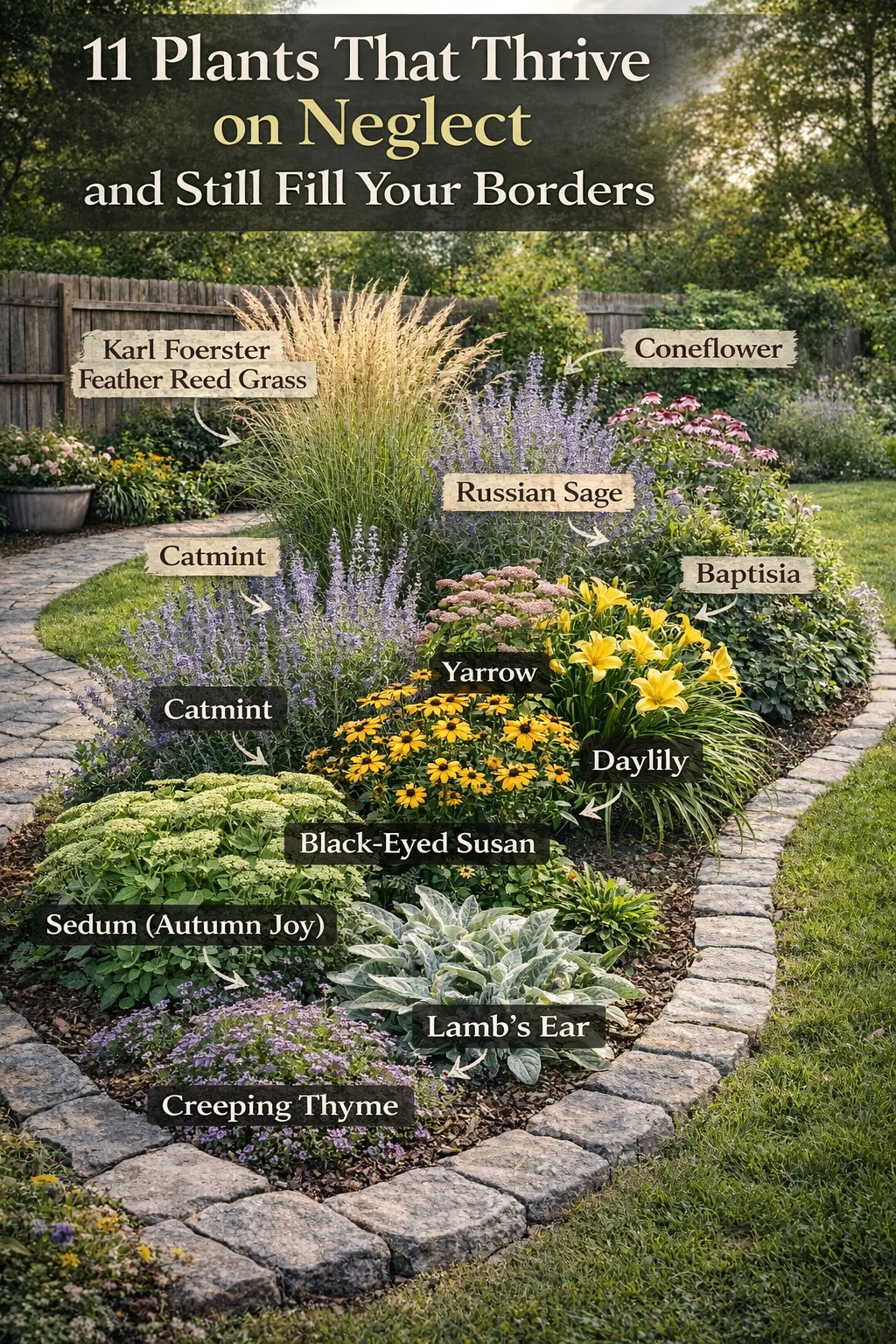
A well-planned garden border serves as the frame for your home, adding structure and curb appeal. The image of a thriving, colorful border filled with Russian Sage, Daylilies, and Black-Eyed Susans demonstrates how texture and height can work together without needing a professional landscaper on speed dial. To achieve this look, you have to think about layering. By placing taller, structural elements in the back and softer, spreading groundcovers in the front, you create a visual depth that makes even a small space feel like a sprawling botanical retreat.
The beauty of the plants featured in this layout is their ability to withstand the elements. These are the workhorses of the gardening world. They handle heatwaves, occasional droughts, and poor soil quality with grace. Instead of struggling to keep delicate exotic flowers alive, focusing on hardy perennials allows you to enjoy the scenery rather than constantly working in it.
Top Plants That Thrive on Neglect
If you want a garden that fills its space and crowds out weeds naturally, these specific varieties are your best friends. They are known for their vigor and their ability to look fantastic even when you forget to water them for a week.
Karl Foerster Feather Reed Grass
In the world of ornamental grasses, Karl Foerster is the gold standard. It provides a vertical element that stays upright throughout the entire season, even in heavy rain or wind. It begins with lush green blades in the spring and transitions into beautiful wheat-like plumes by early summer. Because it is a cool-season grass, it is one of the first things to green up in your garden, providing early structure when other plants are still waking up.
Russian Sage and Catmint
For those who love the look of lavender but live in climates where lavender can be finicky, Russian Sage and Catmint are the perfect alternatives. Both offer silvery-green foliage and airy purple blooms that last for months. These plants are incredibly drought-tolerant once established. In fact, they often perform better in leaner soil where they aren’t overfed. They are also highly resistant to deer and rabbits, which is a major win for rural or suburban gardeners.
Black-Eyed Susans and Coneflowers
No perennial border is complete without the cheerful faces of Black-Eyed Susans (Rudbeckia) and Coneflowers (Echinacea). These plants are the definition of “plant it and forget it.” They are native to many parts of North America, meaning they are perfectly adapted to local weather patterns. They are also magnets for pollinators. If you want your garden to be buzzing with butterflies and bees, these gold and pink blossoms are essential. They are tough enough to handle the hottest sun and will bloom reliably year after year.
Designing for Texture and Contrast
While color is often the first thing people notice, texture is what makes a garden feel sophisticated. The contrast between the fuzzy, soft leaves of Lamb’s Ear and the structural, succulent-like appearance of Autumn Joy Sedum creates a visual playground for the eyes. When you mix different leaf shapes, the garden remains interesting even when the flowers aren’t in peak bloom.
The Role of Sedum Autumn Joy
Sedum is a succulent, which means it stores water in its leaves. This makes it virtually bulletproof in the face of a heatwave. Autumn Joy is particularly beloved because it changes color as the season progresses. It starts as a cool mint green, turns into a soft pink in late summer, and matures into a deep copper-red by autumn. It provides late-season interest when many other plants are starting to fade, ensuring your front yard stays attractive well into the colder months.
Softening Edges with Lamb’s Ear
Lamb’s Ear serves as a fantastic edging plant. Its silvery-grey hue acts as a neutral backdrop that makes the vibrant yellows of Daylilies and Black-Eyed Susans pop. Because it stays low to the ground and spreads gently, it helps to suppress weeds along the edge of your stone or brick borders. It is also a tactile plant that kids and visitors love to touch, adding a sensory layer to your landscaping.
Groundcovers: The Natural Mulch
One of the biggest chores in gardening is mulching and weeding. You can significantly reduce this workload by using living groundcovers like Creeping Thyme. Instead of leaving bare soil between your larger perennials, a carpet of thyme fills the gaps. It produces tiny, beautiful flowers and releases a pleasant herbal scent when stepped on. Using plants as a “living mulch” helps retain moisture in the soil and prevents weed seeds from ever getting the sunlight they need to sprout.
Success Tips for Your Front Yard Flower Beds
Even though these plants are low-maintenance, a little bit of preparation goes a long way in ensuring their long-term success. Here are a few strategies to keep your borders looking their best with minimal effort.
Soil Preparation and Drainage
Most drought-tolerant plants, especially things like Russian Sage and Sedum, hate having “wet feet.” This means they need soil that drains well. If you have heavy clay soil, adding some organic compost or grit can help improve the structure. You don’t need to fertilize these plants heavily. In fact, too much fertilizer can make them grow too fast and become floppy. A simple layer of compost once a year is usually more than enough to keep them happy.
Strategic Watering During the First Year
The “neglect” part of these plants kicks in once they have a solid root system. During their first growing season, you will need to water them regularly to help them get established. Once they have spent a full year in the ground, their roots will be deep enough to find moisture on their own. After that first year, you can step back and let nature take the lead.
Grouping by Water Needs
A common mistake is planting a water-loving flower right next to a drought-tolerant succulent. By grouping plants with similar needs together, you make your maintenance much easier. The plants shown in the image are all excellent companions because they share a love for sun and a tolerance for drier conditions. This harmony makes the entire bed easier to manage as a single unit.
Why Perennials are a Smart Investment
While annuals provide a quick burst of color, they die off at the end of the year, requiring you to spend money and time replanting every spring. Perennials are a long-term investment. Not only do they come back every year, but many of them also grow larger and can be divided. Plants like Daylilies and Hosta can be dug up and split every few years, giving you free plants to start a new border in another part of your yard. It is the gift that keeps on giving.
Additionally, perennials help build soil health over time. Their deep root systems open up the soil and increase organic matter as older roots die off and new ones grow. This creates a healthy environment for beneficial insects and microbes, leading to a more stable and beautiful garden environment without the need for chemical interventions.
Bringing It All Together
A beautiful front yard doesn’t have to be a source of stress. By choosing the right plants and arranging them with care, you can create a landscape that welcomes you home every day with vibrant colors and lush textures. The image of a border filled with Catmint, Yarrow, and Daylilies proves that simplicity and hardiness can result in pure elegance. Whether you are a seasoned gardener looking to reclaim your weekends or a beginner who is worried about having a “brown thumb,” these neglect-friendly plants are the answer.
Start small, focus on the varieties that resonate with your personal style, and watch as your garden transforms into a self-sustaining masterpiece. There is a deep satisfaction in watching a garden grow and thrive, knowing that you’ve partnered with nature rather than fighting against it. Your borders will be full, your home will look incredible, and most importantly, you will have the time to actually sit back and enjoy the view. Happy planting!