
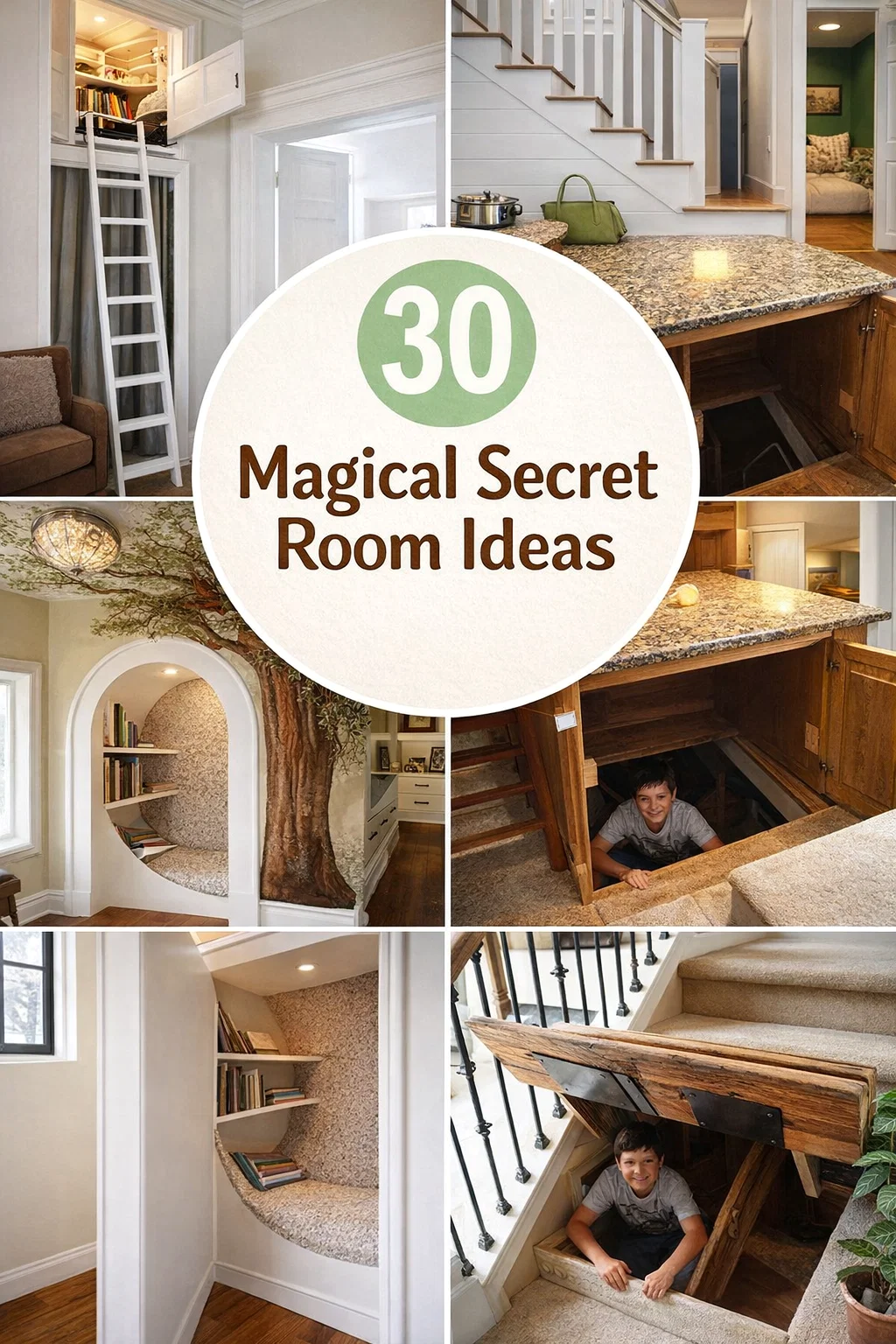
There is something inherently captivating about the idea of a secret room. From the hidden passages in ancient castles to the invisible doors in modern luxury homes, the concept of a “hideout” taps into our deepest childhood fantasies and our adult desire for privacy. Imagine pulling a specific book from a shelf and watching the entire wall pivot open, or lifting a floorboard to reveal a cozy sanctuary tucked away from the noise of the world. These magical spaces are more than just architectural gimmicks; they are functional, imaginative, and incredibly rewarding DIY projects that can add significant character and value to any home.
In today’s fast paced world, finding a place to truly disconnect is becoming a luxury. A secret room provides a unique escape, a dedicated zone for creativity, or even a clever way to utilize those awkward, wasted spaces that exist in almost every house. Whether you have a sprawling estate or a compact apartment, there is always potential to carve out a hidden nook. Let’s dive deep into the world of secret architecture and explore how you can bring a touch of mystery to your own living space.
The Psychology of Hidden Spaces
Why are we so obsessed with secret rooms? It often starts in childhood. The idea of a fort or a “no adults allowed” zone represents a sense of autonomy and ownership. As adults, this translates into a need for a sanctuary. In an era of open floor plans where every room flows into the next, a hidden room offers the ultimate boundary. It is a space that belongs entirely to you, known only to those you choose to invite in.
Beyond the emotional appeal, there is also the thrill of the “reveal.” There is a playful, almost theatrical element to showing a friend a seemingly solid wall that actually leads to a home theater or a wine cellar. It turns a home from a static building into a living, breathing puzzle that rewards curiosity. Building a hidden space is an exercise in creativity that allows homeowners to express their personality in a way that traditional decor simply cannot match.
Transforming the Space Under the Stairs
The space beneath a staircase is perhaps the most underutilized area in the average home. Often relegated to a dark, cramped closet for vacuum cleaners and old coats, this triangular void is actually the perfect candidate for a magical hideout. Because it is already enclosed, the structural heavy lifting is largely done, leaving you to focus on the creative entryway and the interior design.
Creating a Children’s Reading Nook
For families with young children, an under-stairs “Harry Potter” style room is a dream come true. By replacing a standard door with a seamless panel that matches the surrounding woodwork, you create a portal to another world. Inside, you can install plush carpeting, soft LED fairy lights, and low-profile shelving for books. It becomes a quiet zone where kids can develop a love for reading away from the distractions of the television and digital devices.
The Sophisticated Hidden Bar or Wine Cellar
If you prefer an adult-oriented hideout, the under-stairs area can be transformed into a sleek, hidden speakeasy. Using a push-to-open latch system, you can hide a fully stocked bar behind what looks like a simple decorative wall panel. Add some mirrored backing, ambient lighting, and a small marble countertop to create a high-end experience that will leave your guests in awe during dinner parties.
The Classic Bookcase Door: A Timeless Mystery
When most people think of a secret room, they immediately picture the rotating bookcase. This classic trope of mystery novels is surprisingly achievable in modern homes. Today, you can purchase pre-engineered “Murphy Door” kits that function as high-quality, load-bearing bookshelves while also serving as a perfectly balanced door. These units are designed to swing smoothly even when fully loaded with heavy hardcover books.
The beauty of a bookcase door lies in its dual functionality. You aren’t just hiding a room; you are gaining valuable storage space. This works exceptionally well for home offices. Imagine a wall of books in your living room that conceals the entrance to your private workspace. When the door is closed, your work-life balance is physically enforced, and your office equipment remains out of sight and out of mind.
Loft Hideouts and Elevated Sanctuaries
Vertical space is another goldmine for secret rooms, especially in houses with high ceilings or unused attic peaks. A loft hideout can be accessed via a retractable ladder or a set of hidden steps disguised as shelving. These “crow’s nest” style rooms are perfect for meditation, art studios, or a secondary guest sleeping area.
To make an elevated hideout feel truly magical, focus on the view. If possible, add a small skylight or a high-placed window. Being high up, away from the foot traffic of the main floor, creates a feeling of being in a treehouse. It provides a literal and metaphorical shift in perspective that is incredibly soothing for the mind.
Hidden Storage and Security Solutions
While many secret rooms are built for fun and relaxation, they also serve a very practical purpose: security. A “panic room” or a high-security hidden vault can provide peace of mind. These spaces can be reinforced with steel frames and heavy-duty locks, all concealed behind a mundane object like a large floor-to-ceiling mirror or a piece of wall art.
For the average homeowner, hidden storage is a more common need. Concealed floor compartments under a rug can hold valuables, while “fake” wall vents or electrical outlets can serve as small safes for jewelry and important documents. Integrating these features into your home design ensures that your most precious items are safe from prying eyes without the need for an unsightly, bulky safe.
Design Tips for a Seamless Disguise
The success of a secret room depends entirely on how well it is hidden. Even the smallest gap or a mismatched paint color can give the game away. Here are some key tips for ensuring your hideout remains a secret:
- Match the Trim: Ensure that the baseboards and crown molding continue across the “door” without interruption. Any break in the horizontal lines of the room will be immediately noticeable.
- Invisible Hinges: Use Soss hinges or pivot hinges that are mortised into the door and frame. Traditional butt hinges are a dead giveaway.
- Flush Fit: The door must sit perfectly flush with the wall. Even a few millimeters of protrusion will catch the light and create a shadow that reveals the entrance.
- Functional Camouflage: A door that looks like a mirror, a painting, or a shelf should actually function as one. If it is a bookshelf, it should have real books on it. If it is a mirror, it should be at a height where it is actually useful.
The DIY Journey: Planning Your Project
Building a secret room is a rewarding challenge, but it requires careful planning. Start by assessing the structural integrity of the area. If you are cutting into a wall, you must ensure it is not a load-bearing wall and that you aren’t going to slice through vital plumbing or electrical lines. Consulting with a contractor or a structural engineer is always a smart move before you start swinging a hammer.
Consider the ventilation and lighting. Because these rooms are often small and enclosed, they can become stuffy or dark very quickly. Silent exhaust fans and smart LED lighting that can be controlled via an app are excellent additions. You want the space to feel inviting, not claustrophobic.
Innovative Materials and Modern Technology
We live in an exciting time for home automation, and this technology can take your secret room to the next level. Magnetic locks can be triggered by a hidden RFID sensor, meaning you only need to wave a specific object (like a ring or a toy) over a certain spot on the wall to unlock the door. Voice-activated commands through smart home systems can also be used to release latches, adding a futuristic “Mission Impossible” vibe to your home.
Using lightweight materials like high-density foam for “stone” walls or faux-wood veneers can help keep the weight of a secret door down, making it easier to operate and less likely to sag over time. Sustainability is also a factor; using reclaimed wood for a rustic “cabin” hideout adds character while being environmentally friendly.
Conclusion
A secret room is more than just a renovation project; it is an investment in the magic of your home. It creates a sense of wonder for guests, a playground for children, and a much-needed retreat for adults. By taking advantage of overlooked spaces like the area under your stairs or by incorporating clever furniture like bookcase doors, you can transform a standard house into a place of mystery and charm.
Whether your goal is to build a high-tech vault, a cozy reading nook, or a hidden play area, the key is in the details. Focus on seamless integration, functional design, and a touch of whimsy. As you embark on your journey to create the ultimate hideout, remember that the only limit is your imagination. Your home is your castle, and every castle deserves a few secrets of its own.