
Creating a beautiful entryway is one of the most rewarding home improvement projects you can undertake. When you look at a well-designed front porch, your eyes are immediately drawn to the greenery and flowers that frame the doorway. Large planters are the secret weapon of professional landscapers and interior designers alike. They offer a sense of scale and permanence that smaller pots simply cannot match. If you have ever wondered how to achieve that high-end look seen in home decor magazines, the answer lies in mastering the art of the large container garden.
Why Large Planters are a Game Changer for Curb Appeal
First impressions matter, and the front of your house is the very first thing guests and neighbors see. Large planters act as architectural elements. They can hide unsightly corners, soften the hard lines of a brick foundation, and provide a pop of color that guides the visitor toward the entrance. Unlike small pots that can look cluttered or get lost in the landscape, a substantial planter makes a bold statement of intention. It says that you care about your space and have taken the time to curate a welcoming atmosphere.
Beyond aesthetics, larger pots are actually easier to maintain than small ones. Because they hold a greater volume of soil, they retain moisture much longer. This means you will spend less time standing outside with a watering can during the heat of summer. A larger root zone also allows plants to grow more vigorously, leading to the lush, overflowing displays that everyone admires. Investing in a few high-quality, large-scale containers is a long-term strategy for a more beautiful and manageable home exterior.
Selecting the Right Containers for Your Space
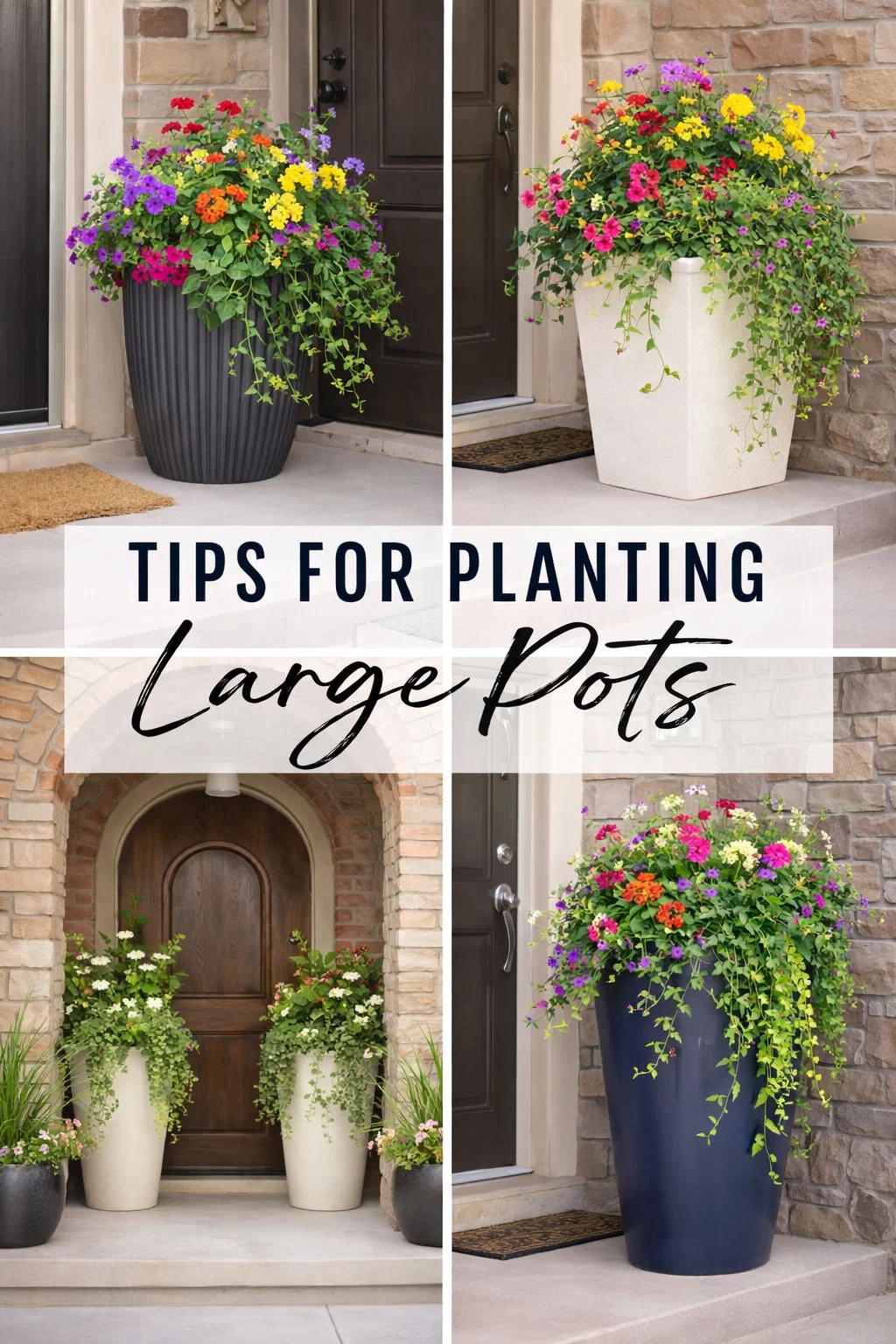
Before you get your hands dirty, you need to choose the right vessels. The image above showcases a variety of styles, from sleek navy blue tapered pots to classic terracotta and deep chocolate brown finishes. When selecting your containers, consider the color of your home and the style of your front door. If you have a traditional brick house, neutral tones like cream or dark brown provide a sophisticated contrast. If you want a more modern or eclectic feel, a bold blue or forest green pot can serve as a stunning focal point.
Materials Matter
The material of your planter affects both its look and its longevity. Here are a few popular options:
- Resin and Plastic: These are lightweight and often mimic the look of stone or ceramic. They are excellent for porches where weight might be a concern, and they are highly resistant to cracking in freezing temperatures.
- Glazed Ceramic: These offer vibrant colors and a heavy, premium feel. They are beautiful but can be fragile in extreme weather if not rated for frost.
- Concrete and Stone: These are the ultimate in durability. They provide a timeless look and are heavy enough to withstand high winds, though they are difficult to move once filled.
- Metal: Galvanized steel or copper planters add an industrial or farmhouse touch. Just be mindful that metal can heat up quickly in direct sunlight, which might stress plant roots.
The Golden Rule of Planting: Thriller, Filler, and Spiller
To create a professional-looking arrangement like the ones seen in the images, you should follow the classic design trio: the thriller, the filler, and the spiller. This formula ensures that your planter has height, volume, and movement.
The Thriller: Adding Vertical Interest
The thriller is the focal point of your arrangement. It should be the tallest plant in the pot and is usually placed in the center or toward the back. Ornamental grasses, spikes, or even small upright shrubs work perfectly here. In the provided images, you can see how tall yellow blooms or spiky green blades draw the eye upward, giving the container a sense of grandeur.
The Filler: Creating Lush Volume
Fillers are the mid-size plants that surround the thriller. Their job is to make the container look full and hide the soil. Mounding plants like petunias, geraniums, or marigolds are excellent choices. You want to choose colors that either complement or provide a striking contrast to your thriller. Notice how the pink flowers in the navy blue pot create a vibrant ring of color that makes the entire display pop.
The Spiller: Providing Soft Movement
The spiller is what gives a large planter its finished, “estate” look. These are trailing plants that grow over the edges of the pot and hang down toward the ground. Ivy, sweet potato vine, or creeping Jenny are classic spillers. By breaking the hard line of the planter’s rim, these plants create a bridge between the container and the porch floor, making the whole arrangement feel more integrated into the environment.
Step by Step Guide to Planting Your Large Pots
Once you have your plants and your pots, it is time to get to work. Following a systematic approach will ensure your plants stay healthy and vibrant throughout the season.
Step 1: Check for Drainage
The number one killer of container plants is root rot caused by standing water. Ensure your planter has at least one large drainage hole at the bottom. If it doesn’t, you may need to carefully drill one yourself. To prevent the hole from getting clogged with soil, you can place a few pieces of broken pottery or a layer of landscape fabric over it.
Step 2: Lighten the Load
Large planters require a lot of soil, which can make them incredibly heavy and expensive to fill. If you are planting annuals with shallow roots, you do not need to fill the entire pot with soil. You can fill the bottom third with empty plastic milk jugs, soda bottles with the caps on, or even packing peanuts. This reduces the weight and saves money on potting mix. Just make sure there is enough soil depth for your chosen plants to thrive.
Step 3: Use High-Quality Potting Mix
Never use garden soil in a container. Garden soil is too heavy and will compact, suffocating the roots. Instead, use a high-quality potting mix designed specifically for containers. These mixes usually contain peat moss, perlite, or vermiculite to ensure proper aeration and moisture retention. Many also come with a slow-release fertilizer already mixed in, giving your plants a head start.
Step 4: Arrange and Plant
Before removing plants from their nursery pots, arrange them on top of the soil to see how they look. Once you are happy with the layout, start planting from the center out. Tease the roots gently if they are pot-bound. Ensure that the top of the root ball is about an inch below the rim of the planter to allow space for watering.
Maintenance Tips for Long-Lasting Beauty
A beautiful planter requires ongoing care. Because containers are isolated environments, the plants rely entirely on you for their needs. Monitoring the moisture level is crucial. On hot days, large pots may need water every single day. Stick your finger an inch into the soil; if it feels dry, it is time to water.
Feeding your plants is the second most important task. Constant watering leaches nutrients out of the soil. Use a water-soluble fertilizer every two weeks to keep the blooms coming and the foliage green. Additionally, don’t forget to deadhead. Removing spent flowers encourages the plant to put its energy into producing new blooms rather than seeds, keeping your porch looking fresh all summer long.
Seasonal Transitions for Your Porch
One of the best things about large planters is their versatility. As the seasons change, you can swap out your plants to reflect the time of year. In the spring, think tulips and pansies. For summer, go for heat-loving tropicals and bright annuals. When autumn arrives, replace tired summer flowers with mums, ornamental peppers, and kale. In the winter, you don’t even need living plants; you can fill your pots with evergreen boughs, birch logs, and red dogwood branches for a festive, hardy display.
Conclusion
Enhancing your front porch with large planters is a simple yet high-impact way to upgrade your home’s exterior. By choosing the right containers, following the thriller-filler-spiller design principle, and maintaining a regular watering and feeding schedule, you can create a professional-grade botanical display that lasts for months. Whether you prefer the classic elegance of stone-toned pots or the modern flair of colorful resin, these tips will help you cultivate a welcoming entrance that you will be proud to come home to every day. Grab some pots, pick your favorite flowers, and start transforming your curb appeal today.