
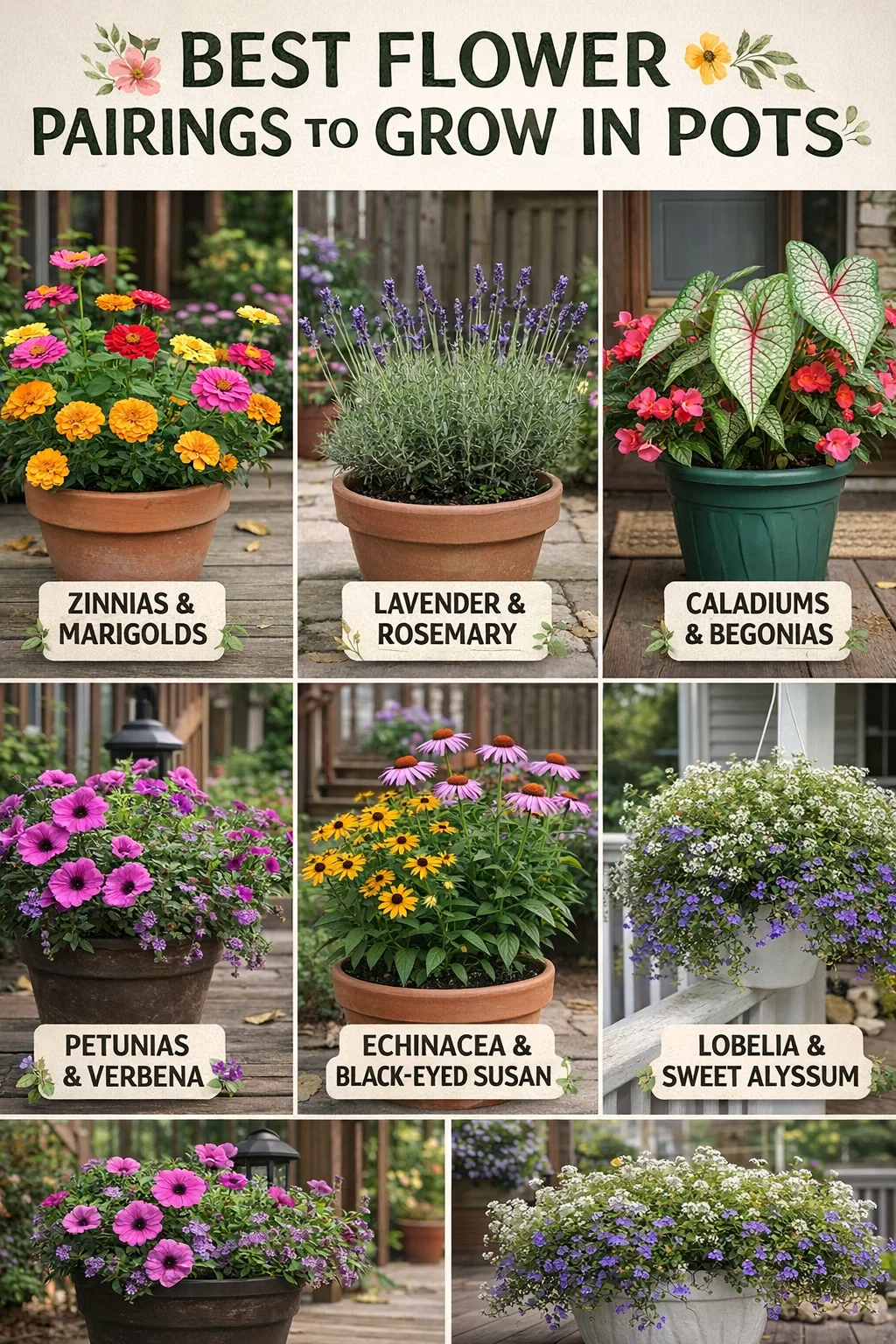
Transforming your outdoor space does not require a sprawling backyard or a professional landscaping crew. Sometimes, the most impactful garden transformations happen right on your doorstep or balcony within the confines of a simple ceramic pot. Container gardening is an art form that allows you to curate miniature ecosystems, bringing bursts of color, fragrance, and even fresh herbs to the smallest of spaces. The beauty of the image we are exploring today lies in its simplicity and the clever pairing of plant species that not only look spectacular together but also share similar growth requirements.
Whether you are a seasoned gardener with dirt under your fingernails or a complete beginner looking to brighten up a front porch, understanding how to pair flowers for pots is the secret to a thriving display. In this guide, we will dive deep into the specific pairings shown in our inspiration image, explore the science of companion planting in containers, and provide you with all the tips you need to maintain a lush, Pinterest worthy garden all season long.
The Power of Pairings: Why Container Combinations Matter
When you plant in a pot, you are creating a micro environment. Unlike plants in the ground, container plants rely entirely on you for their nutrients, water, and space. This makes the selection process crucial. If you pair a water hungry Begonia with a drought tolerant Lavender, one of them is going to suffer. The pairings highlighted in our visual guide are successful because they harmonize in two major ways: aesthetics and environmental needs.
Aesthetic harmony involves looking at color theory and growth habits. Using complementary colors like the yellow and orange of Marigolds against the pink of Zinnias creates a vibrant, energetic feel. Growth habits are equally important. You want a mix of textures, such as the broad, heart shaped leaves of Caladiums paired with the delicate, waxy blooms of Begonias. When these elements come together, the container looks full, balanced, and professionally designed.
Classic Vibrancy: Zinnias and Marigolds
If you want a pot that screams summer and attracts every butterfly in the neighborhood, the combination of Zinnias and Marigolds is unbeatable. Both of these plants are sun worshippers, meaning they will thrive on a south facing porch or a bright deck. They are also remarkably resilient, making them the perfect choice for those who might occasionally forget a watering session.
Growth Habits and Care
Zinnias provide wonderful height and come in almost every color of the rainbow. Their sturdy stems and multi layered petals offer a structured look. Marigolds, specifically the French variety, tend to grow in lower, bushier mounds. Placing Zinnias in the center of the pot as a thriller and surrounding them with Marigolds as a filler creates a beautiful dome of color. Both plants prefer well draining soil and benefit from deadheading, which is the practice of pinching off spent blooms to encourage new flowers to grow.
The Pest Control Bonus
There is a functional reason to love this duo as well. Marigolds are famous in the gardening world for their ability to repel certain pests. Their distinct scent can deter aphids and nematodes, which helps protect the more sensitive Zinnias. It is a natural partnership that keeps your container looking healthy without the need for harsh chemicals.
Fragrance and Utility: Lavender and Rosemary
Not every flower pairing has to be about bright, flashy colors. Sometimes, the best containers are those that appeal to the senses of smell and touch. The pairing of Lavender and Rosemary is a masterclass in Mediterranean style gardening. This duo is perfect for a sunny spot near a doorway where you can brush against the foliage to release its calming aroma.
Why They Work Together
Lavender and Rosemary are both woody perennials that thrive in lean, sandy soil and require very little water once established. They both love the heat and actually prefer to dry out between waterings. In terms of visual appeal, the silvery green needles of the Rosemary provide a fine textured backdrop for the upright, purple spikes of the Lavender. This creates a sophisticated, muted palette that looks elegant in terracotta pots.
Harvesting Your Container
One of the biggest perks of this pairing is the harvest. You can snip Rosemary for your kitchen recipes and dry the Lavender for sachets or tea. To keep these plants happy in a pot, ensure you have plenty of drainage holes at the bottom. These plants hate having wet feet, so a high quality potting mix with added perlite or grit is essential.
Texture and Shade: Caladiums and Begonias
Most people assume that a beautiful flower pot requires full sun, but the pairing of Caladiums and Begonias proves otherwise. This combination is the gold standard for shady corners, covered porches, or under the canopy of a large tree. It focuses on the dramatic contrast between foliage and flowers.
The Beauty of Caladium Foliage
Caladiums are grown primarily for their stunning leaves, which look like they have been painted by hand. With veins of deep red, splashes of white, and borders of bright green, they provide a constant source of color even when nothing is blooming. Because their leaves are so large, they provide a great architectural element to the pot.
Begonias as the Perfect Companion
Begonias tucked around the base of Caladiums add a soft, romantic touch. Wax begonias or tuberous begonias offer small, consistent clusters of flowers that pop against the intricate patterns of the Caladium leaves. Both plants love moisture and humidity but need protection from the harsh afternoon sun, which can scorch their delicate leaves. This pairing creates a lush, tropical feel that can turn a dark porch into a vibrant sanctuary.
The Dramatic Spill: Petunias and Verbena
When you want a container that looks like it is overflowing with color, you look for spillers. Petunias and Verbena are the reigning champions of the hanging basket and the elevated planter. This pairing is all about volume and a cascading growth habit that hides the edges of the pot.
Creating the Overflow Effect
Petunias are famous for their trumpet shaped flowers and their ability to bloom prolifically from spring until the first frost. When paired with Verbena, which produces clusters of tiny, star shaped flowers, you get a varied texture that looks rich and dense. Verbena tends to be a bit more heat tolerant than some petunia varieties, so it helps the pot stay looking fresh even during the hottest weeks of July.
Maintenance Tips for Heavy Bloomers
Because these plants produce so many flowers, they are heavy feeders. To keep this duo looking like the image, you should use a water soluble fertilizer every two weeks. Regular trimming is also helpful. If the Petunias start to look leggy or thin in the middle of summer, do not be afraid to give them a haircut. They will bounce back with even more blooms within a week or two.
The Pollinator Magnet: Echinacea and Black-Eyed Susans
For a more rustic, wildflower aesthetic, pairing Echinacea (Coneflower) with Black-Eyed Susans (Rudbeckia) is a fantastic choice. This combination brings the charm of a prairie garden into a controlled container environment. It is a favorite for those who want to support local bees and butterflies.
A Sturdy, Sun Loving Duo
Both plants are known for their prominent central cones and daisy like petals. They are incredibly tough and can handle wind, heat, and intense sun. In a pot, they provide a tall, structural element that works well as a focal point in a garden or on a large patio. The gold of the Black-Eyed Susans perfectly complements the pinks or purples of the Echinacea, creating a classic late summer palette.
Longevity and Winter Interest
While these are often treated as perennials in the ground, in a pot, they are spectacular seasonal showstoppers. Even after the petals fall, the dried seed heads provide visual interest and can provide food for small birds. They represent a hardy, low maintenance approach to container gardening that looks better and better as the season progresses.
The Airy Delight: Lobelia and Sweet Alyssum
Finally, we have the delicate, airy pairing of Lobelia and Sweet Alyssum. This is the pairing you choose when you want your garden to feel light, whimsical, and fragrant. This combination is often used in hanging baskets or as a frothy border around taller plants in large pots.
A Carpet of Color
Sweet Alyssum is a low growing plant that produces tiny, honey scented white flowers. It creates a thick carpet that covers the soil beautifully. Lobelia, specifically the trailing blue varieties, weaves through the Alyssum to provide a stunning contrast. The electric blue of Lobelia is a rare color in the plant world, and when it is mixed with the pure white of the Alyssum, it creates a crisp, clean look that feels very refreshing.
Cool Weather Favorites
It is important to note that both Lobelia and Alyssum prefer slightly cooler temperatures. They are at their peak in the spring and early summer. In very hot climates, they might take a break during the peak of August, but they often have a second flush of beauty once the autumn air turns crisp. Keep them well watered, as their shallow root systems can dry out quickly in small pots.
Pro Tips for Successful Container Gardening
Now that you have some inspiration for which plants to pair together, let us look at the fundamental rules that will ensure your pots look as good as the ones in the photos. Success in container gardening comes down to the basics of soil, water, and light.
- Quality Potting Mix: Never use garden soil in a pot. It is too heavy and will compact, suffocating your plant roots. Always use a high quality potting mix designed for containers, which includes ingredients like peat moss or coco coir for moisture retention and perlite for aeration.
- The Drainage Rule: A pot without a hole is just a bucket that will eventually drown your plants. Ensure your containers have adequate drainage. If you find a beautiful decorative pot without a hole, use it as a cachepot by placing a plain plastic nursery pot inside it.
- Fertilizing Regularly: Because you are watering frequently, nutrients leach out of the soil quickly. Use a slow release fertilizer at the time of planting and supplement with a liquid fertilizer every few weeks during the peak growing season.
- Watering Wisely: Check your pots daily. Stick your finger an inch into the soil; if it feels dry, it is time to water. Remember that terracotta pots dry out faster than plastic or glazed ceramic ones.
Wrapping Up Your Garden Project
Container gardening is one of the most rewarding ways to interact with nature. It allows you to experiment with different colors, textures, and scents without the commitment of a permanent garden bed. By following the pairings we have discussed today, you can create professional looking displays that will thrive throughout the season.
Whether you choose the vibrant energy of Zinnias and Marigolds or the soothing scent of Lavender and Rosemary, the key is to enjoy the process. Gardening is a journey of discovery, and every pot you plant is an opportunity to learn something new about the natural world. So, grab your favorite containers, pick up some high quality soil, and start planting your own little piece of paradise today.