
Enhancing your home’s exterior often starts with the smallest details, and few projects offer as much immediate satisfaction as a mailbox garden. It is the very first thing guests and neighbors see when they approach your property, serving as a floral handshake that sets the tone for the rest of your landscape. By surrounding your mailbox with a curated selection of blooms, you transform a purely functional utility into a vibrant focal point that boosts curb appeal and provides a sanctuary for local pollinators.
Why Mailbox Gardens are the Perfect Weekend Project
The beauty of a mailbox garden lies in its accessibility. Unlike a sprawling backyard renovation, this is a small scale project that can be completed in a single afternoon. It allows you to experiment with color palettes and plant textures without committing to a massive area of land. Furthermore, because mailboxes are usually located near the street, they often benefit from the heat reflected off the pavement, creating a unique microclimate where sun-loving perennials can truly thrive. Whether you are a seasoned gardener or a beginner looking to get your hands dirty for the first time, these floral combinations provide a foolproof roadmap to success.
Choosing the Right Plants for Your Environment
Before you start digging, it is essential to consider the specific conditions of your curb. Most mailbox areas are exposed to full sun and can be subject to harsh conditions like road salt in the winter or heavy foot traffic. Choosing hardy plants that can withstand these stressors is key to maintaining a lush look throughout the season. You want to look for a mix of heights, ensuring that you don’t obscure the mailbox itself or create a blind spot for drivers, while still providing enough volume to make an impact from a distance.
The Classic Duo: Coneflower and Black-Eyed Susan
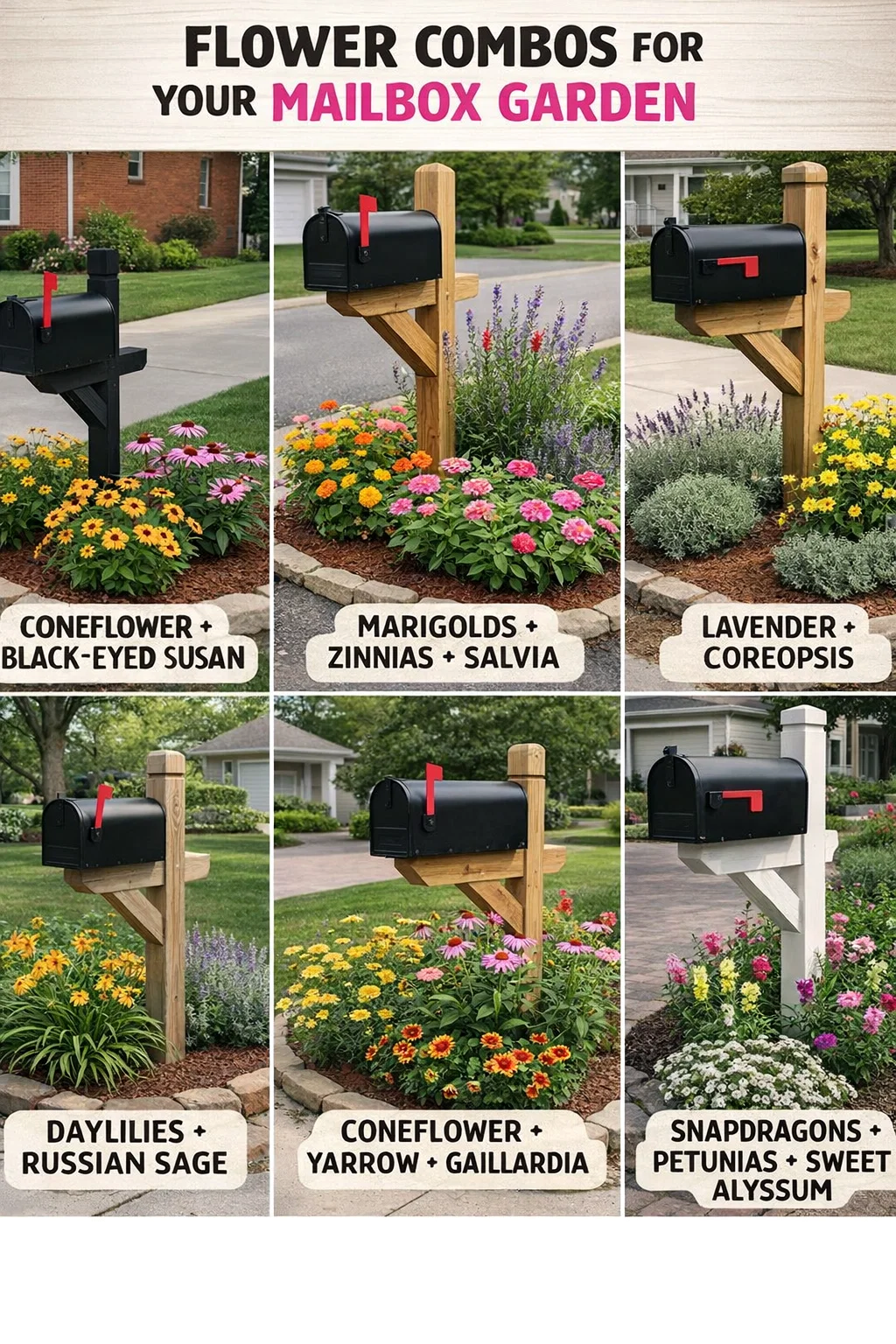
For a look that screams summer, there is no better pairing than Coneflowers (Echinacea) and Black-Eyed Susans (Rudbeckia). This combination is a staple in many landscapes because it is incredibly resilient and produces a massive amount of color. The tall, sturdy stems of the coneflower provide a lovely purple or pink backdrop, while the cheerful yellow petals of the Black-Eyed Susans fill in the foreground. Both of these plants are drought-tolerant once established, meaning they won’t wilt if you forget to water them for a day or two during a heatwave. They are also absolute magnets for butterflies and bees, bringing your front yard to life with movement.
The Vibrant Trio: Marigolds, Zinnias, and Salvia
If you prefer a bold, high-energy palette, consider mixing Marigolds, Zinnias, and Salvia. This trio offers a stunning contrast in both color and form. Marigolds and Zinnias are famous for their round, ruffled flower heads and come in every warm shade imaginable, from fiery orange to soft pink. Adding Salvia into the mix provides a vertical element with its spiky purple blooms. This contrast between the round flower heads and the tall spikes creates visual interest that keeps the eye moving. Additionally, these plants are prolific bloomers, meaning the more you cut them for indoor bouquets, the more they will grow back.
Designing for Texture and Fragrance
A garden should engage more than just the eyes. Incorporating plants with interesting textures or delightful scents adds a layer of sophistication to your mailbox bed. When you walk out to grab your mail, being greeted by the scent of fresh herbs or the sight of silvery foliage can turn a mundane chore into a sensory experience.
Sophisticated Simplicity: Lavender and Coreopsis
For those who love a more refined or Mediterranean aesthetic, Lavender and Coreopsis are an elite pairing. Lavender is prized for its soothing fragrance and its unique silvery-green foliage which stays attractive even when the plant isn’t in full bloom. When paired with the bright, airy yellow flowers of Coreopsis, the result is elegant and light. This combination works exceptionally well against wooden mailbox posts, as the natural grain of the wood complements the soft tones of the plants. These varieties prefer well-drained soil, making them perfect for raised beds or mounds around the mailbox base.
Low Maintenance Elegance: Daylilies and Russian Sage
If you want a garden that looks professional but requires minimal effort, look no further than Daylilies and Russian Sage. Daylilies are often called the perfect perennial because they are nearly indestructible and come in a wide range of heights and colors. Russian Sage provides a misty, ethereal cloud of blue flowers and fine-textured foliage that acts as a perfect filler. This pair is particularly effective because the Russian Sage fills the space with a soft volume while the Daylilies provide bold bursts of color. It is a sophisticated look that requires very little deadheading or maintenance throughout the year.
Creating a Seasonal Spectacle
One of the secrets to a great garden is ensuring there is always something interesting to look at, regardless of the month. By mixing different types of plants, you can ensure that as one variety fades, another is just beginning to take center stage. This keeps your curb appeal high from early spring through the first frost of autumn.
The Triple Threat: Coneflower, Yarrow, and Gaillardia
This combination is a masterclass in prairie-style gardening. Yarrow and Gaillardia (also known as Blanket Flower) are incredibly rugged and can handle poor soil conditions with ease. Yarrow provides flat-topped clusters of flowers that offer a landing pad for pollinators, while Gaillardia brings in vibrant, multi-colored petals that look like miniature sunsets. When you add Coneflowers to this mix, you create a tiered effect that feels natural and wild yet intentionally designed. These plants are all perennials, so they will return year after year, getting bigger and better with every season.
Soft and Romantic: Snapdragons, Petunias, and Sweet Alyssum
For a softer, more traditional look, many homeowners opt for a mix of annuals like Snapdragons, Petunias, and Sweet Alyssum. This is a fantastic choice if you have a white or light-colored mailbox post. Snapdragons provide the necessary height and a touch of whimsy with their unique flower shapes. Petunias offer a carpet of saturated color, and Sweet Alyssum acts as a “spiller,” cascading over the edges of the bed or onto the sidewalk. The scent of Sweet Alyssum is particularly honey-like, making every trip to the mailbox a pleasure. While these will need to be replanted each year, they offer a level of color density that is hard to beat with perennials alone.
Tips for Maintaining Your Mailbox Garden
Once your plants are in the ground, a little bit of upkeep will go a long way in keeping them looking their best. Because these beds are often isolated from the rest of the lawn, they can dry out faster. Here are a few quick tips to ensure your mailbox garden stays healthy:
- Mulching: Apply a two inch layer of mulch around the base of your plants. This helps retain moisture, regulates soil temperature, and prevents weeds from taking over your small garden space.
- Deadheading: Regularly remove spent flowers. This encourages the plant to put its energy into producing new blooms rather than setting seeds, extending the flowering season significantly.
- Watering: If your mailbox is far from a hose, consider carrying a watering can out with you once or twice a week during dry spells. Deep watering is better than frequent shallow splashes.
- Bordering: Use stones, bricks, or a small decorative fence to define the edge of the bed. This prevents grass from creeping in and protects your plants from string trimmers or lawnmowers.
Wrapping Up Your Front Yard Transformation
Your mailbox does not have to be a lonely post in the middle of a grass strip. By applying these flower combinations, you can create a miniature landscape that reflects your personal style and enhances the character of your home. Whether you prefer the wild, sun-drenched look of coneflowers and yarrow or the structured elegance of lavender and sage, there is a combination that will work for your space. Gardening at the curb is a wonderful way to connect with your community, provide for local wildlife, and enjoy the beauty of nature every single day. So, grab your shovel, pick your favorite colors, and start planting your own mailbox masterpiece today.