
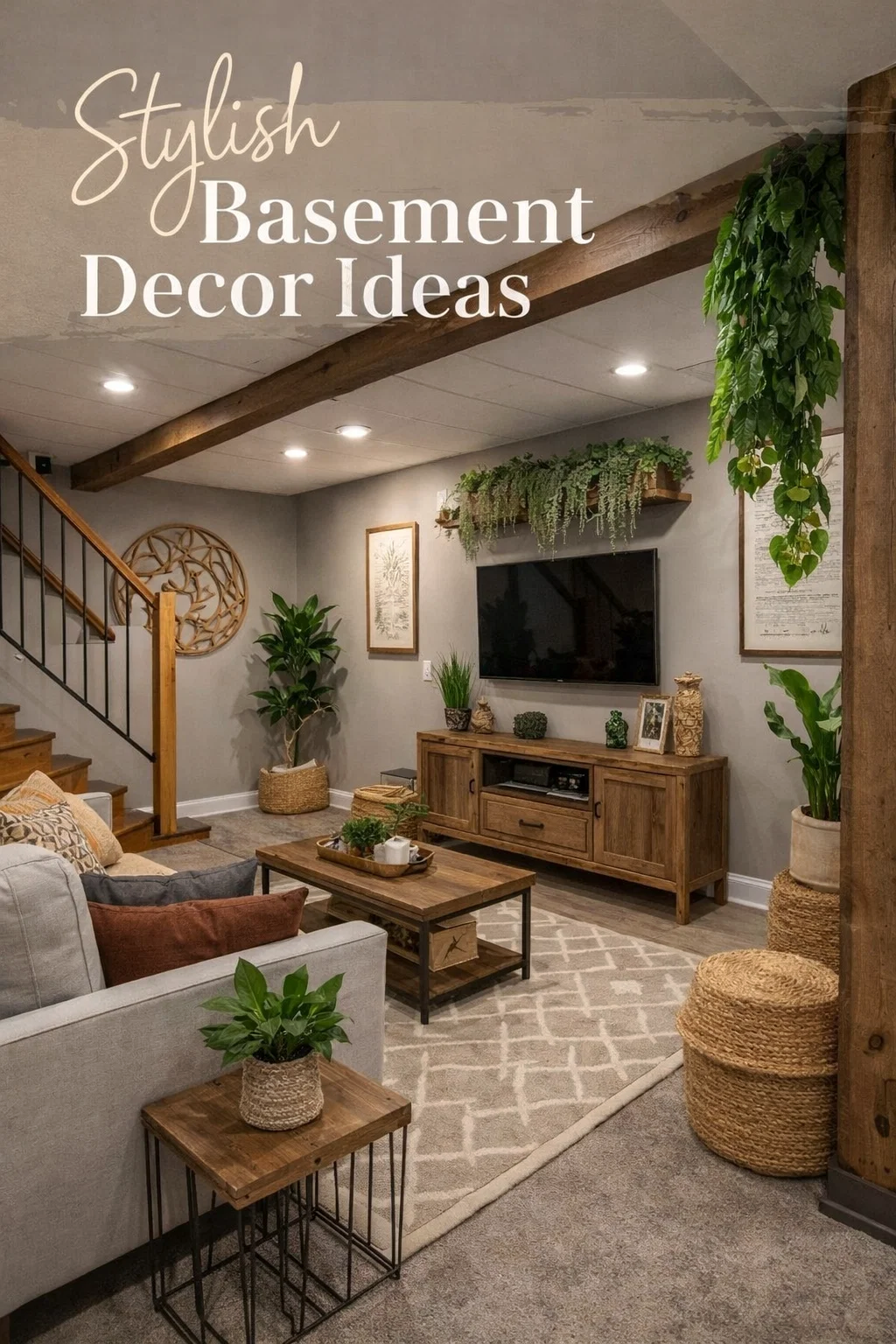
Transforming a basement from a cold, dark storage area into a vibrant and inviting living space is one of the most rewarding home improvement projects you can undertake. As we see in the beautifully curated space before us, the key to a successful basement remodel lies in balancing subterranean practicalities with high end aesthetic choices. This room perfectly captures the modern boho spirit, blending rustic wooden elements with soft textiles and a lush indoor garden vibe. It is a masterclass in how to use texture and light to create a sanctuary that feels anything but underground.
The Foundations of a Cozy Basement Aesthetic
When you start designing a basement living room, the first challenge is often the lack of natural light. To counter this, the design here uses a neutral, warm gray palette for the walls. This color choice is brilliant because it provides a sophisticated backdrop that reflects artificial light without feeling sterile. By opting for a soft greige or light charcoal, you create a cocoon-like atmosphere that feels intimate rather than cramped.
The flooring also plays a massive role in the comfort of the space. While basements are prone to being chilly, the use of wall to wall carpeting in a neutral tone provides immediate thermal and acoustic insulation. Adding a large, patterned area rug on top of the carpet is a professional styling trick that adds a layer of visual interest and defines the seating area. The geometric lines on the rug provide a modern contrast to the more organic shapes found throughout the decor.
Architectural Interest Through Exposed Wood Beams
One of the most striking features of this room is the use of dark wood beams across the ceiling. Often, basement ceilings are low or cluttered with ductwork. Instead of trying to hide every structural element, this design leans into a rustic aesthetic by installing or exposing heavy timber beams. These beams draw the eye upward and provide a sense of strength and history to the room.
The dark stain of the wood is echoed in the staircase railing and the media console, creating a cohesive visual language. This repetition of materials is essential in open plan basements to ensure the room feels intentional and designed. The wood adds a necessary warmth that balances the cooler tones of the gray walls and the metal accents in the side tables.
Maximizing Vertical Space with Indoor Greenery
Bringing the outdoors in is a hallmark of bohemian design, and it is particularly effective in a basement where a connection to nature might be missing. The use of greenery in this space is strategic and tiered. We see a tall fiddle leaf fig in the corner, which fills an awkward space and adds height. Meanwhile, trailing plants like pothos are placed on a high shelf above the television, creating a waterfall effect that softens the hard lines of the electronics.
Indoor plants do more than just look good. They improve air quality and have a significant impact on mood, making the basement feel like a healthy, living part of the home. If your basement has very little light, you can achieve this look with high quality silk plants or by using dedicated grow lights hidden within the recessed ceiling fixtures.
Choosing the Perfect Media Console and Storage
In a multi functional living room, the media center is often the focal point. The console shown here is a beautiful example of how to combine form and function. Its light oak finish keeps the room feeling airy, while the shutter style doors provide a touch of farmhouse charm. This piece offers ample storage to hide away gaming consoles, cables, and board games, keeping the visual clutter to a minimum.
Above the TV, the floating shelf is a clever addition. It provides a dedicated spot for decor without taking up any floor space. By placing long, hanging plants here, the television is integrated into the room design rather than standing out as a giant black rectangle on the wall. This makes the viewing experience feel more integrated into the overall lifestyle of the room.
Layering Textures for Ultimate Comfort
A basement living room should be the most comfortable spot in the house. To achieve this, you must layer different textures. In this example, we see a mix of smooth fabrics, rough jute, and soft knits. The couch features plush cushions in light gray and deep navy, providing a comfortable place to lounge for hours.
- Jute and Seagrass: The stacked floor poufs and the basket for the large plant introduce a natural, tactile element that grounds the room.
- Woven Wall Art: The large circular wooden art piece on the wall adds dimension and serves as a conversation starter, breaking up the flat surface of the wall.
- Mixed Metal Accents: The side table with its thin metal legs adds a touch of industrial modernism, ensuring the boho look stays current and not too cluttered.
Lighting Strategies for Subterranean Spaces
Since you cannot rely on windows, your lighting plan must be layered. This room utilizes recessed LED lighting, often called pot lights, which provide a clean and even distribution of light across the entire ceiling. This prevents dark corners and makes the ceiling feel higher than it actually is.
However, overhead lighting can sometimes feel a bit harsh for movie nights or quiet evenings. That is why accent lighting is so important. Notice the small lamps and the way light reflects off the framed art. Incorporating dimmable switches allows you to transition the room from a bright, active family space to a cozy, dimly lit cinema room at the turn of a dial.
Creating a Flowing Layout
The layout of this basement is designed for flow. The placement of the sofa allows for easy movement from the stairs into the heart of the room. By keeping the center of the rug clear, the room feels spacious. The use of multifunctional furniture, like the jute poufs, means that extra seating can be moved around easily when guests come over, but they do not take up a permanent, bulky footprint.
The staircase itself is treated as a design feature rather than just a utility. The open risers and the simple black metal balusters keep the sightlines open, which is a crucial trick for making small basements feel much larger. Every element, from the art on the walls to the placement of the side tables, is balanced to ensure the room feels harmonious.
Personalizing Your Space with Art and Decor
Framed botanical prints and abstract sketches give the room a curated, personal feel. In a basement, art should be used to add color and personality. Choosing frames that match the wood tones of the furniture helps to tie the whole design together. Don’t be afraid to go large with your wall decor. A single, oversized piece often looks better and less cluttered than a gallery wall of many small items.
The small details matter too. A ceramic vase on the console, a textured basket for extra blankets, and a well placed coffee table book all contribute to the lived in feel. These are the items that turn a house into a home and a basement into a favorite retreat.
Conclusion
Creating a basement living room that feels warm, stylish, and functional is entirely possible with the right design approach. By focusing on natural materials like wood and jute, incorporating a variety of plants, and planning for layered lighting, you can transform any lower level into a beautiful extension of your home. This modern boho inspiration shows that you do not need a massive budget to create a high impact space. It is all about the careful selection of textures and a commitment to a cohesive color palette. Whether you are starting from scratch or just looking for a few ways to refresh your current setup, these ideas provide a perfect roadmap for a cozy, inviting basement that your family will enjoy for years to come.