
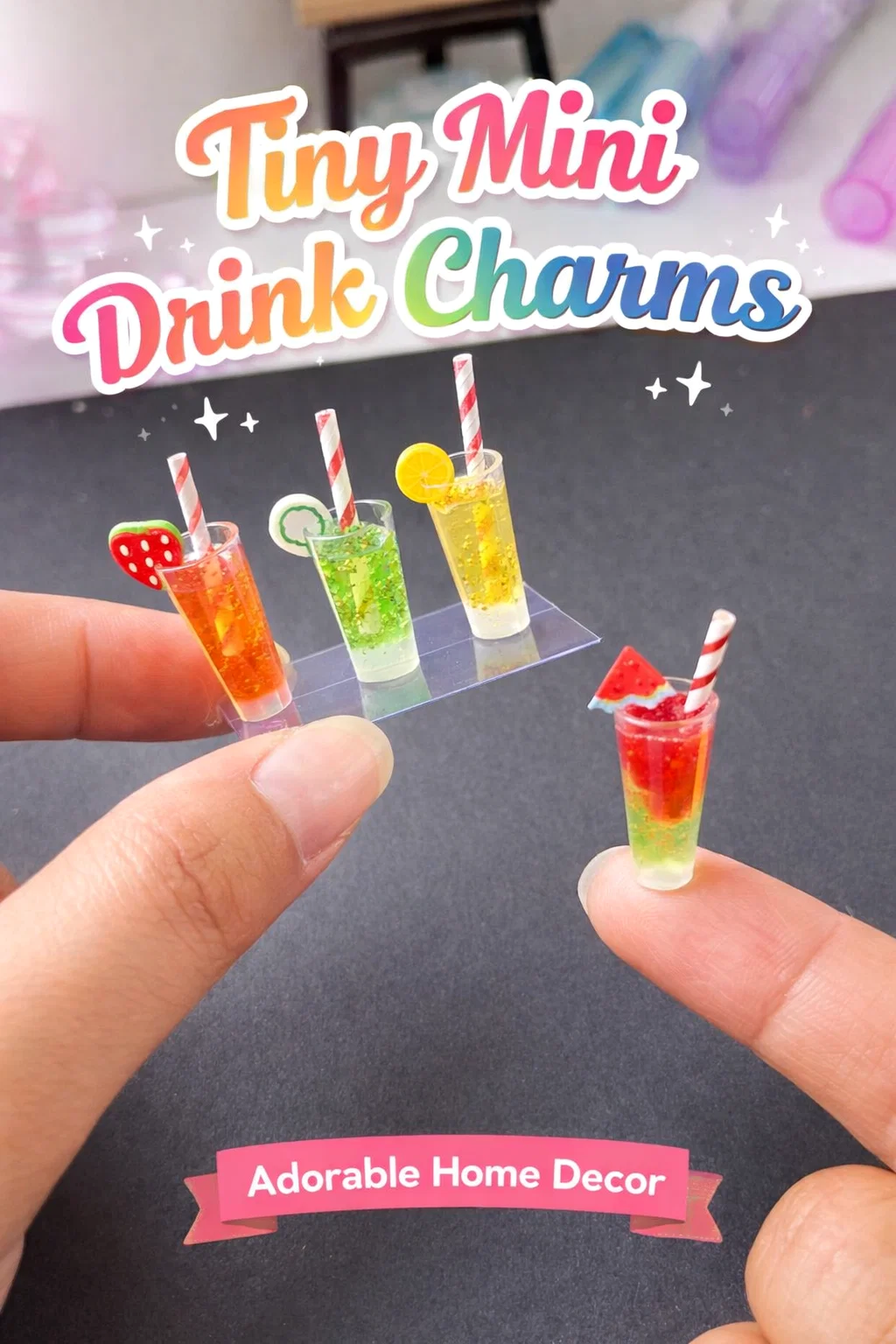
Step into the world of tiny wonders where creativity knows no bounds and the smallest details make the biggest impact. There is something inherently captivating about miniatures. They invite us to look closer, slow down, and appreciate the craftsmanship required to shrink reality into the palm of our hand. The vibrant, translucent miniature drinks seen in the image are a perfect example of how art and patience come together to create something magical. These tiny summer cocktails, complete with fruit slices and striped straws, represent a booming niche in the crafting world that blends realism with a sense of whimsical play.
The Fascinating Appeal of Miniature Art
Why are we so drawn to tiny things? Psychologists often suggest that miniatures provide a sense of control and a unique perspective on the world. When we look at a miniature scene, we are seeing a curated version of life that is manageable and perfect. For crafters, the appeal lies in the challenge. Replicating the texture of a strawberry or the bubbly carbonation of a soda at a scale of 1:12 requires a deep understanding of materials and a very steady hand. It is a form of artistic expression that rewards precision and rewards the viewer with a sense of wonder.
In recent years, the miniature community has grown significantly thanks to social media platforms. Artists can now share their process through macro photography and short-form videos, showing the world that these are not just toys, but sophisticated works of art. The tiny drinks featured here are a testament to that evolution, using modern materials like UV resin to achieve a level of realism that was nearly impossible a few decades ago.
Materials Needed for Crafting Miniature Drinks
If you are inspired to start your own collection of tiny refreshments, you will need a specific kit of materials. Crafting at this scale is different from traditional sculpture because you are often working with liquids that need to be cured into solids. Here are the essentials for creating realistic miniature beverages.
UV Resin and Epoxy Resin
Resin is the superstar of the miniature world. UV resin is particularly popular for small items because it cures in minutes under a UV lamp, allowing you to build layers quickly. It is clear, durable, and can be tinted to any color. For larger batches or thicker pours, epoxy resin is often used, though it requires a longer drying time of 24 to 48 hours.
Pigments and Dyes
To get that perfect sunset orange or lime green, you need high-quality resin dyes. A little goes a long way. Just a single drop can transform clear resin into a vibrant liquid. You can also use chalk pastels or alcohol inks to create gradients and depth within the glass, mimicking the way a real drink looks when ice or fruit is added.
Miniature Glassware
While some artists blow their own tiny glass, many use high-quality plastic or acrylic “blanks.” These are pre-formed miniature cups, wine glasses, and jars that provide the perfect foundation for your pour. The clarity of the container is vital for making the finished product look authentic.
Detailing Elements
The magic is in the accessories. Tiny fruit slices, known as fimo canes, are sliced thinly and placed inside the resin. Miniature straws can be made from painted plastic wires or even hollowed-out cocktail sticks. For the “ice,” many crafters use crushed clear plastic or specialized resin ice cubes that catch the light and add to the realism.
Step by Step Guide to Creating Tiny Resin Cocktails
Creating these pieces is a multi-stage process. You cannot simply fill the cup and be done. To achieve the depth seen in professional miniatures, you must work in layers.
Preparing the Base
Start by cleaning your miniature cups to ensure there is no dust or fingerprints. Mix a small amount of resin with your chosen color. If you want a “gradient” look, start with a lighter color at the bottom. Pour a small amount into the base of the cup and use a toothpick to pop any bubbles that might have formed.
Adding Ice and Fruit
Once your base layer is slightly set, add your tiny ice cubes and fruit slices. Positioning is key here. You want the fruit to look like it is floating naturally, not just sitting at the bottom. Using a pair of fine-tip tweezers, carefully lean a lemon slice against the side of the glass. Once the placement is perfect, hit it with a UV light to freeze everything in place.
The Final Pour and Straw Placement
Fill the rest of the cup with resin, leaving just a tiny bit of room at the top for the surface tension to create a realistic “liquid” look. This is the stage where you insert your straw. Since resin is thick, the straw should stay upright on its own, but you can use a small jig to hold it if necessary. Give the piece a final, long cure under the UV lamp to ensure it is rock hard and non-sticky.
Common Challenges in Miniature Crafting
Even for experienced artists, working on such a small scale presents unique hurdles. One of the most common issues is air bubbles. In a full-sized glass of water, a few bubbles are normal, but in a 1:12 scale miniature, one large bubble can look like a giant defect. Using a heat gun or a lighter to gently warm the resin before curing can help bring those bubbles to the surface to be popped.
Another challenge is scale consistency. It is easy to accidentally make a straw that would be the size of a telephone pole in real life. Constantly referencing a scale ruler or placing your work next to a standard object like a coin helps keep your proportions in check. This ensures that when the pieces are placed in a dollhouse or a dioramas, they look like they belong there.
Uses for Miniature Food and Drink Art
You might wonder what people do with these tiny creations once they are finished. The answer is surprisingly diverse. The most traditional use is for dollhouse collectors who take great pride in creating realistic “room boxes” or miniature homes. A kitchen scene looks far more lived-in when there is a cold drink sitting on the counter.
Beyond dollhouses, these miniatures are incredibly popular in the jewelry world. It is common to see these tiny drinks turned into whimsical earrings, charms for bracelets, or even unique necklaces. Their bright colors and high-gloss finish make them eye-catching accessories that start conversations.
Finally, there is the world of “flat lay” photography and content creation. Many people find the process of watching miniatures being made to be very relaxing. This has led to a massive audience for “ASMR” crafting videos where the focus is on the sounds of the tiny tools and the visual satisfaction of the resin curing. Collectors also use them as props for toy photography, creating realistic scenes for action figures or fashion dolls.
Tips for Displaying Your Tiny Collection
If you have a growing collection of tiny stuff, displaying it properly is essential to protect the pieces and show off the detail. Dust is the enemy of miniatures, so glass-fronted shadow boxes or acrylic display cases are highly recommended. These keep the items safe while allowing light to pass through the resin, making the colors pop.
Lighting is also a major factor. Because these items are often translucent, placing them in a spot where they can catch natural light or adding small LED strip lights to your display case will enhance the “liquid” effect. It makes the tiny cocktails look like they were just poured and are waiting to be enjoyed.
Conclusion: The Big World of Small Things
Miniature crafting is a journey of patience, creativity, and perspective. It reminds us that beauty can be found in the smallest of places and that with a little bit of resin and a lot of imagination, we can recreate the world in the palm of our hand. Whether you are looking for a new hobby that improves your focus or you simply want to add a bit of charm to your decor, the world of miniatures offers something for everyone. These tiny summer drinks are just the beginning. Once you start noticing the intricate details of the small world, you will find inspiration everywhere you look. So grab some resin, find your tweezers, and start creating your own tiny masterpiece today.