
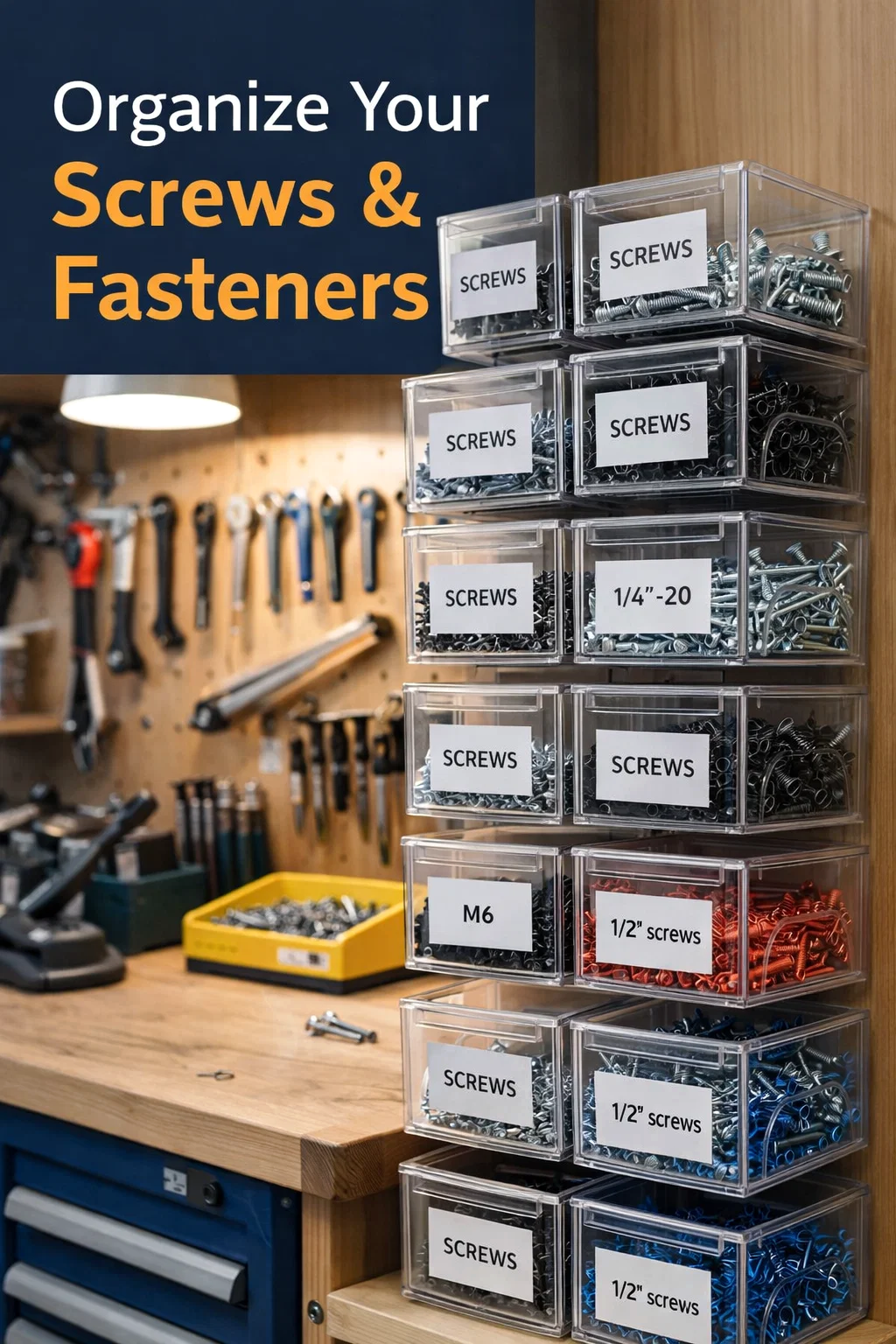
Walking into a cluttered workshop can feel like trying to solve a puzzle with half the pieces missing. We have all been there: you are in the middle of a creative flow, ready to drive that final screw, only to realize you have no idea where the specific size you need is buried. The image of a perfectly organized workstation, with clear bins and labeled compartments, is not just a dream for professional contractors. It is a reachable reality for any DIY enthusiast. Effective workshop storage is about more than just aesthetics; it is about reclaiming your time and reducing the mental friction that comes with a messy environment.
The Power of Visual Organization in the Shop
One of the most striking features of a high functioning workshop is the use of transparent storage. When you look at clear, wall mounted bins, you immediately notice how they transform the space. Instead of opaque drawers that hide their contents, clear bins provide an instant inventory check. You can see exactly how many 1.2 inch screws or red wall anchors you have left before you even start your project. This visual transparency prevents the frustration of running out of supplies mid task and saves you unnecessary trips to the hardware store.
Visual organization also helps with cognitive load. When every item has a dedicated, visible home, your brain does not have to work as hard to locate tools. This allows you to focus entirely on the craftsmanship at hand. By utilizing the vertical space on your walls, you move the small, fiddly items off your workbench and into a structured system, leaving your primary surface clear for the actual work.
Why Labeling is Your Best Friend
While clear bins are a massive step forward, labeling is what truly perfects the system. In the image, we see a mix of simple “SCREWS” labels alongside more specific designations like “M34” or “1.4 Inch.” This level of detail is crucial. Many fasteners look nearly identical to the naked eye, especially when comparing metric and imperial sizes. A difference of a few millimeters might not be visible through plastic, but it certainly matters when you are trying to thread a bolt.
Choosing the Right Labeling Method
There are several ways to approach labeling depending on how often your inventory changes. Permanent markers are quick, but they are difficult to change. Printed adhesive labels, as seen in the clear bins, offer a professional and clean look that is easy to read from a distance. If you frequently swap out your hardware, consider using small pieces of masking tape or even chalkboard paint patches. The key is consistency. When every bin follows the same labeling logic, your muscle memory takes over, and you find yourself reaching for the right bin without even thinking.
Optimizing Vertical Space for Small Parts
The beauty of the storage system shown is its verticality. In many workshops, the walls are underutilized, while the benches are overcrowded. By mounting rows of small bins, you utilize the “dead space” above your desk. This layout is particularly effective for small hardware like nuts, bolts, washers, and specialized anchors. It keeps them at eye level, which is ergonomically superior to bending down to rummage through low cabinets or heavy floor chests.
When setting up a vertical bin system, consider the frequency of use. Place your most commonly used fasteners at chest height, right within arms reach. Specialty items, like long lag bolts or rare automotive clips, can go higher up. This tiered approach ensures that your workflow remains fluid and that you are not constantly reaching or stretching for the items you use every single day.
The Impact of Color Coding and Categorization
Notice how the red and blue wall anchors stand out in the transparent bins. Beyond just looking organized, color coding is a powerful organizational tool. You can categorize your storage by material type or application. For instance, you might use one section of bins for woodworking screws, another for machine hardware, and a third for electrical components. If you use specific brands that color code their packaging, keeping that theme in your bins can help you identify the right part even faster.
Sorting by Project Type
Another advanced strategy is to organize bins by project type. If you do a lot of drywall work, having a cluster of bins that hold various sizes of anchors and drywall screws together makes sense. If you are into electronics, grouping your resistors, capacitors, and LEDs in a dedicated vertical column saves time. Organizing by “usage logic” rather than just “part type” can be a game changer for specialized makers.
Maintaining Your Workshop Storage System
Building a storage system is only half the battle; maintaining it is where the real discipline comes in. It is tempting to toss a stray screw back into the nearest bin when you are cleaning up at the end of the night. However, this is how “junk drawers” are born. To keep your workshop in top shape, you need a reset routine. At the end of every project, take five minutes to ensure every stray fastener has returned to its labeled home.
It also helps to have a “catch all” tray for things you are too tired to sort immediately. This keeps the workbench clear while preventing the organized bins from being contaminated with the wrong parts. Once a week, you can take that tray and quickly distribute the items back into their transparent bins. This small habit ensures that your shop remains a place of inspiration rather than a source of stress.
Essential Tools for an Organized Workspace
To achieve the level of organization seen in a professional setup, you might need a few specific supplies. High quality clear tilting bins are a favorite because they stay closed to keep dust out but provide easy access when pulled forward. A reliable label maker is also a worthwhile investment for any shop owner. Beyond the bins, consider a sturdy pegboard or a French cleat system for your larger hand tools. When the small parts are handled by bins and the large tools are handled by wall racks, the middle ground of your workshop remains a clean, open space for building.
Integrating Lighting for Visibility
Even the best storage system fails if you cannot see what is inside. Overhead shop lights are great, but adding localized LED strips or task lighting directly above your storage bins makes a world of difference. Proper lighting eliminates shadows, making labels easier to read and helping you distinguish between different metal finishes or thread pitches. It adds a level of polish to the room that makes you want to spend more time there.
Conclusion: The Reward of an Organized Shop
In the end, the goal of workshop storage is to support your creativity. Whether you are building furniture, fixing the car, or tinkering with electronics, a system like the one pictured provides the foundation you need. By investing time into clear bins, precise labeling, and vertical organization, you are investing in your future projects. You will work faster, make fewer mistakes, and enjoy the process significantly more when your environment is working with you instead of against you. Start small, pick one wall, and begin the journey toward the ultimate organized workshop today. You will be amazed at how much more you can accomplish when every screw has its place.