
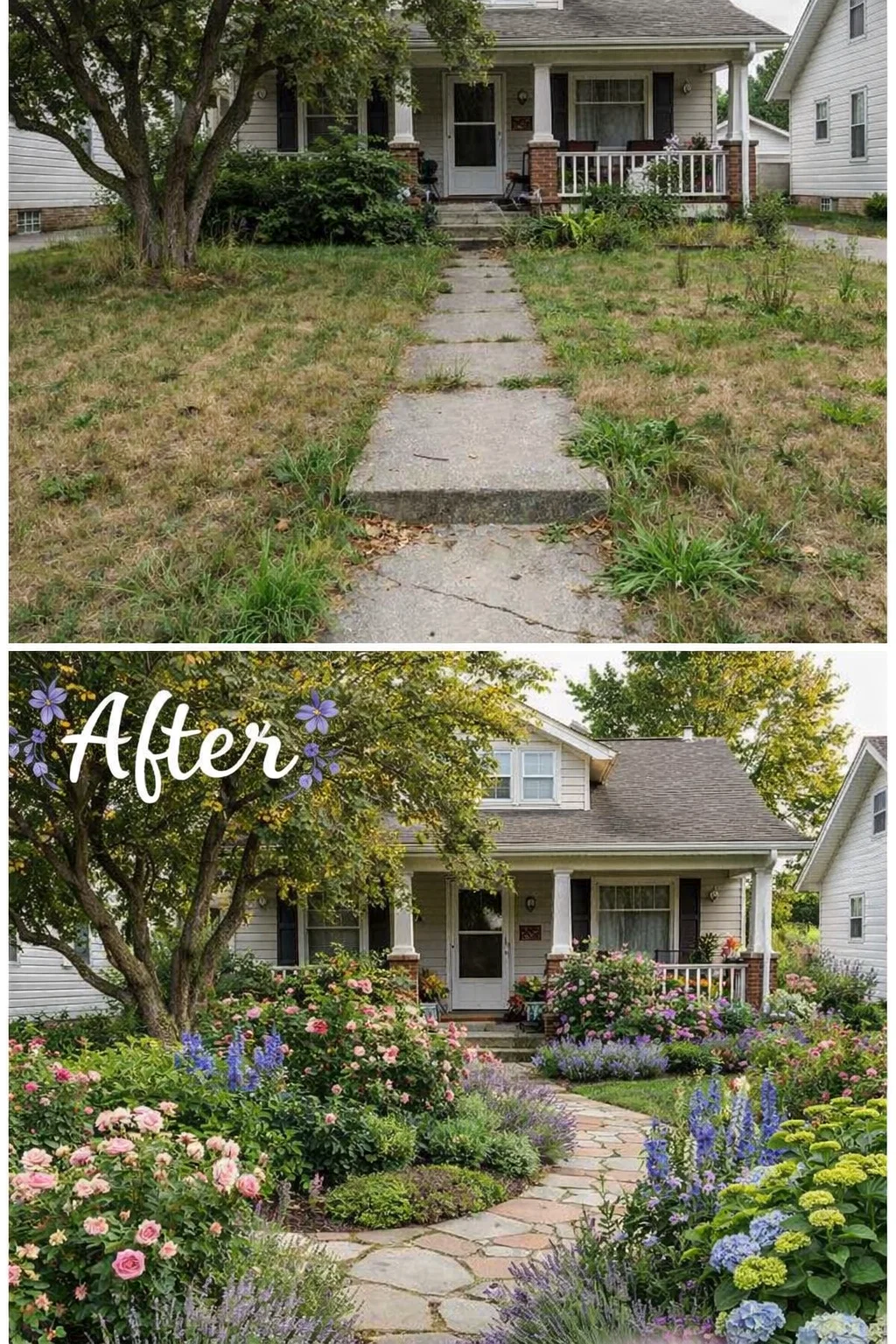
Transforming a neglected front yard into a breathtaking landscape is one of the most rewarding home improvement projects you can undertake. As seen in the striking transformation of a traditional suburban home, moving from a parched, weed-choked lawn to a flourishing cottage garden changes more than just the aesthetic of the property; it changes the entire energy of the neighborhood. A well-designed garden serves as a living welcome mat, inviting pollinators, increasing property value, and providing a daily dose of nature right at your doorstep. This guide explores how to achieve a high-impact landscape design that balances color, texture, and structure to create a professional-grade curb appeal makeover.
Evaluating Your Current Canvas
Before the first shovel hits the dirt, a deep analysis of your current space is essential. In many “before” scenarios, the primary issues are soil compaction, lack of defined pathways, and a monoculture of struggling grass. Traditional lawns require immense amounts of water and chemicals to stay green, often failing in high-heat or high-traffic areas. By evaluating the sun exposure and drainage of your front yard, you can determine which plants will thrive without constant intervention. Look at the architectural lines of your home. A straight, narrow concrete path often feels utilitarian and cramped. Replacing it with a wider, winding stone walkway immediately adds a sense of luxury and discovery to the entry experience.
Soil Preparation and Foundation
The secret to a lush, “after” photo garden lies beneath the surface. Most distressed lawns have depleted soil that lacks the nutrients required for vibrant perennials. Testing your soil pH is a great starting point, but generally, incorporating organic compost and high-quality topsoil will provide the boost your plants need. If you are removing a lawn, consider the “sheet mulching” method to kill off grass and weeds naturally while building soil health. This foundation ensures that your lavender, hydrangeas, and roses have the drainage and fuel necessary to produce the dense, overflowing bloom look seen in professional cottage designs.
The Power of Hardscaping in Landscape Design
Hardscaping refers to the non-living elements of your yard, such as paths, walls, and fences. It provides the skeleton of your garden. A common mistake in DIY landscaping is focusing solely on the plants while ignoring the transit zones. In a successful makeover, the transition from a cracked concrete sidewalk to a natural flagstone or pavers is a total game-changer. Natural stone offers organic shapes and earthy tones that blend seamlessly with greenery, whereas gray concrete can feel cold and detached.
Creating a Flowing Walkway
A curved path is visually more appealing than a straight line because it mimics the natural flow of the environment. When designing your walkway, make it wide enough for two people to walk side-by-side. This creates a generous, “estate” feel. Use large, flat stones with smaller gravel or creeping groundcovers like thyme in the crevices. This technique softens the edges of the hardscaping and makes the path look like it has been there for decades. The stones also act as a heat sink, which can benefit certain sun-loving plants nearby.
Selecting the Perfect Plant Palette
To achieve that overflowing, romantic garden aesthetic, you need a diverse plant palette that emphasizes height, color, and seasonality. The visual impact of a garden comes from the contrast between different species. In the featured transformation, the use of cool tones like purple lavender and bright blue delphinium creates a serene yet vibrant atmosphere. These are balanced by the soft pinks of English roses and the lush whites of hydrangeas.
Tall Perennials for Vertical Interest
Verticality is key to preventing a garden from looking flat and two-dimensional. Delphiniums and Foxgloves are classic choices for adding height. Their tall spikes of flowers draw the eye upward and provide a backdrop for mid-sized shrubs. When planting, place your tallest specimens toward the back of the bed or near the house, and stagger the heights as you move toward the walkway. This creates a tiered effect that feels natural and professionally curated.
The Role of Fragrance and Texture
A garden should engage more than just the eyes. Incorporating sensory plants like Lavender or Catmint along the edges of a path ensures that every time you walk to your door, you are greeted by a relaxing aroma. Texture is equally important. Mixing the fine, needle-like foliage of herbs with the broad, bold leaves of Hostas or Hydrangeas creates visual “weight” in the garden. This variety keeps the landscape interesting even when the plants are not in full bloom.
Sustainable Practices for a Thriving Garden
Modern landscape design is moving away from high-maintenance lawns and toward “xeriscaping” or eco-friendly gardening. By choosing native plants or species that are well-adapted to your climate, you reduce the need for supplemental watering and pesticides. Mulching is perhaps the most important maintenance step. A thick layer of wood chips or bark mulch suppresses weeds, retains moisture in the soil, and slowly breaks down to feed your plants. It also gives the garden a finished, clean look that highlights the colors of your flowers.
Inviting Wildlife and Pollinators
A flourishing garden is a functional ecosystem. By planting a variety of flowering perennials, you provide food and habitat for bees, butterflies, and hummingbirds. This biodiversity is not only good for the planet but also adds movement and life to your yard. Watching a monarch butterfly land on a lavender sprig is a far more rewarding experience than looking at a patch of brown grass. Choosing plants with different blooming schedules ensures that your yard remains a haven for wildlife from early spring through late autumn.
Maintenance Tips for Long-Term Beauty
While a cottage garden looks wild and effortless, it does require intentional care to stay looking its best. Deadheading, which is the process of removing spent flowers, encourages the plant to produce more blooms rather than putting energy into seed production. This keeps your roses and delphiniums looking fresh for a longer period. Pruning is also necessary to keep aggressive growers from overtaking smaller plants. Every spring, take the time to edge your garden beds with a sharp spade. This simple task creates a crisp line between your garden and whatever lawn remains, providing that “professional” finish that makes a makeover stand out.
Automating Your Irrigation
To protect your investment, consider installing a drip irrigation system. Unlike traditional sprinklers that lose a lot of water to evaporation and can encourage fungal growth on leaves, drip lines deliver water directly to the roots. This is more efficient and ensures that your plants stay hydrated during the hottest months of the summer. Setting this on a timer means your garden stays lush even if you go on vacation or have a busy week.
Conclusion: The Value of a Beautiful Entry
Investing in your front yard landscape is about more than just “curb appeal” for a future sale. It is about creating a space that brings joy to your daily life and pride to your home ownership. The journey from a barren lawn to a flowering sanctuary requires planning and effort, but the result is a living piece of art that grows more beautiful with each passing year. By focusing on quality hardscaping, a diverse plant selection, and sustainable maintenance, you can turn any “before” into a stunning “after.” Whether you are starting with a small patch of dirt or a sprawling yard, let the inspiration of a cottage garden guide you toward a greener, more beautiful home.