
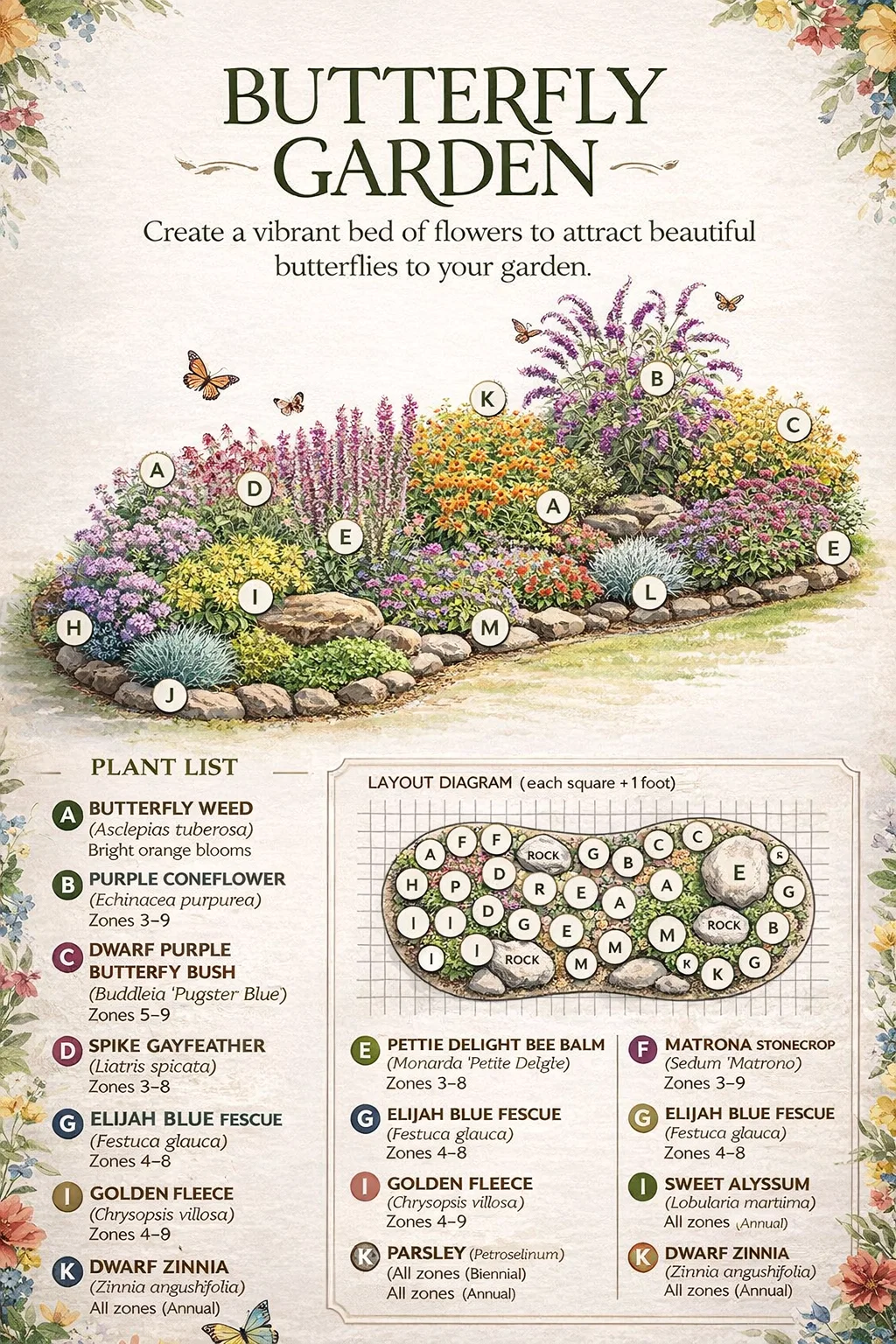
Creating a vibrant, living landscape starts with a well-thought-out plan. If you have been looking for a way to transform your front yard into a sanctuary for nature, a dedicated butterfly garden is one of the most rewarding projects you can undertake. This specific island bed design focuses on a mix of heights, textures, and blooming schedules to ensure that your garden remains a flurry of activity from late spring through the first frost. By selecting native and pollinator-friendly perennials, you are not just planting flowers; you are building an ecosystem that supports local biodiversity while significantly boosting your home’s curb appeal.
The Foundations of a Successful Butterfly Garden
When planning your front flower beds, the first step is understanding the needs of your winged visitors. Butterflies are cold-blooded insects that require plenty of sunlight to warm their wings for flight. This island bed layout is designed for full sun exposure, which is typical for many front lawns. Beyond the light, butterflies look for shelter from the wind and a variety of nectar sources. This plan uses a tiered approach, placing taller shrubs like the Nanho Purple Butterfly Bush in the center to act as an anchor and a windbreak, while lower-growing plants like Sweet Alyssum and Dwarf Zinnia frame the edges.
Soil preparation is another critical factor. Most of the plants listed in this guide, such as Black-Eyed Susans and Purple Coneflowers, are incredibly hardy, but they perform best in well-draining soil. Before you start digging, it is a good idea to amend your soil with organic compost. This provides a slow-release nutrient boost that helps your perennials establish deep, healthy root systems. A healthy root system is the secret to a garden that can withstand the heat of mid-summer and return even stronger the following year.
Choosing the Right Plant Palette
The beauty of this specific garden plan lies in its diversity. A monoculture of just one type of flower might look pretty for a week, but it will not provide the continuous support butterflies need. By combining different species, you cater to various types of pollinators and ensure a long season of interest. The plant list for this layout includes:
- Butterfly Weed (Asclepias tuberosa): This is the gold standard for any butterfly garden. It is the primary host plant for Monarch larvae, providing essential nutrients for caterpillars.
- Purple Dome Aster: These provide a massive burst of color in late summer and autumn when many other flowers are beginning to fade.
- Spike Gayfeather (Liatris spicata): Known for its unique vertical wands of purple flowers, this plant adds architectural interest and is a magnet for butterflies and bees alike.
- Matrona Stonecrop: This succulent-like perennial offers thick, fleshy leaves and flat clusters of flowers that serve as perfect landing pads for insects.
Designing for Visual Impact and Curb Appeal
Front flower beds are the first thing people notice when they drive by your home. An island bed, which is accessible and viewable from all sides, creates a professional, landscaped look that feels more intentional than a simple strip of flowers along the foundation. This layout uses a kidney-bean shape, which feels more organic and fluid than sharp rectangles or circles. The curves naturally lead the eye around the garden, making the space feel larger and more integrated with the rest of the lawn.
Color coordination is also key to high-end design. The palette suggested here focuses on complementary shades of purple, gold, and pink. The deep violet of the Butterfly Bush contrasts beautifully with the bright yellow of the Black-Eyed Susans and the Goldenrod. These colors are not only aesthetically pleasing to humans but are also highly visible to butterflies, who are particularly attracted to purple, red, and yellow hues.
Incorporating Texture and Year-Round Interest
While the flowers are the stars of the show, a truly great garden design incorporates foliage and texture to keep things interesting even when nothing is in bloom. The inclusion of Elijah Blue Fescue brings a silvery-blue, grassy texture that breaks up the broad leaves of the flowering perennials. Similarly, the rocks indicated in the layout diagram serve two purposes. Visually, they provide a sense of permanence and “weight” to the bed. Functionally, they give butterflies a flat, warm surface to sun themselves on cool mornings.
Do not forget the power of annuals in your front flower beds. While perennials are the backbone of the garden, annuals like Dwarf Zinnias and Parsley fill in the gaps quickly. Parsley is an often-overlooked addition to ornamental beds, but it serves as a vital food source for Black Swallowtail caterpillars. Mixing herbs with flowers is a hallmark of a smart, functional landscape design.
Step-by-Step Planting and Maintenance
Once you have your plants and your soil is ready, it is time to follow the layout diagram. This plan uses a grid system where each square represents one square foot. This is a foolproof way to ensure you do not overcrowd your plants. It might be tempting to plant everything closer together for an instant full look, but perennials need room to breathe and grow. Overcrowding can lead to poor air circulation, which increases the risk of powdery mildew and other fungal diseases.
Start by placing your “anchor” plants first. In this case, that would be the Butterfly Bush and the larger clusters of Coneflowers. Once the big pieces are in place, you can tuck in the smaller “fillers” like the Sweet Alyssum and the Stonecrop. After planting, give everything a deep soak. Mulching the bed with two to three inches of wood chips or shredded bark will help retain moisture, suppress weeds, and give the bed a finished, clean appearance.
Sustainable Gardening Practices
When your goal is to attract wildlife, your maintenance routine needs to be eco-friendly. This means avoiding synthetic pesticides at all costs. Even “targeted” sprays can be harmful to the very caterpillars and butterflies you are trying to attract. Instead, rely on the biodiversity of your garden to manage pests. Ladybugs, lacewings, and birds will eventually find your garden and help keep aphid populations in check.
Deadheading, or removing spent flowers, is another important task. For plants like Zinnias and Black-Eyed Susans, removing old blooms encourages the plant to produce more flowers. However, toward the end of the season, you may want to leave some seed heads standing. Birds like finches love to snack on coneflower seeds during the winter, and the dried stalks provide interest in an otherwise dormant landscape.
Conclusion: A Garden That Gives Back
Building a butterfly garden in your front flower beds is a project that yields dividends far beyond simple aesthetics. Every time you look out your window and see a Monarch or a Swallowtail dancing among the blooms, you will feel a sense of pride knowing you created that habitat. This specific plan takes the guesswork out of landscaping, providing a balanced, colorful, and ecologically sound blueprint for any homeowner.
Whether you are a seasoned gardener or a beginner picking up a spade for the first time, following a structured layout like this ensures success. You are creating a welcoming entrance for your guests and a vital pit stop for nature’s most beautiful travelers. Grab your gloves, head to the nursery, and start bringing this lush island bed to life. Your front yard, and the local butterfly population, will thank you for it.