
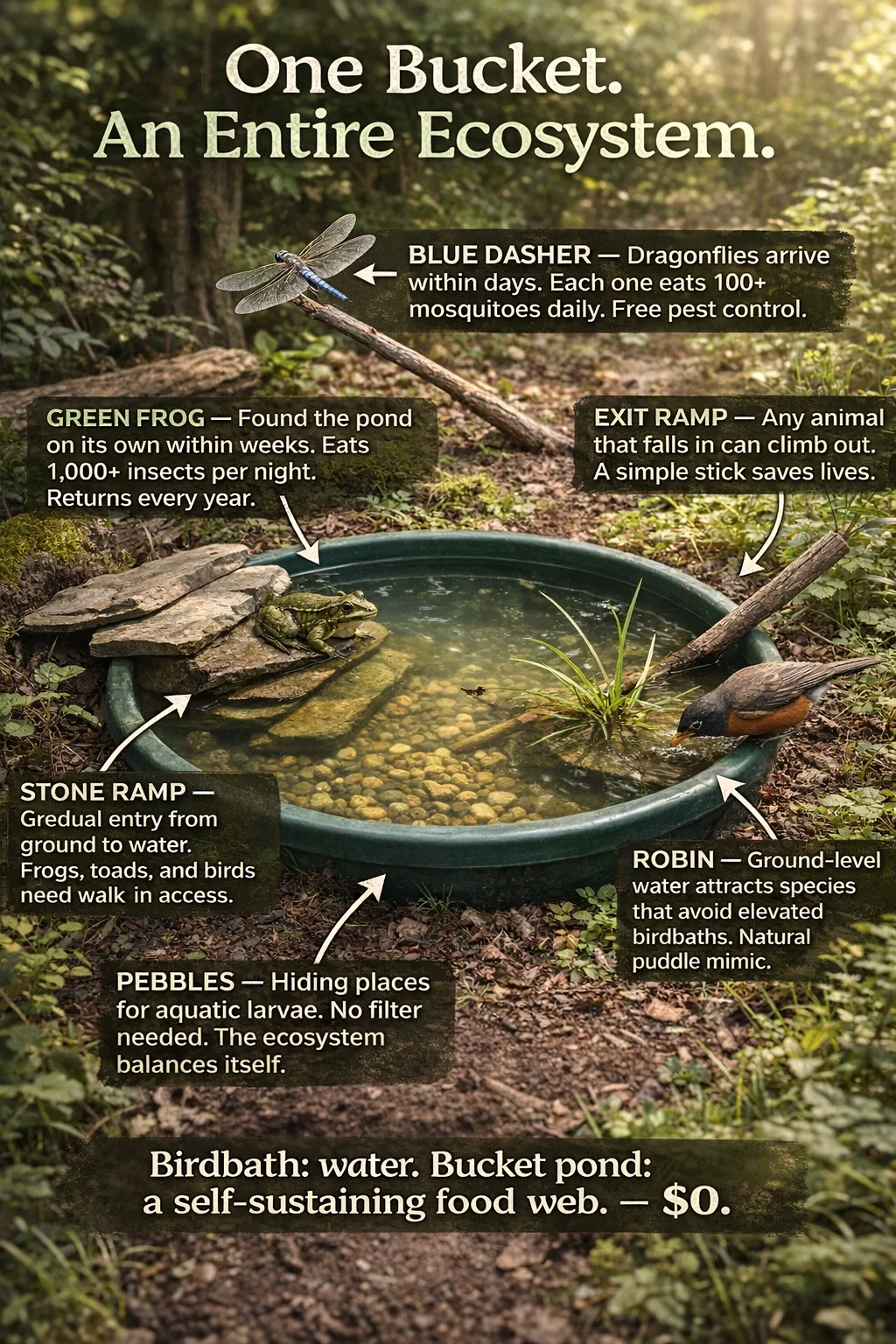
Creating a thriving wildlife sanctuary does not require a massive plot of land or a professional landscaping crew. In fact, you can kickstart a complete biological food web using nothing more than a simple container and a few natural materials found right in your own backyard. The concept of a bucket pond is a revolutionary approach to garden design that prioritizes ecological function over high-maintenance aesthetics. By mimicking the natural puddles and shallow depressions found in the wild, you invite a diverse array of species to take up residence, providing you with free pest control and hours of nature watching.
The Magic of the Micro Pond Ecosystem
While a traditional birdbath is a wonderful addition to any garden, it often serves a singular purpose: providing drinking water. A bucket pond, or a mini patio pond, functions as a living, breathing ecosystem. When you set a container at ground level and fill it with life-supporting elements, you are doing more than just quenching thirst. You are creating a habitat for aquatic larvae, a breeding ground for beneficial insects, and a reliable home for amphibians that play a critical role in maintaining the health of your garden.
The beauty of this project lies in its simplicity and its cost. As seen in the image, a successful ecosystem can be established for zero dollars using repurposed items. This accessibility makes it an ideal project for seasoned gardeners and beginners alike. Once the water is in place and the access points are established, nature takes over the heavy lifting. Within days, you will notice the first pioneers arriving to claim their new territory.
Essential Components of a Functional Bucket Pond
To ensure your mini pond remains healthy and safe for wildlife, there are several key features you must include. These components work together to maintain water quality and provide safe entry and exit for the creatures that visit.
The Importance of the Stone Ramp
Not every creature is a graceful diver. Frogs, toads, and many bird species prefer to walk into the water at a gradual pace. By stacking flat stones or slate to create a submerged staircase, you provide a stable platform for animals to transition from the ground into the water. This is particularly important for juvenile amphibians that may not yet have the strength to leap over high container edges. The stones also serve as basking spots where cold-blooded visitors can soak up the sun and regulate their body temperature.
The Life-Saving Exit Ramp
One of the most overlooked aspects of water features is the danger of drowning for non-aquatic animals. Small mammals or even larger insects can accidentally fall into a deep container and find themselves unable to climb the slippery walls. A simple stick or a long piece of driftwood acts as a vital exit ramp. By leaning a branch from the bottom of the pond to the outer rim, you provide a ladder that saves lives. This simple addition ensures your pond remains a sanctuary rather than a trap.
The Role of the Pebble Layer
At the bottom of your bucket pond, a thick layer of river pebbles or gravel serves a dual purpose. First, it provides a massive surface area for beneficial bacteria to grow. These bacteria act as a natural filter, breaking down waste and keeping the water clear without the need for expensive pumps or chemicals. Second, the nooks and crannies between the pebbles provide essential hiding spaces for aquatic larvae and small crustaceans. These tiny organisms are the foundation of your pond’s food web.
Attracting Nature’s Top Pest Controllers
When you build a balanced ecosystem, you are essentially hiring a full-time security team for your garden. The visitors attracted to a ground-level pond are some of the most effective predators in the insect world.
Dragonflies: The Aerial Guardians
Species like the Blue Dasher are often the first to arrive at a new water source. Dragonflies are incredible hunters, with some individuals consuming over a hundred mosquitoes in a single day. By providing a perch near the water, such as a tall stick or a surrounding plant, you give these “mosquito hawks” a place to survey their kingdom. They will lay their eggs in your pond, and their aquatic larvae will continue the hunt underwater, eating mosquito larvae before they ever get a chance to fly.
Frogs and Toads: The Night Shift
Green frogs and common toads are the unsung heroes of the backyard. A single frog can eat over a thousand insects in a single night, targeting everything from beetles to slugs that might otherwise devour your vegetable garden. Because they have permeable skin, amphibians need consistent access to moisture. A ground-level pond provides the perfect humid environment for them to thrive. Once a frog finds a reliable pond, it will often return year after night, becoming a permanent resident of your landscape.
Planting Your Mini Pond for Success
Vegetation is the final piece of the puzzle. Adding a few native aquatic plants helps to oxygenate the water and provides even more cover for wildlife. You do not need a lot of space for this. A small clump of sedge, a miniature water lily, or some floating duckweed can make a world of difference. These plants absorb excess nutrients, preventing algae blooms and keeping the water looking fresh. Furthermore, the foliage offers birds a sense of security, making them more likely to visit for a bath.
Choosing Ground-Level Placement
Positioning your pond at ground level is strategic. Many species, like robins and thrushes, are naturally inclined to look for water on the forest floor. These birds may feel exposed at an elevated birdbath but will happily splash around in a “natural puddle” surrounded by leaf litter and garden plants. Choose a spot that receives a mix of sun and shade to prevent the water from overheating during the peak of summer.
Maintaining Your Ecosystem with Minimal Effort
The best part of a bucket pond is that it is designed to be self-sustaining. Unlike large koi ponds that require constant testing and expensive equipment, a mini pond balances itself over time. During dry spells, you may need to top off the water level to ensure the ramps remain accessible. Occasionally, you might need to clear out fallen leaves if they begin to clog the surface, but a little organic matter is actually good for the larvae living at the bottom.
If you are concerned about mosquitoes, remember that a healthy pond attracts the very predators that eat them. However, you can always add a “mosquito dunk” which contains a natural bacterium that kills larvae without harming birds, frogs, or pets. Over time, the dragonflies and frogs will establish a natural equilibrium, and you will find that your garden has fewer pests than ever before.
Observing the Cycle of Life
Having a bucket pond offers a front-row seat to the wonders of biology. You can watch the transformation of tadpoles into frogs, observe the intricate mating dances of dragonflies, and see the local bird population grow more vibrant. It is a powerful reminder that even a small action can have a massive impact on the environment. By providing just one bucket of water, you are supporting hundreds of lives and contributing to the biodiversity of your neighborhood.
Conclusion: Start Your Backyard Revolution Today
Building a wildlife pond is a rewarding project that proves you do not need a big budget to make a big difference. By focusing on the needs of local species and providing safe, accessible habitat, you transform your backyard into a living classroom and a sanctuary for nature. Whether you are looking to reduce the mosquito population, attract beautiful birds, or simply enjoy the peaceful presence of a water feature, the bucket pond is the perfect solution. Grab an old container, some stones from the garden, and a sturdy stick, and start building your own entire ecosystem today. Your local wildlife will thank you for it, and you will enjoy a more vibrant, healthy garden for years to come.