
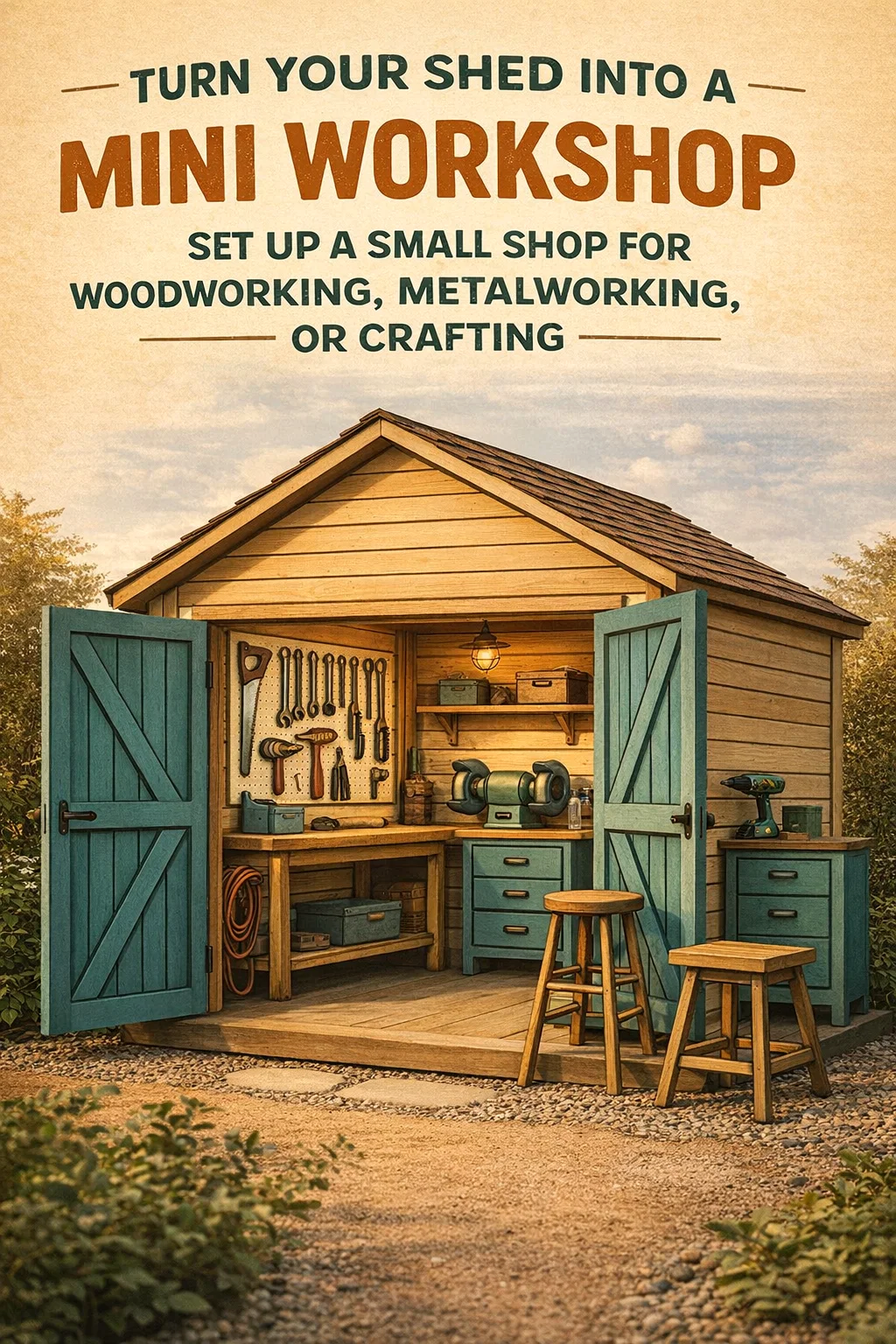
Transforming a standard backyard shed into a functional mini workshop is one of the most rewarding projects a maker can undertake. There is something profoundly satisfying about carving out a dedicated space for your craft, whether you are interested in the fine details of woodworking, the industrial challenge of metalworking, or the diverse world of general crafting. The beauty of a mini workshop lies in its efficiency. You do not need a massive industrial garage to produce high quality work. With the right layout, a few essential tools, and a smart approach to organization, even the smallest garden shed can become a powerhouse of productivity and creativity.
The Philosophy of the Small Scale Workspace
The concept of the mini workshop is built on the idea that constraints actually breed creativity. When you have a limited amount of square footage, every single inch must be intentional. This forces you to evaluate your workflow and prioritize the tools that truly matter. Unlike larger shops where clutter can hide in distant corners, a small shed demands order. This discipline often leads to a more focused working environment where you spend less time searching for misplaced wrenches and more time actually building.
A well designed small shop feels like a cockpit. Everything should be within reach or easily accessible with a single step. By centering your workspace around a sturdy workbench and utilizing the vertical real estate of your walls, you create a hub that supports your passion without the overhead and maintenance of a massive facility. It is about creating a sanctuary where the outside world disappears and the project in front of you takes center stage.
Assessing Your Shed for a Workshop Conversion
Before you start bolting pegboards to the walls, you need to ensure your foundation is solid. Not every shed is immediately ready for heavy duty tasks. Start by checking the flooring. If you plan on installing a heavy workbench or stationary power tools like a drill press or a grinder, the floor must be level and capable of supporting significant weight. Many pre fabricated wooden sheds benefit from an extra layer of 3/4 inch plywood to stiffen the floor and reduce vibration.
Lighting is the next critical factor. Most sheds come with a single small window or no light at all. For detailed work, you need bright, even illumination. LED shop lights are an excellent choice because they provide high output with very low energy consumption and minimal heat. Position your primary light source directly over your main workbench to eliminate shadows while you work. If possible, adding a window or keeping the double doors open during the day can provide natural light that reduces eye strain and makes the space feel much larger.
Power and Ventilation Requirements
A workshop without power is just a storage unit. Depending on your needs, you might need anything from a heavy duty extension cord to a fully permitted sub panel. For basic crafting and light woodworking, a few dedicated circuits for your tools and vacuum system will suffice. However, if you are venturing into metalworking with welders or heavy duty lathes, you will need to consult with an electrician to ensure your shed can handle the load safely.
Ventilation is often overlooked but is vital for health and safety. Woodworking creates fine dust, metalworking produces fumes and sparks, and many crafts involve glues or finishes with strong odors. A simple exhaust fan or even a strategically placed floor fan can keep the air moving. For those in extreme climates, consider adding basic insulation and a small heater or portable air conditioner to ensure the workshop remains a comfortable place to spend time year round.
The Heart of the Shop: The Workbench
Your workbench is the most important piece of furniture in the mini workshop. It is where the magic happens. For a small space, a heavy, stationary bench is often better than a light, flimsy one. Weight provides stability, which is essential when you are sawing, chiseling, or hammering. If space is at a premium, consider a fold down workbench that can be tucked against the wall when not in use, or a mobile bench on heavy duty locking casters.
The surface of your bench should be durable. Thick plywood or a laminated hardwood top are popular choices for woodworkers. If metalworking is your primary focus, a steel topped bench is necessary to handle heat and heavy impacts. Regardless of the material, make sure the height is comfortable for your stature. A bench that is too low will cause back pain, while one that is too high will make it difficult to apply leverage during physical tasks.
Mastering Vertical Storage and Tool Organization
In a mini workshop, the walls are your best friends. Floor space is precious, so you should aim to get as much as possible off the ground. The classic pegboard remains a gold standard for a reason. It is incredibly versatile and allows you to rearrange your tool layout as your collection grows. Grouping tools by task is a smart way to stay organized. Keep your measuring and marking tools together, your striking tools in another section, and your pliers and wrenches in their own dedicated spot.
Custom tool racks are another great way to maximize space. You can build simple wooden holders for your chisels, screwdrivers, and saws. This not only keeps them organized but also protects the sharp edges of your tools from dulling. For smaller items like screws, nails, and drill bits, use clear bins or magnetic strips. Being able to see your inventory at a glance prevents the frustration of running out of supplies in the middle of a project.
Utilizing Ceiling Space
Do not forget to look up. The rafters of a shed are perfect for storing long stock like lumber, PVC pipes, or metal rods. Simple overhead racks can keep these bulky items out of your way until you need them. You can also hang lightweight items like ladders or extension cords from hooks in the ceiling. Just be mindful of head clearance so you aren’t constantly bumping into your supplies as you move around the shop.
Tailoring the Space for Woodworking
If woodworking is your primary hobby, your mini workshop needs to accommodate specific workflows. A woodworking shop centers around the management of wood dust and the movement of long boards. A miter saw station is a frequent centerpiece, providing a dedicated spot for crosscutting lumber to length. In a small shed, you can build a bench that incorporates the miter saw at the same level as the work surface, effectively using the rest of the bench as outfeed support.
Dust collection is non negotiable for woodworkers. In a confined space, sawdust can quickly become overwhelming and hazardous. A shop vac with a cyclone separator is a compact and effective solution for a mini workshop. You can run hoses to your primary tools to catch dust at the source. This keeps your air cleaner and your finished projects free of debris.
Equipping the Metalworking Mini Shop
Metalworking introduces a different set of challenges, primarily related to fire safety and heavy equipment. Unlike woodworking, metalworking involves sparks. Your shop should be cleared of flammable materials, and you should have a fire extinguisher easily accessible at all times. The floor should ideally be concrete or protected by a fire resistant mat.
A bench grinder is a staple for metalworkers, used for sharpening tools, cleaning up welds, and shaping metal. In a small shop, mounting the grinder on a dedicated pedestal or a small cabinet with drawers for grinding wheels and wire brushes is a smart move. If you are using a welder, ensure you have a dedicated welding table and proper eye protection. Because metal is heavy, storing it requires robust shelving that can handle the weight without bowing.
The Versatile Crafting Hub
For the general crafter, the mini workshop is a place of endless variety. You might be painting one day, leatherworking the next, and assembling electronics the day after. Versatility is the name of the game here. A large, flat work surface with a cutting mat is essential. Modular storage works best for crafters, as the types of materials you use can change frequently.
Consider incorporating a “clean zone” and a “dirty zone.” The dirty zone is for tasks like sanding or gluing, while the clean zone is for assembly and finishing. This helps prevent cross contamination between projects. Lighting is especially important for detailed craft work, so consider adding an adjustable desk lamp with a magnifying glass for intricate tasks.
Creating an Inspiring Atmosphere
While functionality is the priority, your workshop should also be a place where you enjoy spending time. Personal touches can make the space feel more inviting. A few posters, a small radio for music or podcasts, and perhaps a chalkboard for sketching out ideas can transform a utility shed into a personal studio. Keeping the space clean and organized is the best way to maintain a positive atmosphere. Spend ten minutes at the end of every session tidying up, and you will always be greeted by a welcoming environment the next time you step inside.
Summary of the Mini Workshop Journey
Building a mini workshop is an evolving process. Your shop will likely look very different a year from now than it does today. As you take on new projects, you will discover what works and what doesn’t. You might realize that you need more light over your vise, or that your lumber rack would be better positioned on the opposite wall. Embrace this evolution. The mini workshop is not just a place where you build things; it is a project in itself.
The goal is to create a space that removes the barriers between you and your creativity. By outfitting your shed with intentionality and focusing on smart storage, you create a professional grade environment on a domestic scale. Whether you are turning a bowl, welding a bracket, or crafting a gift, your mini workshop provides the foundation for excellence.
Ultimately, the size of the shop does not determine the quality of the work. The passion, skill, and organization you bring to the space are what truly matter. So, take that first step, clear out the old lawnmower and the rusted garden tools, and start building the workshop you have always dreamed of. Your future projects are waiting for a place to be born.