
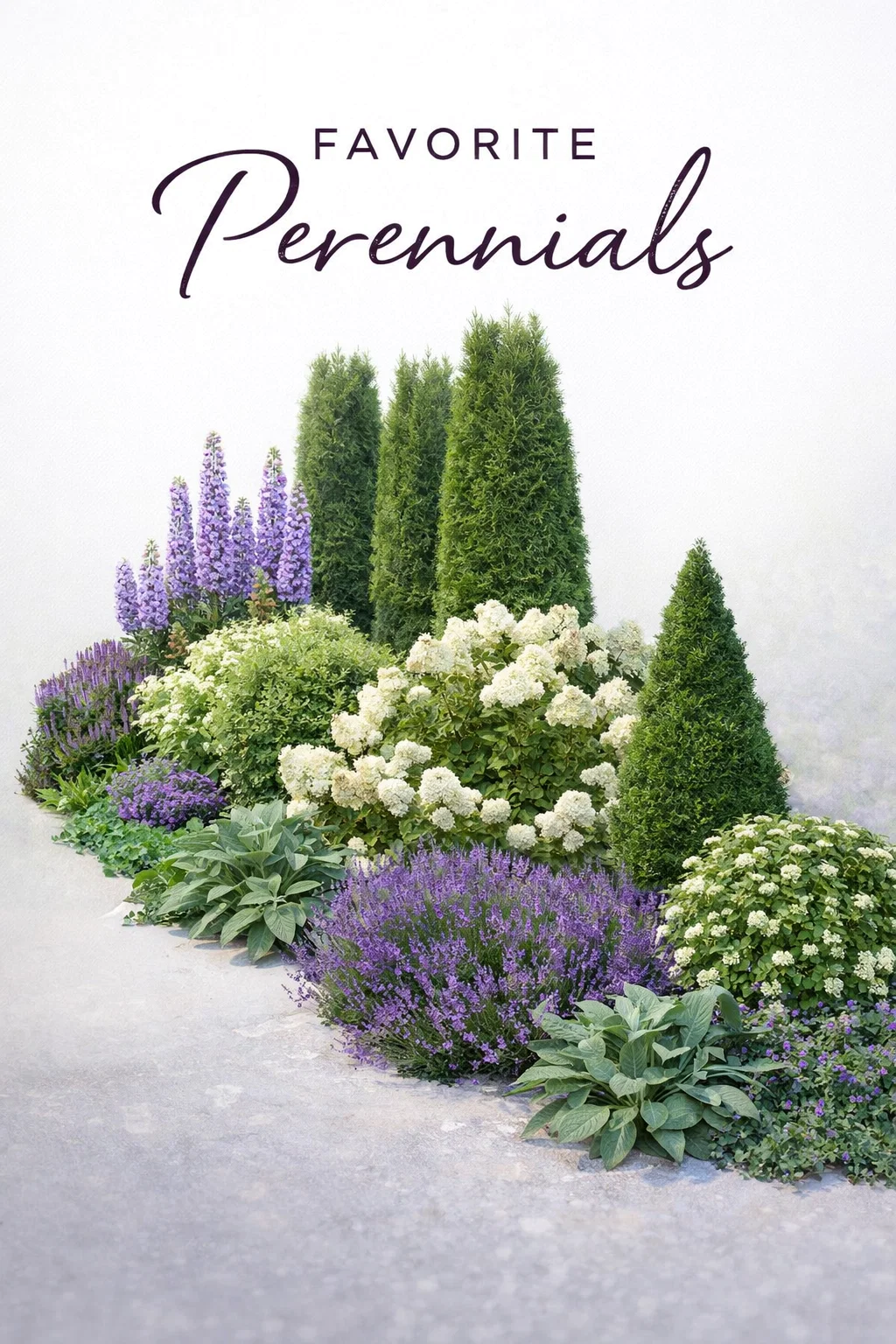
Creating a beautiful, cohesive garden landscape can often feel like a daunting task, especially when you are staring at a blank patch of dirt and trying to imagine how different plants will look together as they mature. The secret to a professional looking garden lies in the layering of textures, the contrast of colors, and the strategic placement of heights. In the image provided, we see a masterclass in garden composition, showcasing a balanced mix of evergreen structure, perennial blooms, and ground-covering foliage. This design is not just aesthetically pleasing but also serves as a functional blueprint for a low maintenance, multi-seasonal garden bed that offers visual interest throughout the year.
Understanding the Foundation: Structural Evergreens
Every successful garden bed needs a “backbone” to provide structure, especially during the winter months when deciduous plants lose their leaves. In this layout, the Thuja occidentalis (often referred to as Thuja Western) plays a critical role. The “Columna” and “Timi Tim” varieties offer verticality and height, acting as a green backdrop that makes the colors of the flowering plants pop. These evergreens are prized for their narrow, upright growth habits, making them perfect for smaller yards or for creating privacy screens without taking up too much horizontal space.
Complementing these tall pillars is the “Konyka” spruce, likely a reference to the Dwarf Alberta Spruce (Picea glauca ‘Conica’). Its tight, conical shape provides a formal, architectural element to the garden. By placing these structural plants at the back or center-left, the design establishes a sense of permanence and depth. They serve as the anchor for the more fluid and changing perennials situated in the foreground.
The Magic of Summer Blooms: Hydrangeas and Phlox
To bring life and vibrance to the landscape, the design incorporates heavy hitting flowering shrubs and perennials. The Hydrangea paniculata is a standout feature in this arrangement. Unlike traditional mophead hydrangeas, panicle hydrangeas are incredibly hardy and produce large, cone shaped flower clusters that often transition from creamy white to pink or lime green as the season progresses. They add a sense of lushness and luxury to the middle layer of the garden bed.
Adding to this floral display is the Phlox paniculata, a classic garden favorite known for its clusters of fragrant flowers. Phlox is excellent for attracting pollinators like butterflies and hummingbirds, adding movement and ecological value to your backyard. By pairing the white tones of the hydrangea with the softer hues of the phlox, the design maintains a sophisticated color palette that feels bright and airy rather than cluttered.
Vertical Accents with Delphiniums
While the Thuja provides evergreen height, the Delphinium hybrid adds a seasonal “spike” of color. Delphiniums are beloved for their tall, regal flower stalks, usually in shades of blue, purple, or white. In this layout, they are placed behind the shorter perennials to draw the eye upward and create a tiered effect. This layering technique ensures that every plant is visible and that the garden feels full and lush from top to bottom.
Texture and Contrast: The Role of Foliage Plants
A common mistake in garden design is focusing solely on flowers. However, flowers are often fleeting. To keep a garden looking great all season, you must incorporate interesting foliage. This design utilizes “Spotted Lamb” (likely Spotted Dead Nettle or Lamium maculatum) and various hostas to provide a carpet of texture at the base.