
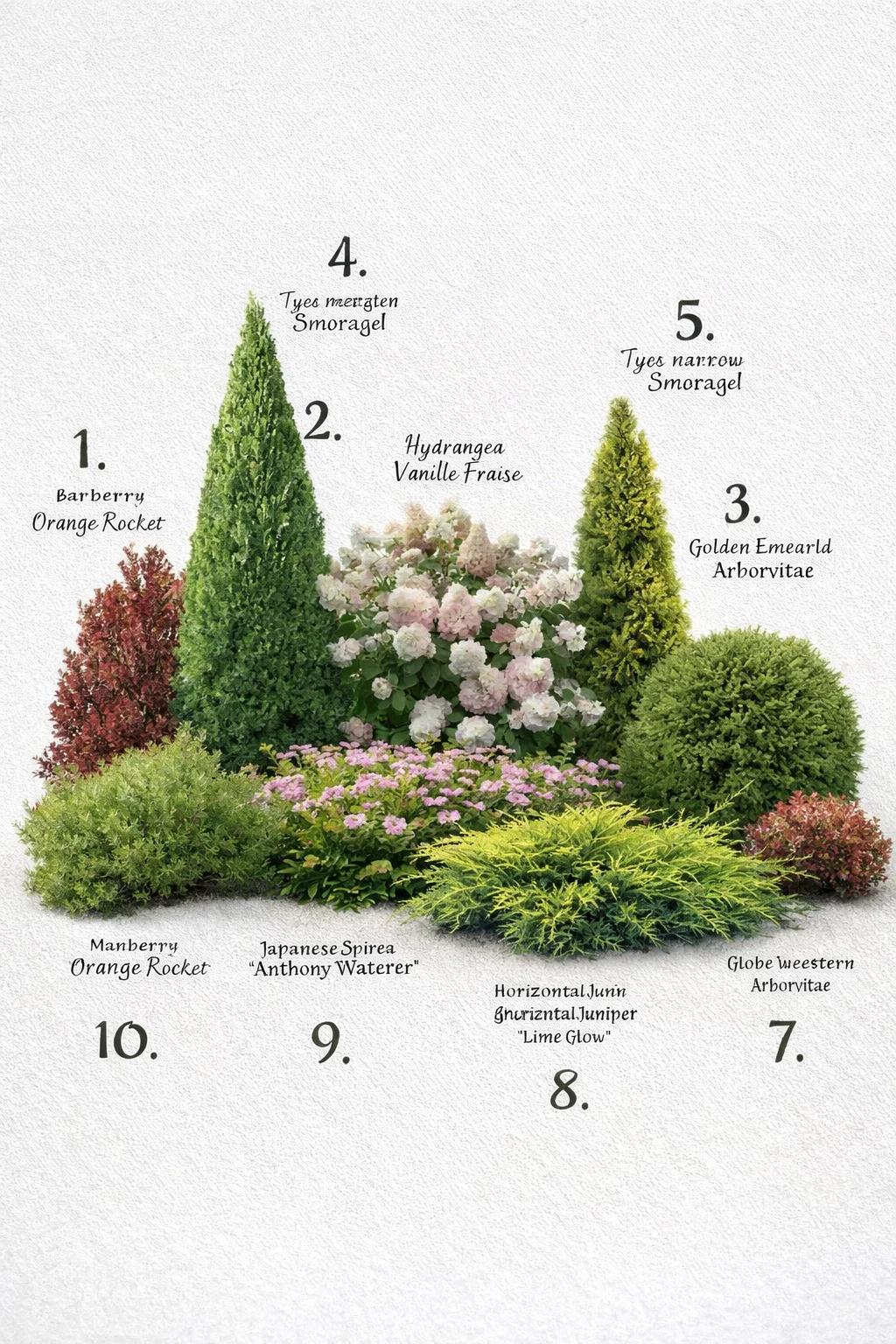
Creating a front entry that captures attention requires more than just planting a few random shrubs. It involves a thoughtful blend of color, texture, and structural height to create a welcoming atmosphere year round. The design featured in the image demonstrates a masterful use of hardy perennials and evergreens that work together to provide a professional, tiered look. By balancing the bold verticality of conifers with the soft, spreading nature of flowering shrubs, you can transform a plain walkway into a stunning botanical journey for anyone approaching your front door.
The Foundations of Great Front Entry Landscaping
When you look at a successful landscape design, you are seeing a careful arrangement of layers. The front entry is your home’s first handshake with the world, so it needs to feel deliberate. A common mistake many homeowners make is planting everything in a straight line or choosing plants that all grow to the same height. To avoid a flat, uninspired look, you should aim for a tiered approach. This involves placing taller, structural plants toward the back or near the foundation of the house, and gradually tapering down to shorter, spreading varieties at the front edge of the garden bed.
The image provided showcases this perfectly with the use of Thuja occidentalis Smaragd. These emerald green giants act as the anchors of the garden. Because they are evergreen, they maintain their shape and color even during the bleakest winter months, ensuring that your home never looks bare. Using these as a backdrop allows the more delicate or colorful plants in the foreground to truly pop.
Balancing Texture and Form
A garden that relies solely on one type of foliage can quickly become monotonous. The key to professional grade landscaping is the interplay between different leaf textures. Notice how the fine, feathery needles of the Juniperus horizontalis Lime Glow contrast against the broader, softer leaves of the Spiraea japonica. This contrast keeps the eye moving and makes the space feel larger and more complex than it actually is.
Form is equally important. In this layout, we see a mix of upright pillars, rounded globes, and low-spreading carpets. The Thuja Globosa offers a perfectly round, dense shape that provides a sense of order and symmetry, while the creeping juniper softens the hard edges of the garden bed. When planning your own space, try to include at least one plant from each of these categories: upright, mounding, and groundcover.
Choosing the Right Plant Palette for Curb Appeal
Color is often the first thing people notice, but in a front entry, you want a palette that remains sophisticated. The design here utilizes a sophisticated “triad” of colors: deep greens, vibrant limes, and rich burgundies. By using the Berberis thunbergii Orange Rocket and Bagatelle, the designer has introduced a warm, reddish-purple hue that serves as a focal point against the sea of green.
Year Round Interest with Evergreens
One of the biggest challenges in residential landscaping is ensuring the yard looks good in all four seasons. Many people focus entirely on spring flowers, leading to a garden that looks like a graveyard once the first frost hits. By selecting a variety of conifers like the Pinus mugo Humpy and various Thujas, you ensure that fifty percent of your garden remains vibrant even under a blanket of snow. These plants are the “bones” of your landscape, providing the necessary structure that holds everything together when the perennials go dormant.
Adding Seasonal Flare with Flowering Shrubs
While evergreens provide the structure, flowering shrubs like the Hydrangea paniculata Vanille Fraise provide the magic. This specific variety is beloved for its massive flower heads that transition from a creamy white to a delicious strawberry pink as the season progresses. Placing a hydrangea in the center of your entry bed creates a seasonal focal point that draws the eye directly toward the entrance. It adds a touch of softness and romance that balances the rigid structure of the surrounding conifers.
Step-by-Step Guide to Recreating This Look
If you want to replicate this specific aesthetic, you need to follow a logical planting order. Start with your tallest specimens. In this case, that would be the Thuja Smaragd. Space them far enough apart to allow for their mature width, but close enough to create a cohesive green wall. Next, place your mid-range shrubs like the Barberry and the Hydrangea. These should be staggered in front of the tall evergreens to create depth.
- Step 1: Prepare the soil with organic compost to ensure a healthy start for all varieties.
- Step 2: Map out your heights. Place your 4 and 5 foot plants in the back row.
- Step 3: Install your focal points. The Vanille Fraise Hydrangea should be visible from the street.
- Step 4: Fill in the gaps with mounding shrubs like the Spirea and Globe Thuja.
- Step 5: Edge the bed with low-growing groundcovers like the Lime Glow Juniper to suppress weeds and create a finished look.
Maintenance Tips for a Polished Entrance
A beautiful garden can quickly become an eyesore if it is not maintained. Fortunately, the plants selected in this design are relatively low maintenance. The conifers require very little pruning, and the “Orange Rocket” barberry naturally grows in a tight, upright column. To keep your hydrangeas blooming vigorously, prune them in late winter or early spring before new growth begins. This encourages larger flowers and keeps the shrub from becoming too leggy.
Mulching is another critical step. Use a high-quality dark brown or black wood mulch to make the colors of the foliage stand out. Mulch also helps retain moisture in the soil, which is essential for the hydrangeas, as they are notoriously thirsty plants. A two to three inch layer of mulch will significantly reduce your weeding time and give the entire entry a professional finish.
The Psychology of a Welcoming Entryway
There is a psychological component to landscaping that shouldn’t be ignored. A cramped, overgrown entryway can feel claustrophobic or even slightly forbidding. Conversely, a wide, open, and colorful path feels inviting and safe. By using low-growing plants like the Spiraea Anthony Waterer near the walkway, you keep the sightlines open while still providing plenty of visual interest. This makes guests feel welcomed and gives the homeowner a sense of peace every time they pull into the driveway.
Incorporating Lighting
To truly make your front entry landscaping shine, consider adding low-voltage LED lighting. Up-lighting the Thuja Smaragd pillars creates a dramatic architectural effect at night, while path lights nestled among the Lime Glow Juniper can guide guests safely to the door. Lighting highlights the textures of the plants in a way that sunlight cannot, turning your garden into a 24-hour masterpiece.
Why This Design Works for Small Spaces
Even if you have a small front yard, this layout can be adapted. The beauty of plants like the Orange Rocket Barberry is their narrow footprint. They provide height and color without taking up several feet of horizontal space. You can scale this design down by choosing dwarf varieties of the same species. For example, instead of a standard hydrangea, you could use a “Little Lime” variety that offers similar beauty in a more compact size. The principle remains the same: layer, contrast, and provide year-round structure.
The Importance of Drainage
Before you start digging, check the drainage around your front entry. Most of the plants in this list, especially the conifers and barberries, do not like “wet feet.” If your soil is heavy clay, consider building a slightly raised garden bed. This not only improves drainage but also adds another layer of visual interest by giving the plants a bit more elevation. A raised bed also makes it easier to edge the lawn and keep the mulch from washing away during heavy rains.
Final Thoughts on Landscape Transformation
Transforming your home’s exterior doesn’t require a degree in horticulture. It requires a vision and a few key principles. By looking at the image provided, we see that the most effective designs are those that embrace variety while maintaining a sense of unity. The repetition of green tones provides the unity, while the variations in shape and the pops of pink and burgundy provide the excitement. This specific combination of Thujas, Hydrangeas, and Spireas is a time-tested winner that works in a variety of climates and soil types.
Your front yard is an extension of your home’s personality. When you invest time into selecting the right plants and arranging them with care, you aren’t just gardening; you are creating an environment. This layout is a perfect starting point for anyone looking to boost their curb appeal and create a space that they can be proud of for years to come. Remember to plant for the future, giving each shrub enough room to reach its full potential, and you will be rewarded with a lush, professional landscape that gets better with every passing season.