
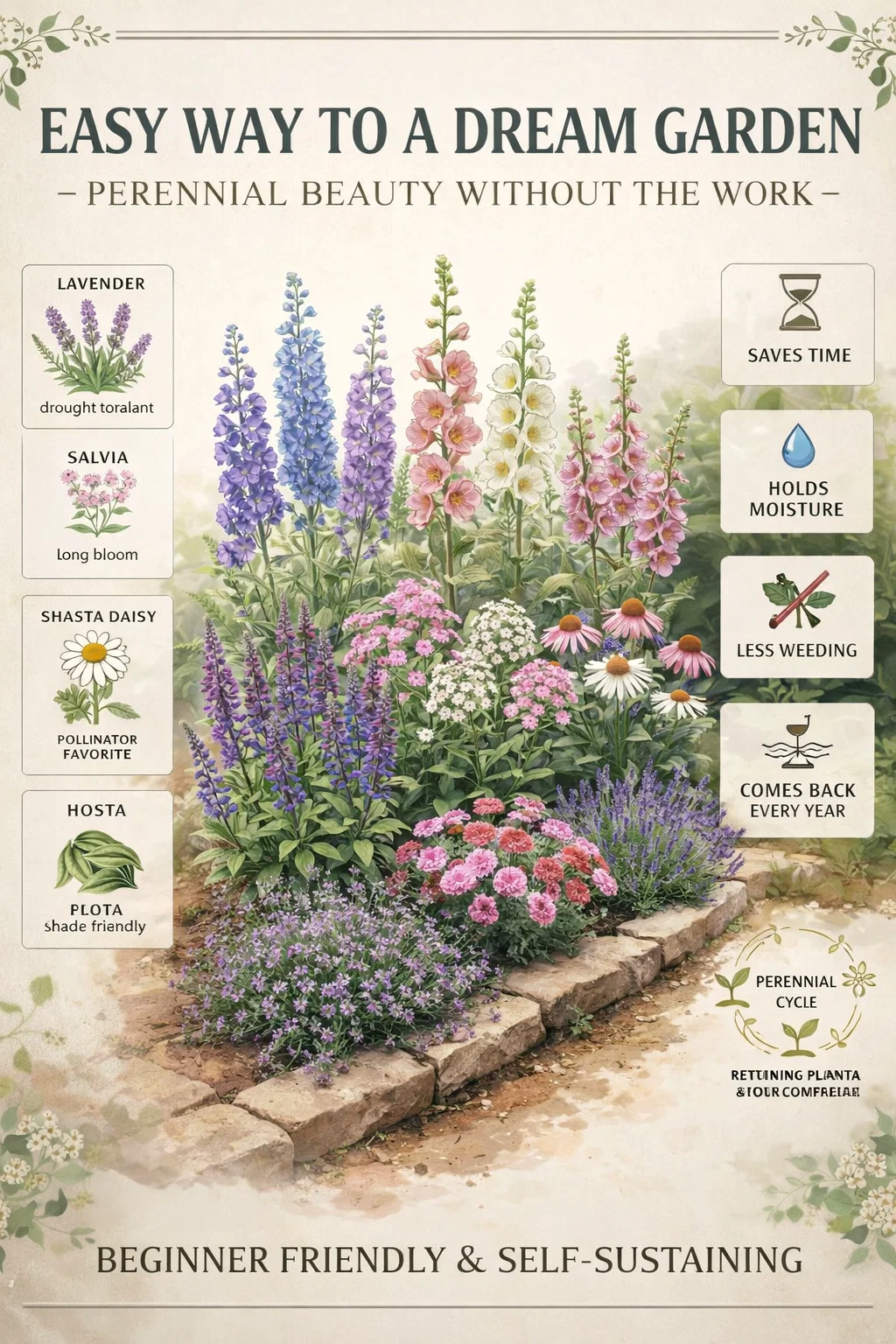
Imagine walking out to your front porch every morning to be greeted by a sea of vibrant purples, soft pinks, and pure whites, all without spending every weekend hunched over a trowel. It sounds like a dream, but the secret to a stunning landscape lies in a concept often called the garden that grows itself. By focusing on perennial powerhouses and strategic layering, you can create a front flower bed that offers high beauty with remarkably low effort. This approach is perfect for busy homeowners or gardening beginners who want a fairytale aesthetic without the intense labor usually associated with high-end landscaping.
The Magic of Perennial Powerhouses
The foundation of a low-maintenance garden is the perennial. Unlike annuals that need to be replanted every single spring, perennials are the gift that keeps on giving. These plants are biological overachievers. They spend their first year establishing deep root systems, and once they are settled, they return year after year, often growing larger and more impressive with each passing season.
When you choose the right mix of perennials, you are essentially setting up a self-sustaining ecosystem. The goal is to select plants that are known for being tough, drought-tolerant, and resistant to common pests. This reduces the need for constant watering or chemical interventions. By investing in these varieties once, you save money and time in the long run, allowing the natural cycle of the plants to do the heavy lifting for you.
Designing with the Three-Layer Strategy
To achieve that professional, lush look seen in high-end garden magazines, you need to think in layers. A flat garden can look cluttered or thin, but a tiered garden creates depth and visual interest. The most effective way to organize your front flower beds is by following a simple back-to-front height arrangement.
The Back Row: Tall Architectural Statements
The back of your flower bed should feature your tallest plants. These serve as the backdrop for your entire display. Varieties like Delphiniums, Foxgloves, and Hollyhocks are ideal here. They provide vertical interest and a sense of height that draws the eye upward. Because these plants can grow several feet tall, they act as a living fence or a soft wall that frames the rest of your home architecture.
The Middle Layer: The Color Drivers
The middle section is where most of your color and texture will live. This is the heart of the garden. Plants like Coneflowers, Shasta Daisies, and Phlox are perfect middle-ground contenders. They usually grow to a medium height and produce large, showy blooms. By mixing different shapes, such as the daisy-like petals of the Coneflower with the dense clusters of Phlox, you create a rich tapestry that looks intentional and full.
The Front Border: Low-Growing Groundcovers
Finally, the front border serves as the finishing touch. This layer hides the “feet” of the taller plants and creates a clean edge against your lawn or walkway. Lavender, Hostas, and creeping herbs are excellent choices for this spot. These plants stay low to the ground and spread horizontally, acting as a living mulch that keeps the soil cool and prevents weeds from popping up at the very edge of your bed.
Why Low Effort Leads to High Beauty
Many people assume that a beautiful garden requires daily maintenance, but the opposite can actually be true. When you design a garden based on the “low effort” philosophy, you are working with nature rather than against it. There are several reasons why this method actually produces a more beautiful result than high-maintenance traditional gardening.
- Reduced Stress on Plants: By choosing drought-tolerant varieties like Salvia or Lavender, your garden won’t wilt the moment you miss a day of watering. These plants are adapted to survive, meaning they look healthy and vibrant even during dry spells.
- Natural Weed Suppression: When you plant your layers densely and use mulch, you leave very little room for weeds to take hold. A full garden is its own best defense against unwanted visitors.
- Improved Soil Health: Perennials develop deep root systems that help aerate the soil and improve drainage over time. This creates a healthier environment for all your plants without you needing to constantly till the earth.
Essential Plants for a Fairytale Look
If you are looking to replicate a classic cottage or fairytale aesthetic, certain plants are non-negotiable. These varieties are famous for their romantic appearance and their ability to thrive with minimal intervention.
Lavender and Salvia for Long-Lasting Blooms
Lavender is a staple for a reason. Its silvery foliage and fragrant purple spikes are iconic. Beyond its beauty, it is incredibly drought-tolerant once established. Pairing Lavender with Salvia is a pro-move because Salvia offers a long blooming season. While some flowers peak and fade in a week, Salvia keeps pushing out spikes of blue or violet for months, ensuring your front yard never looks dull.
Coneflowers: The Pollinator Heroes
If you want your garden to feel alive, you must include Coneflowers. These tough perennials are magnets for butterflies and bees. They are virtually indestructible and can handle heat and poor soil with ease. Their prominent centers and drooping petals give them a whimsical, wild look that fits perfectly into a beginner-friendly garden plan.
Hostas: The Secret to Shady Corners
Not every front yard is bathed in constant sunlight. For the areas under trees or near the porch shadows, Hostas are the ultimate solution. Known for their lush, heart-shaped leaves, Hostas come in various shades of green, blue, and gold. They provide a cooling, structural element to the front border and require almost zero maintenance once they are in the ground.
Maintenance Tips to Keep it Easy
While we call this a garden that grows itself, a tiny bit of preparation goes a long way in ensuring success. The goal is to do a small amount of work once so you don’t have to do a lot of work later.
The Power of Mulching
Mulch is the best friend of the lazy gardener. A thick layer of organic mulch, such as wood chips or shredded bark, does three vital jobs. It keeps moisture in the soil so you water less, it smothers weed seeds before they can sprout, and it breaks down over time to feed your plants. Applying mulch once a year is the single most effective thing you can do to reduce your workload.
Smart Watering Techniques
Instead of light daily sprinkles, aim for deep watering once or twice a week. This encourages your perennials to grow their roots deeper into the ground, making them even more resilient. Over time, as your plants mature, you will find that you need to water less and less, especially if you have selected drought-tolerant varieties.
Creating a Sustainable Perennial Cycle
The beauty of this garden plan is the perennial cycle. In the autumn, many of these plants will go dormant. While you can trim them back if you prefer a tidy look, many gardeners choose to leave the dried seed heads for birds to enjoy during the winter. Come springtime, you will see the magical moment when the first green sprouts begin to poke through the soil.
This returning cycle means your garden has a memory. It knows how to grow in your specific soil and climate. Every year that passes, the root systems get stronger and the floral displays get more spectacular. It is a long-term investment in the curb appeal of your home that pays dividends in beauty and relaxation.
Transforming Your Curb Appeal Today
The journey to a beautiful front yard doesn’t have to start with a massive, expensive renovation. You can start by clearing a small patch and planting just a few of these perennial powerhouses. Start with a “middle” plant like a Shasta Daisy and a “front” plant like Lavender. As you see how easy they are to care for, you can expand your beds and add the taller back-row layers.
By following the principles of layering and selecting tough, reliable plants, you create a space that welcomes you home every day. You move away from the “chore” of gardening and toward the “joy” of gardening. Your front flower beds become a place of peace and inspiration rather than a list of to-do items.
Bringing the Vision to Life
Designing a garden that grows itself is about shifting your perspective. It is about choosing quality over quantity and planning for the future. When you look at your front yard, don’t just see grass or empty dirt. See the potential for a layered, blooming masterpiece that reflects a fairytale charm. With the right perennials, a bit of mulch, and a tiered layout, you can achieve a professional-looking landscape that is as easy to maintain as it is beautiful to behold.
The best time to start is now. Whether you are planting in the spring or preparing your beds in the fall, every perennial you put in the ground today is a gift you are giving to your future self. Enjoy the process of watching your garden evolve, and take pride in the fact that you have created something truly stunning with a beginner-level effort.