
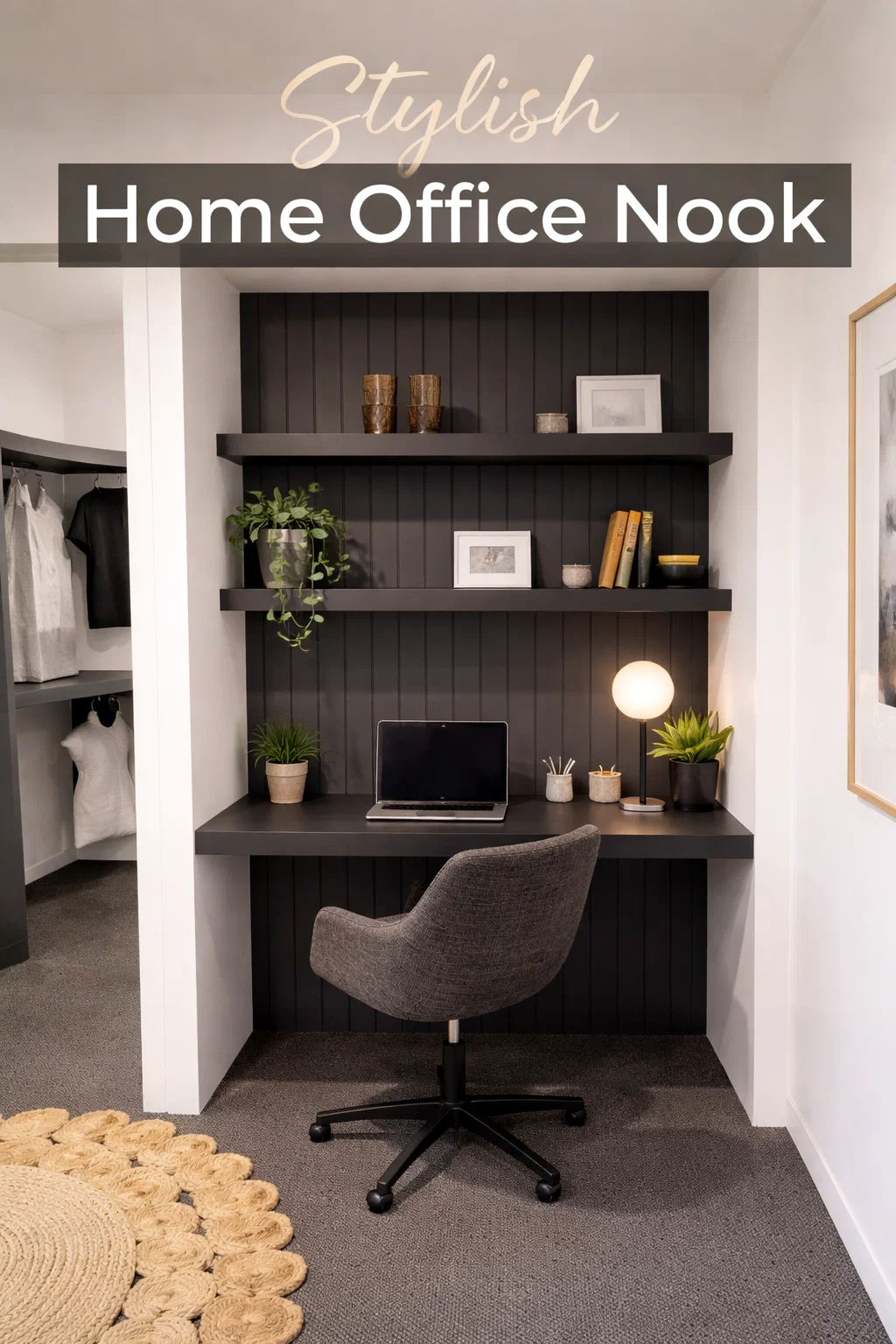
Creating a functional workspace doesn’t always require a dedicated room. In modern home design, the rise of the study nook has proven that even the smallest corridor or hallway can become a powerhouse of productivity. By utilizing vertical space and a cohesive color palette, you can transform a simple transition area into a sophisticated office that feels integrated rather than intrusive. This approach to interior design focuses on maximizing every square inch while maintaining a sleek, minimalist aesthetic that complements the rest of your home.
The Power of the Hallway Study Nook
A study nook in a hallway or closet transition is the ultimate space-saving solution for urban living and open-plan homes. Often, we view hallways as nothing more than paths from one room to another, but with a bit of creative engineering, they can serve a dual purpose. The beauty of a built-in desk lies in its ability to disappear into the architecture. When you use deep, moody tones like charcoal or matte black, the nook gains a sense of depth that actually makes the surrounding area feel more expansive and intentional.
One of the primary benefits of this setup is the psychological boundary it creates. Even in a high-traffic area, a recessed desk provides a sense of enclosure. By adding vertical elements like shiplap or paneling, you draw the eye upward, highlighting the ceiling height and making the workspace feel like a private sanctuary. This is particularly effective for those who need a spot for quick tasks, evening study sessions, or a streamlined home command center.
Designing with Verticality and Texture
When working with limited horizontal space, the walls become your greatest asset. Incorporating vertical shiplap or wood paneling behind the desk adds a layer of texture that prevents a dark color scheme from feeling flat. The lines created by the paneling provide a rhythmic backdrop that looks professional on video calls and stays visually interesting throughout the day. This textural detail is what separates a basic DIY desk from a high-end architectural feature.
The Role of Floating Shelves
Floating shelves are essential in a study nook for both storage and styling. By choosing thick, chunky shelves that match the desk surface, you create a unified look that feels custom-built. These shelves allow you to keep the actual desktop clear for your laptop or notebook, which is vital in a small footprint. When the desk is cluttered, the whole hallway feels messy, so having elevated storage is a game changer for maintaining a clean environment.
Choosing a Moody Color Palette
While many people lean toward bright white for small spaces, a dark and moody palette can actually be more effective for a study area. Deep blacks, dark grays, and forest greens absorb light in a way that reduces glare on screens and creates a focused, “den-like” atmosphere. To keep the space from feeling too heavy, it is important to balance these dark tones with natural elements. A jute rug, a wooden chair, or small potted plants can break up the monochrome look and add much-needed warmth.
Essential Elements for a Productive Nook
To make a hallway office truly functional, you need to consider the ergonomics and the utility of the space. It is not just about looking good on social media; it needs to work for your daily life. Here are a few key components to keep in mind:
- Integrated Lighting: Since hallways often lack natural light, a dedicated task lamp or built-in LED strips under the shelves are necessary to prevent eye strain.
- Hidden Cable Management: In a small space, tangled wires are an eyesore. Using desk grommets or hidden channels behind the paneling keeps the minimalist look intact.
- Comfortable Seating: A low-profile swivel chair allows you to tuck the seat under the desk when not in use, keeping the hallway clear for foot traffic.
- Minimalist Decor: Choose a few high-quality items like a ceramic pencil holder or a framed piece of art to personalize the space without overcrowding it.
Maximizing Storage in Tight Quarters
Storage is usually the biggest challenge in a hallway study nook. Without the luxury of a large filing cabinet, you have to get creative. Using decorative boxes on your floating shelves can hide away loose papers and office supplies. You can also utilize the space under the desk for a small, rolling storage unit if needed, though keeping that area clear often helps the hallway feel wider. The goal is to curate your office supplies so that only the essentials are within reach, promoting a more mindful and organized way of working.
Incorporating Greenery and Life
Adding a touch of nature is one of the best ways to soften the hard lines of a built-in desk. A trailing plant like a Pothos or a Philodendron looks stunning draping off a high shelf. Not only do plants improve air quality, but they also provide a boost to your mood and creativity. In a darker color scheme, the vibrant green of the leaves pops beautifully against the black or gray backdrop, making the workspace feel more inviting and less clinical.
Personalizing Your Small Office
Because the study nook is part of a larger living area, it should reflect your personal style while remaining tidy. Small framed photos, a travel memento, or a stack of your favorite books can make the space feel like yours. The trick is to be selective. In a “cloffice” or hallway nook, every item on display is highlighted. Choose pieces that inspire you or bring a sense of calm to your workday. A neutral-toned chair or a textured rug can also help bridge the design between the office area and the rest of the hallway.
The Future of Home Office Design
As remote work continues to be a staple of modern life, our homes are evolving to be more flexible. The study nook hallway is a perfect example of this evolution. We are moving away from the idea that an office must be a separate, closed-off room and toward the idea that productivity can happen anywhere. This design philosophy encourages us to look at our homes with fresh eyes and find the hidden potential in unused corners.
Whether you are a student, a freelancer, or someone who just needs a quiet place to pay bills and organize the family schedule, a built-in nook provides a permanent home for your laptop and thoughts. It eliminates the “table-clearing” ritual where you have to move your work every time it is dinner or guests arrive. Having a dedicated, even if small, workspace tells your brain that it is time to focus, helping you transition into a flow state more quickly.
Final Thoughts on Creating Your Hallway Sanctuary
Transforming a hallway into a study nook is a rewarding project that adds significant value to your home. It combines the best of interior design with practical utility, proving that style and function are not mutually exclusive. By focusing on smart storage, a sophisticated color palette, and intentional lighting, you can create a workspace that you actually look forward to using every day. Remember that the best designs are the ones that adapt to your lifestyle, and a well-placed nook is the ultimate tool for a versatile, modern home.
As you plan your own small space makeover, take inspiration from the minimalist and moody trends that emphasize quality over quantity. A few well-placed shelves, a sturdy desk surface, and a comfortable chair are all you need to start your journey toward a more organized and productive life. Don’t be afraid of dark colors or unconventional spaces; sometimes the most overlooked parts of our homes hold the most potential for beauty and efficiency.