
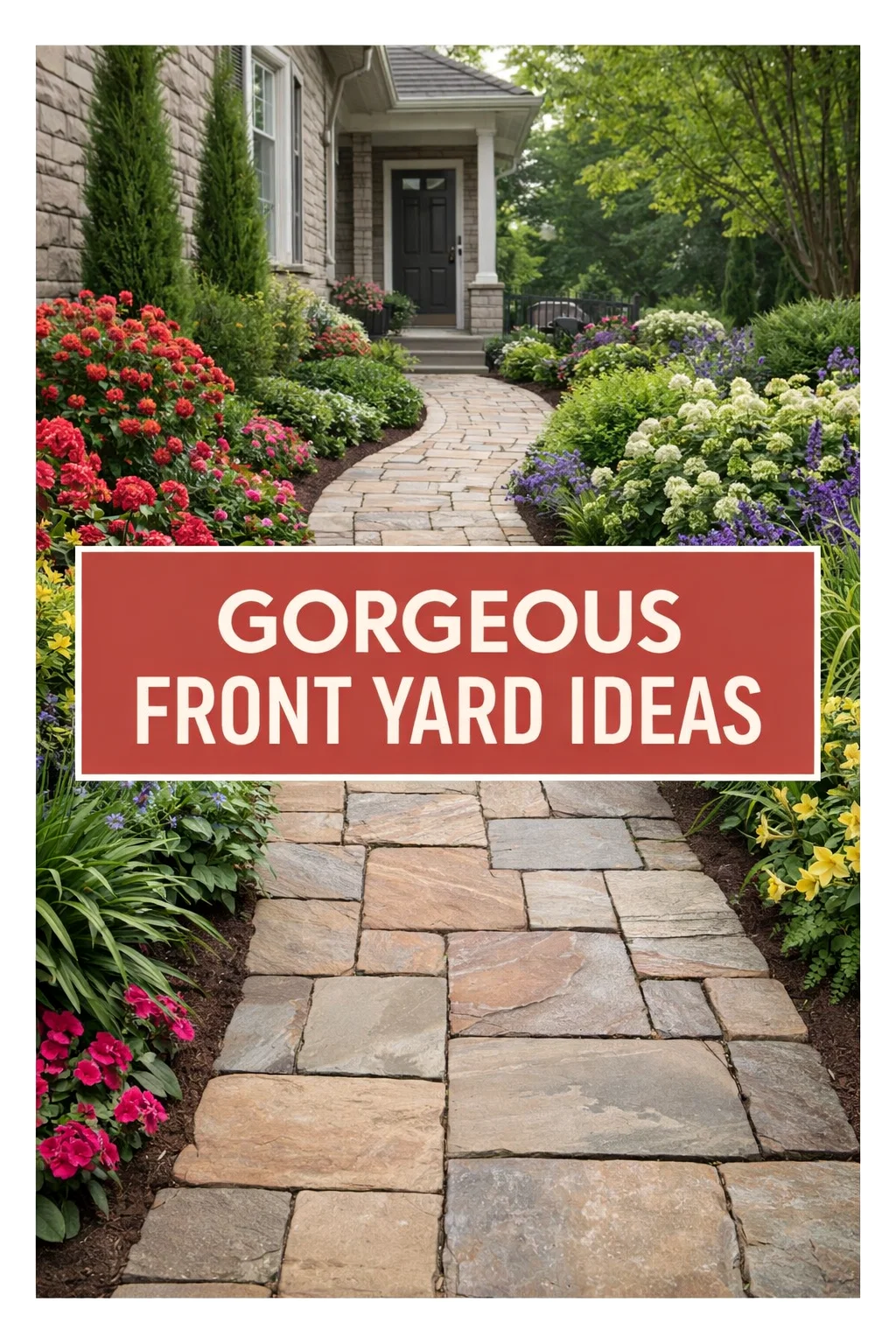
First impressions start at the curb, and nothing speaks louder about a home than its front entry landscaping. When you look at a beautifully designed walkway lined with vibrant blooms and lush greenery, it does more than just increase property value. It creates a sense of arrival. The image of a winding flagstone path flanked by tiered garden beds is the perfect example of how thoughtful design can transform a standard house into an inviting sanctuary. Whether you are planning a complete renovation or just looking to refresh your flower beds, understanding the principles of professional landscaping can help you achieve a high end look that feels both personal and timeless.
The Power of Curb Appeal and First Impressions
Curb appeal is often discussed in the context of real estate, but its true value lies in the daily experience of coming home. A well designed front yard sets the tone for the rest of the property. It acts as a transition zone between the public world and your private life. By focusing on the entry point, you are highlighting the most important part of your home architecture: the front door. Professional landscapers often use the phrase framing the house because the goal is to use plants and hardscaping to draw the eye toward the entrance, making it feel prominent and welcoming.
Hardscaping as the Foundation of Your Design
In any successful landscaping project, the hardscaping serves as the skeleton of the garden. As seen in the inspiration image, a flagstone walkway is a classic choice that offers both durability and aesthetic charm. Unlike a standard poured concrete sidewalk, natural stone provides texture and a variety of earthy tones that blend seamlessly with the environment. Using large, irregular pavers creates an organic feel that mimics nature, while more uniform rectangular stones can give a modern or formal appearance.
When planning your walkway, consider the width. A path should be wide enough for two people to walk side by side comfortably, typically around four to five feet. This ensures that the entry does not feel cramped or utilitarian. The material you choose should also reflect the architectural style of your home. If you have a rustic stone facade, matching or complementary natural stone is ideal. For a contemporary home, sleek pavers with clean lines and dark tones might be more appropriate.
Creating Depth with Layered Planting Beds
One of the most effective ways to make a front yard look professional is through layering. This technique involves placing plants of different heights and textures in a way that creates depth and visual interest throughout the year. Instead of a flat row of identical shrubs, a layered bed utilizes foreground, midground, and background plants to fill the space vertically and horizontally.
- Background Plants: These are usually taller evergreen shrubs or small trees planted closest to the house. They provide a green backdrop that hides the foundation and stays vibrant even in the winter months.
- Midground Plants: This is where you can introduce variety. Flowering shrubs, ornamental grasses, and medium sized perennials live here. They provide the bulk of your garden texture and color.
- Foreground Plants: Low growing groundcovers, annual flowers, and smaller perennials are used to edge the walkway. These plants soften the transition between the hard stone path and the garden beds.
Choosing the Right Color Palette
Color is a powerful tool in landscaping. The image showcases a brilliant mix of warm oranges and soft pinks contrasted against bright white hydrangeas and deep green foliage. When selecting your palette, think about how the colors will interact with your home exterior. Complementary colors, which sit opposite each other on the color wheel, create a high energy look. For instance, purple flowers stand out beautifully against a yellow house. Harmonious colors, which are next to each other on the wheel, create a more serene and calming environment.
Do not forget the importance of white. White flowers and silver foliage act as a visual palette cleanser. They help separate vibrant colors so they do not clash and they literally glow in the twilight, extending the beauty of your garden into the evening hours.
Integrating Vertical Elements for Visual Interest
While most people focus on what is on the ground, vertical elements are essential for a balanced landscape. Tall, slender evergreens like Italian Cypress or Sky Pencil Hollies can be used to add height without taking up much horizontal space. These are perfect for framing a doorway or breaking up a long, flat wall. In the featured design, upright greenery helps to bridge the gap between the low flower beds and the roofline of the porch, making the entire entrance feel cohesive.
The Role of Specimen Trees
A specimen tree is a tree that is planted to be a focal point because of its unique shape, bark, or seasonal color. Japanese Maples, Dogwoods, and Magnolia trees are popular choices for front entries. Placing a specimen tree near the turn of a walkway or at the corner of the house adds a level of sophistication that smaller shrubs cannot provide. They offer a sense of permanence and age to a landscape, making it feel established rather than newly planted.
Functionality and Accessibility in Entryway Design
Beyond beauty, a front entry must be functional. Lighting is a critical component that is often overlooked. Low voltage LED path lights not only increase safety by illuminating the walkway at night but also highlight the textures of your plants and stonework. Well placed up lighting on a specimen tree can create a dramatic and high end look after the sun goes down.
Drainage is another practical consideration. When you install new garden beds and walkways, you must ensure that water is directed away from the foundation of the house. Using permeable materials for your path or installing hidden French drains can prevent puddling and protect your home structure during heavy rainstorms.
Low Maintenance Strategies for Busy Homeowners
Most people want a beautiful yard but do not have hours to spend on maintenance every weekend. The key to a low maintenance front yard is plant selection. Native plants are the best choice because they are already adapted to your local climate and soil conditions. They typically require less water and are more resistant to local pests and diseases.
Mulching is another essential step. A thick layer of organic mulch, such as shredded bark, helps retain moisture in the soil, regulates temperature, and significantly reduces weed growth. It also gives the garden beds a finished, professional look. As the mulch breaks down over time, it improves the soil quality, providing natural nutrients for your plants.
Designing for the Seasons
A common mistake in front yard landscaping is choosing plants that all bloom at the same time. While the yard might look incredible in May, it can look bare by August. To avoid this, plan for four season interest. Look for plants that offer different benefits throughout the year.
- Spring: Bulbs like tulips and daffodils, along with flowering trees like cherries or pears.
- Summer: Long blooming perennials like Coneflowers, Black-eyed Susans, and Hydrangeas.
- Fall: Ornamental grasses and shrubs that change color, such as Burning Bush or Fothergilla.
- Winter: Evergreens, red twig dogwoods, and plants with interesting bark or structure that looks beautiful under a dusting of snow.
The Importance of Symmetry and Balance
Symmetry is a classic design principle that works exceptionally well for traditional homes. Planting identical shrubs on either side of the front door creates a formal and organized appearance. However, asymmetrical balance is often more modern and dynamic. This involves using different plants on each side that have a similar visual weight. For example, a large shrub on one side can be balanced by a cluster of smaller plants and a decorative boulder on the other. Both approaches can be successful as long as the design feels intentional.
Bringing It All Together
Transforming your front entry is an investment that pays off in both home value and personal satisfaction. By combining high quality hardscaping, like a stone walkway, with thoughtful, layered planting, you create an environment that feels welcoming and luxurious. Remember to think about the long term growth of your plants so the space does not become overcrowded in a few years. Leave enough room for shrubs to reach their mature size without blocking windows or encroaching on the path.
If you are overwhelmed by the choices, start small. Focus on the area immediately around your front door and work your way out toward the street. Even simple changes, like adding a few colorful pots or fresh mulch, can make a significant difference. The goal is to create a space that reflects your style and makes you happy every time you pull into the driveway.
Conclusion
Front entry landscaping is much more than just putting plants in the ground. It is an art form that balances architecture, biology, and personal taste. As we have explored, the combination of a well crafted walkway and a diverse palette of plants can completely redefine the character of a home. By focusing on quality materials, seasonal variety, and proper maintenance, you can ensure that your home makes a stunning first impression for years to come. Whether you prefer the lush, overflowing look of a cottage garden or the clean, structured lines of a modern estate, the principles of good design remain the same. Take inspiration from the beautiful textures and colors around you, and start planning your own amazing front yard transformation today.