
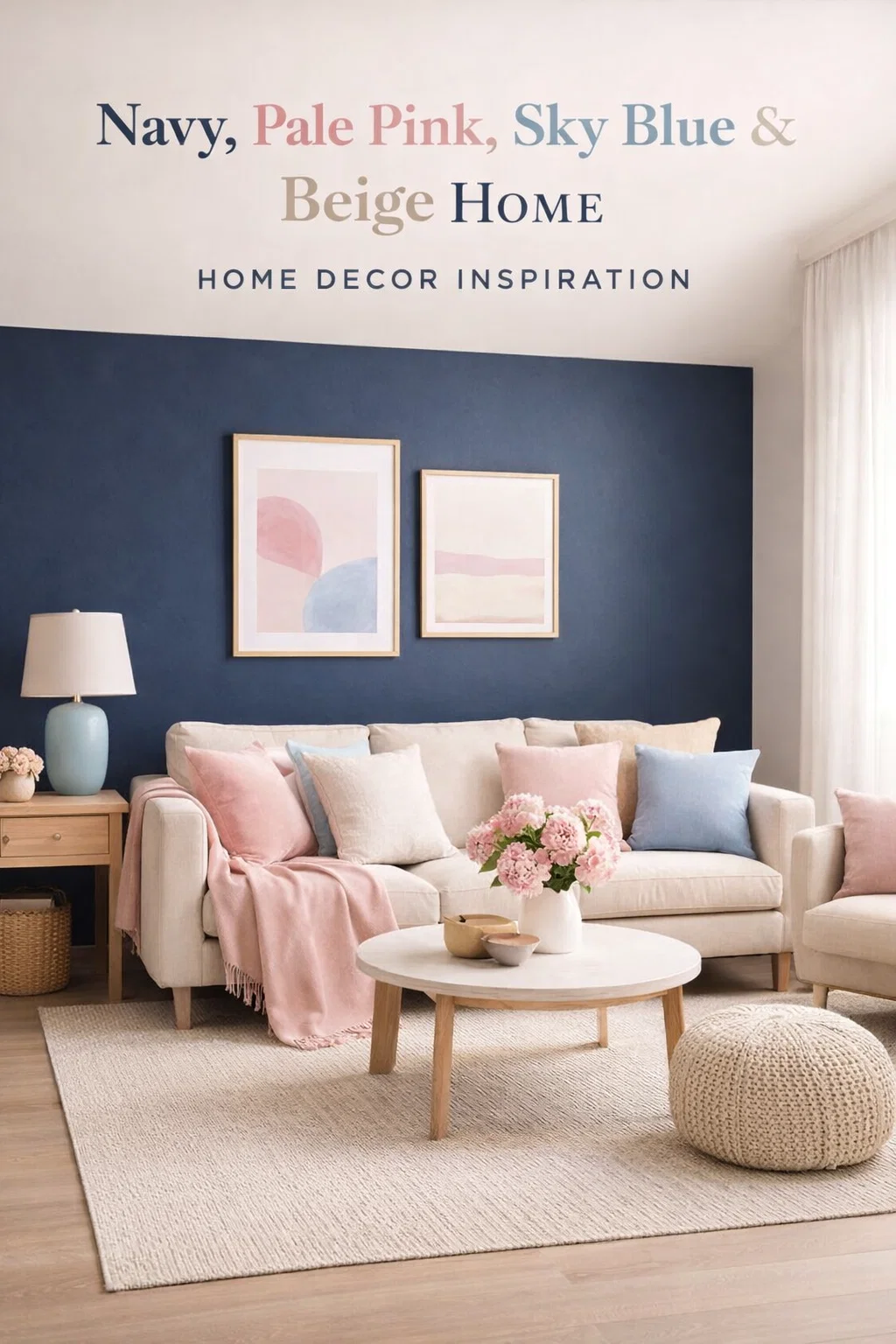
Finding the perfect color combination can often feel like searching for a needle in a haystack. Whether you are a small business owner looking to define your brand identity or a homeowner trying to pick the right paint for a living room refresh, the colors you choose set the entire mood of your project. Today, we are diving deep into a palette that strikes a rare balance between authority and softness. This specific collection of navy, sky blue, pale pink, azalea, and beige offers a masterclass in color theory, proving that high contrast can still feel incredibly harmonious.
The Power of a Deep Anchor: Understanding Navy
Every successful color palette needs a foundation. In this selection, Navy (Hex #2F4156) serves as the anchor. Unlike black, which can sometimes feel flat or overly aggressive in certain lighting, navy blue provides a sense of depth and intelligence. It is a color often associated with trust, stability, and professional excellence. When you look at this specific shade of navy, you notice it has a slight charcoal undertone, which prevents it from feeling too much like a standard school uniform and more like a sophisticated velvet sofa or a high-end corporate logo.
In interior design, using a navy this dark on an accent wall can actually make a room feel larger by creating the illusion of a receding wall. In the world of digital branding, it provides the perfect backdrop for lighter text, ensuring that your website or social media graphics are easy to read while maintaining an air of luxury.
Adding Air and Space with Sky Blue
To prevent a palette from becoming too heavy, you need a breath of fresh air. That is exactly what Sky Blue (Hex #C8D9E6) provides here. This is not a bright, neon blue; it is a muted, dusty shade that feels reminiscent of a clear morning sky. By placing this directly next to the navy, you create a monochromatic layering effect that is naturally pleasing to the eye.
This shade is particularly effective for large surfaces where you want to promote a sense of calm. Think of bathroom tiles, airy linen curtains, or the secondary backgrounds of a mobile app. It bridges the gap between the dark authority of the navy and the playful warmth of the pink tones that follow.
Balancing Masculine and Feminine Energy
One of the most impressive aspects of this specific palette is how it blurs the lines between traditionally masculine and feminine color stories. By mixing the strong, dark blues with the softer Azalea and Pale Pink, you create a gender neutral appeal that works for a wide variety of industries, from wedding planning to tech startups.
The Soft Touch: Pale Pink and Azalea
Pink has undergone a massive transformation in the design world over the last decade. It is no longer just for nurseries. The Pale Pink (Hex #FFE1E6) and Azalea (Hex #F7C9D4) included in this image provide a necessary warmth that keeps the blues from feeling too cold or clinical.
Pale Pink acts almost like a neutral in this context. It is subtle enough to be used as a highlight color that guides the eye toward a call to action button or a decorative pillow. Azalea, being slightly more saturated, adds a punch of personality. When these two are paired with navy, the result is a classic preppy look that feels modern and updated for today’s aesthetic standards.
Using Warm Tones to Create Contrast
The secret to why this palette works so well lies in the temperature contrast. Navy and sky blue are cool colors, which tend to be calming and receding. Pink and beige are warmer, which means they feel more inviting and forward moving. When you combine them, you get a visual vibration that keeps the viewer engaged without causing eye strain.
The Importance of Neutrals: Why Beige Matters
Without the Beige (Hex #F5EFEB), this palette might feel a bit too colorful for certain professional applications. Beige serves as the “reset button” for the eyes. It is a clean, crisp off-white that avoids the harshness of a pure #FFFFFF white. In branding, this is your primary background color or your paper stock choice. In a home, this is your trim, your flooring, or your primary wall color.
Using a warm beige instead of a cold grey is a specific choice that makes this palette feel more organic and approachable. It ties the sky blue and the pale pink together, acting as the glue that holds the more distinct colors in place.
Practical Applications in Graphic Design and Branding
If you are a designer, you are likely already imagining how to use these hex codes. This palette is a goldmine for lifestyle brands. Imagine a skincare line where the primary packaging is the soft beige, the logo is the deep navy, and the different product scents are categorized by the sky blue and azalea pinks. It communicates a brand that is both established and gentle.
- Logo Design: Use Navy for the primary wordmark to ensure legibility and impact.
- Social Media Grids: Alternate between Sky Blue and Beige backgrounds to keep your Instagram feed looking varied yet cohesive.
- Typography: Use Navy for headers and a dark grey or the navy for body text on a Beige background to reduce digital eye strain.
Transforming Your Home with This Palette
Interior design enthusiasts can take a lot of inspiration from this layout. If you are struggling with a room that feels “flat,” it is usually because you are missing a dark anchor or a bright pop of color. This palette gives you both.
The Living Room
Imagine a living room with Beige walls and a large Navy sectional sofa. You can then layer in Sky Blue throw blankets and Azalea pink velvet cushions. This creates a space that feels sophisticated enough for hosting guests but cozy enough for a Sunday afternoon nap.
The Home Office
For a workspace, you want to encourage focus. Paint the wall behind your desk in Navy to minimize distractions and create a professional background for video calls. Use Sky Blue and Beige for your desk accessories and wall art to keep the energy light and creative.
The Science of Color Psychology
Why do we feel a certain way when we look at these colors? Psychology tells us that blue lowers the heart rate and clears the mind. It is the color of the ocean and the sky, representing vastness and possibility. Pink, on the other hand, is associated with compassion and nurturing. By combining the two, you are essentially telling a story of “Kind Strength.”
This is why this palette is so popular for healthcare brands, therapy practices, and educational platforms. It says “We know what we are doing, and we care about you.” Understanding these subtle psychological triggers can help you make better decisions for your own projects.
How to Implement Hex Codes Correctly
For those new to digital design, the codes seen in the image (like #2F4156) are essential. These are Hexadecimal codes, and they ensure that the color you see on your screen is exactly the same as the color someone else sees on theirs. When working with a printer or a web developer, always provide these specific codes rather than just saying “navy” or “pink.”
Be aware that colors can look different when printed on different materials. A navy blue on a glossy business card will look slightly different than the same navy on a cotton t-shirt. Always ask for a proof if you are doing a large production run to ensure the colors maintain the harmony seen in this digital palette.
Creating Your Own Variations
While this palette is beautiful as it is, you can always tweak it to fit your specific needs. If you want something a bit more energetic, you could swap the Azalea for a brighter coral. If you want something more masculine, you could remove the pinks entirely and replace them with a forest green or a dark slate grey.
The key is to maintain the ratio of dark, medium, and light tones. A good rule of thumb is the 60-30-10 rule. 60 percent of your project should be your dominant neutral (Beige or Sky Blue), 30 percent should be your secondary color (Navy), and 10 percent should be your accent color (Azalea or Pale Pink).
Conclusion: Finding Your Visual Voice
Design is a journey of exploration. The image we analyzed today provides a perfect roadmap for anyone looking to create something that is both trendy and timeless. By understanding how the deep, commanding presence of navy interacts with the soft, inviting nature of pink and beige, you can build a visual identity that resonates with people on an emotional level.
Don’t be afraid to experiment with these shades in your own life. Start small with some stationery or a new phone wallpaper and see how the colors affect your mood. Whether you are building a global brand or just decorating a corner of your home, this navy-led palette is a reliable, beautiful choice that will stand the test of time. Take these hex codes, get creative, and watch how a well-thought-out color story can transform your entire perspective.