
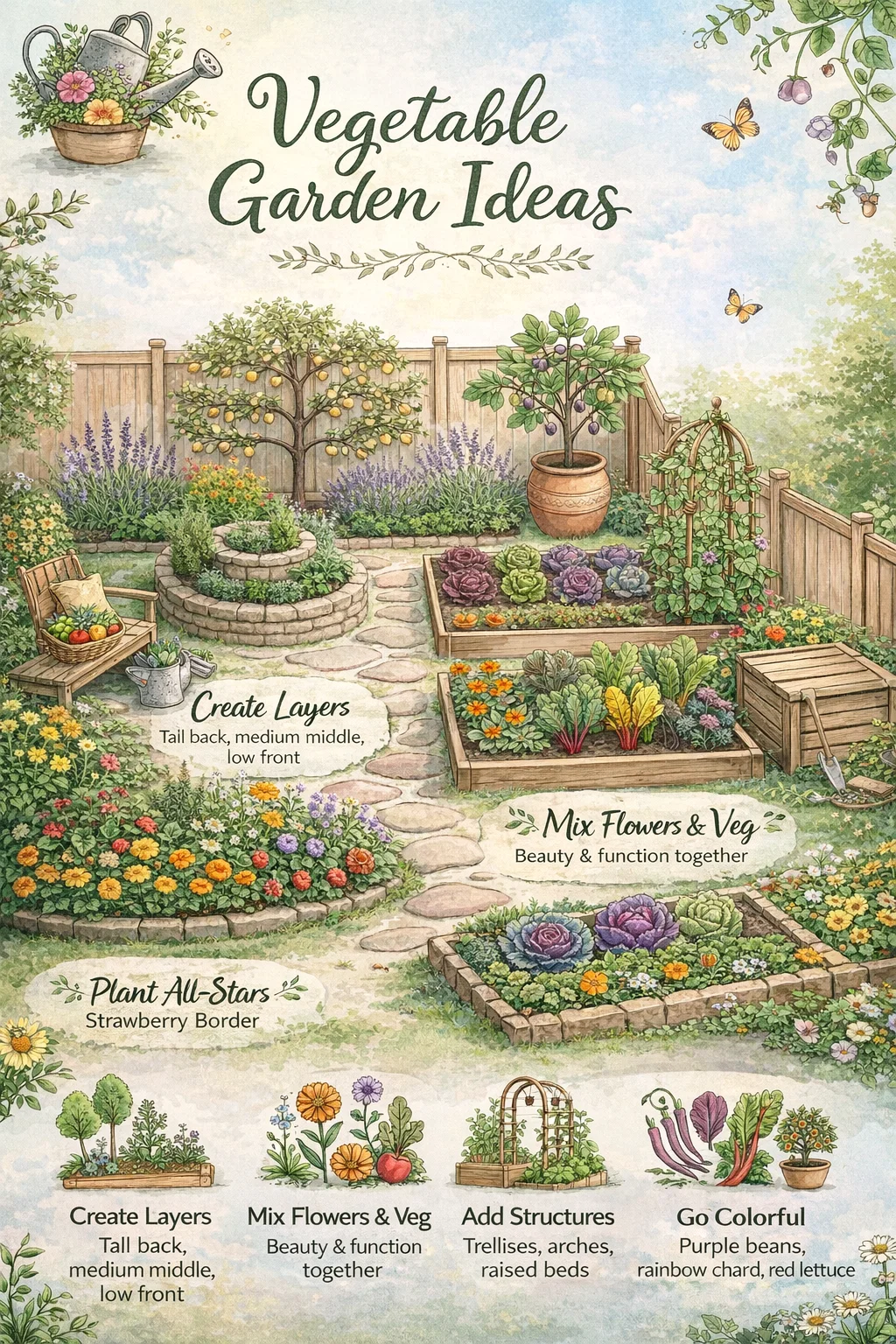
Transforming your backyard into a productive and beautiful oasis is one of the most rewarding home improvement projects you can undertake. Many people assume that a vegetable garden has to be a hidden, messy corner of the yard, but as the image illustrates, an edible landscape can be the crown jewel of your outdoor living space. By blending traditional garden design principles with food production, you create a space that nourishes both the body and the soul. This guide will walk you through the essential elements of designing a functional and aesthetic backyard layout that maximizes your harvest without sacrificing style.
The Foundations of a Functional Backyard Layout
Before you pick up a shovel, it is vital to understand the basic principles that make a garden layout successful. A well-planned garden is more than just plants in soil; it is a system of paths, structures, and zones that work together to make maintenance easier and the environment more inviting. When looking at a cohesive design, you notice that everything has its place. The layout should flow naturally from your back door to the furthest fence line, creating a sense of discovery as you move through the space.
Prioritizing Sunlight and Water Access
The first rule of any backyard vegetable layout is following the sun. Most vegetables and fruit trees require at least six to eight hours of direct sunlight to thrive. When planning your layout, observe how shadows move across your yard throughout the day. Place your tallest elements, like espaliered trees or climbing beans on obelisks, on the north side of your garden so they do not shade out smaller crops like herbs or strawberries. Additionally, ensure your layout includes easy access to a water source. A garden that is hard to water is a garden that will eventually be neglected.
Creating Visual Interest with Layering
One of the most effective ways to make a backyard layout look professional is by creating layers. In a traditional landscape, this involves placing tall trees in the back, medium shrubs in the middle, and low groundcovers at the front. You can apply this exact same logic to your edible garden. By placing your tallest crops against a fence or wall, you create a lush green backdrop that frames the rest of the space. This approach not only looks better but also ensures that every plant gets the light and airflow it needs to stay healthy.
Using Espaliered Fruit Trees for Structure
If you have limited space, espaliered fruit trees are a game changer. This ancient technique involves training a tree to grow flat against a support, such as a wooden fence or a stone wall. It is an incredibly space-efficient way to grow apples, pears, or citrus. Beyond the harvest, espaliered trees act as living architecture, providing a sophisticated and structured look to the perimeter of your yard. They turn a plain fence into a focal point and serve as the perfect high-layer element in your backyard design.
The Magic of Raised Veggie Beds
Raised beds are the backbone of a modern backyard layout. They offer several advantages over traditional in-ground planting, including better drainage, fewer weeds, and warmer soil temperatures in the spring. From a design perspective, raised beds provide clean lines and a sense of order. You can build them from cedar, stone, or even recycled materials to match the aesthetic of your home. By arranging these beds in a symmetrical or tiered fashion, you create a structured environment that feels intentional and organized.
Organizing by Plant Families
Within your raised beds, consider grouping plants by their needs and growth habits. For example, one bed might be dedicated to leafy greens and brassicas like kale and purple cabbage, while another focuses on root vegetables like carrots and radishes. This organization makes crop rotation much easier from year to year, which is essential for preventing soil-borne diseases and maintaining nutrient levels. Plus, seeing rows of colorful, healthy vegetables neatly tucked into their beds is deeply satisfying for any gardener.
Incorporating Edible Focal Points
Every great backyard layout needs a focal point, something that draws the eye and anchors the design. In an edible garden, this can be achieved through unique structures or striking plant choices. Instead of a standard birdbath, why not install a herb spiral? This stone or brick structure winds upward, creating different microclimates for various herbs. Mediterranean herbs like rosemary and thyme sit at the top where it is drier, while moisture-loving herbs like mint or parsley thrive at the base. It is a functional piece of art that adds vertical interest and texture to the center of your garden.
The Beauty of Fruit Trees in Pots
If you have a patio or a seating area within your layout, use fruit trees in large terracotta pots to define the space. A lemon or lime tree near a wooden bench provides a wonderful fragrance and a pop of bright color. Containers allow you to move plants around to catch the sun or to protect them during harsh winters. They also break up the horizontal lines of the ground-level beds, adding height and elegance to your relaxation zones.
Mixing Flowers and Vegetables for Beauty and Function
The most beautiful backyard layouts are those that blur the line between a vegetable patch and a flower garden. Interplanting flowers with your vegetables is known as companion planting, and it is a cornerstone of organic gardening. Flowers like marigolds, nasturtiums, and sunflowers do more than just look pretty. They attract pollinators like bees and butterflies, which are necessary for your fruit and vegetable production. They also help to deter pests by masking the scent of your crops or providing a home for beneficial insects.
Design Tips for a Cutting Garden
Including a dedicated section for a cutting garden ensures that you always have fresh blooms for your home. You can tuck these between your vegetable beds or create a dedicated border. Zinnias, cosmos, and dahlias are excellent choices that provide vibrant colors and long stems. By integrating these into your layout, you ensure that your backyard remains colorful even when the vegetable harvest is between seasons. It turns your garden into a multi-sensory experience where you can gather both a salad and a bouquet at the same time.
Adding Vertical Structure with Obelisks and Arches
Vertical gardening is the secret to maximizing a small backyard layout. When you grow plants upward, you free up valuable floor space for other features like a compost bin or a small seating area. Wooden or metal obelisks are perfect for climbing beans, peas, or even small cucumbers. These structures provide a sense of height and drama, making the garden feel more established. You can also use arches over pathways to create a portal between different sections of the yard, perhaps covered in climbing roses or hardy kiwi vines.
The Importance of a Sustainable Infrastructure
A truly successful backyard layout accounts for the less glamorous side of gardening as well. This includes paths, storage, and waste management. Stone or gravel paths are not only practical for keeping your feet dry, but they also define the different zones of your garden. They guide visitors through the space and provide a clear boundary for your planting areas. Without well-defined paths, a garden can quickly begin to look overgrown and chaotic.
Integrating a Compost Bin Discreetly
Every gardener needs a place to manage green waste. A compost bin is essential for building healthy soil, but it does not have to be an eyesore. In a well-planned layout, the compost area is tucked into a corner, perhaps screened by a trellis or a few tall plants. Choosing a wooden slat design, as seen in many high-end garden plans, allows the bin to blend in with the fencing and other wooden structures in the yard. This ensures that your sustainability efforts support the overall beauty of the space rather than detracting from it.
Color Theory in the Vegetable Garden
Don’t be afraid to play with color when selecting your plant varieties. Vegetables come in a stunning array of hues beyond just basic green. Incorporating ornamental kale with its deep purples and blues, or rainbow chard with its bright red and yellow stems, can turn a simple veggie bed into a work of art. Using colorful varieties makes the garden more visually stimulating and encourages you to spend more time outdoors. You can even theme certain areas, such as a “purple garden” featuring eggplant, purple peppers, and lavender.
Creating a Space for Relaxation
Finally, your backyard layout should include a place for you to sit and enjoy the fruits of your labor. A simple wooden bench or a small bistro set placed in the heart of the garden allows you to pause and appreciate the ecosystem you have created. Positioning your seating area near fragrant herbs or under the shade of a fruit tree makes it the perfect spot for morning coffee or evening reflection. The goal is to create a space that is not just a workplace, but a sanctuary.
Conclusion: Bringing Your Vision to Life
Designing a backyard layout that incorporates a vegetable garden is a journey of balancing utility with aesthetics. By using techniques like layering, vertical gardening, and companion planting, you can create a space that is as beautiful as any ornamental landscape. Remember to start with a solid plan that prioritizes sunlight and movement, then layer in the details that reflect your personal style. Whether you are harvesting a handful of strawberries from a border or picking apples from an espaliered tree, the joy of an edible backyard is unmatched. With a bit of creativity and planning, your yard will become a thriving, productive retreat that provides fresh food and inspiration for years to come.