
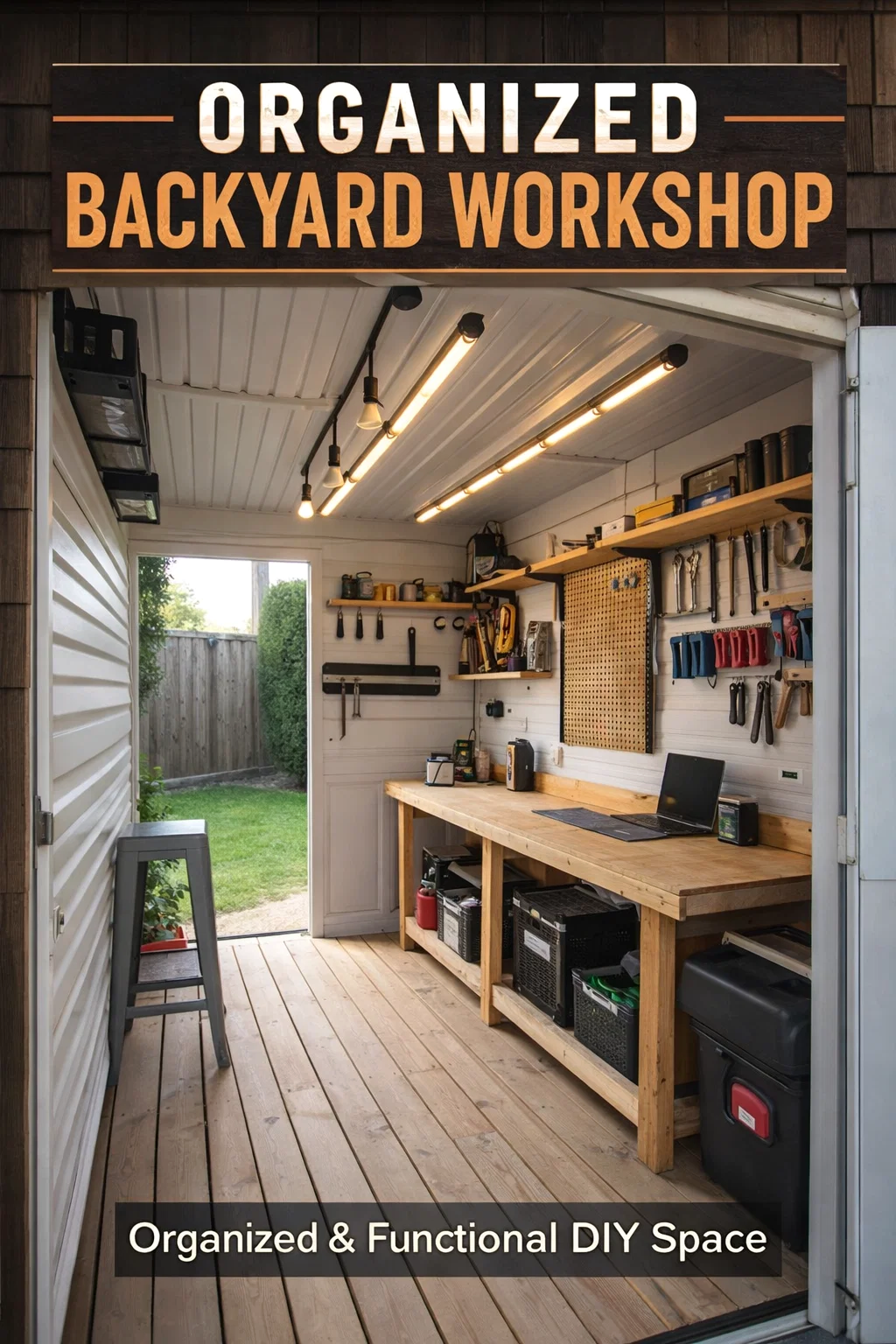
Stepping into a well-organized workspace feels like catching a second wind. There is something deeply satisfying about a workshop where every screwdriver has a home and the workbench is cleared for the next big idea. For many DIY enthusiasts, the dream isn’t necessarily a massive industrial warehouse, but rather a compact, efficient, and well-lit sanctuary right in the backyard. This small workshop shed perfectly captures that balance, proving that you do not need thousands of square feet to build something incredible. By maximizing vertical space and focusing on high-quality lighting, this setup transforms a simple garden structure into a professional-grade creative hub.
The Anatomy of an Efficient Small Workshop
When you are working with limited square footage, every inch must earn its keep. The design seen here excels because it prioritizes flow and accessibility. A central workbench serves as the heart of the operation, while the surrounding walls act as a vertical toolkit. The use of light-colored wood for the flooring and white-paneled walls is a brilliant choice, as it bounces light around the room, making a narrow space feel much larger than it actually is.
The open-door policy of this shed also plays a massive role in its functionality. By positioning the workbench near a wide entrance, the workspace can physically expand into the yard for larger projects, like sanding long boards or assembly. It also provides essential ventilation, ensuring that sawdust and fumes do not linger in the air. This connection between the indoors and outdoors is a hallmark of a smart backyard shop design.
Designing the Ultimate DIY Workbench
A workbench is more than just a table; it is the foundation of your craft. In this setup, the builder opted for a heavy-duty, custom-built wooden bench that spans the length of the wall. This design offers several advantages that store-bought benches often lack.
Stability and Material Choice
Notice the thick, solid wood top and the sturdy 4×4 legs. When you are hammering, sawing, or using a drill press, you need a surface that does not wobble. Mass is your friend here. By building a custom frame, you can tailor the height to your specific ergonomics, preventing back strain during long sessions of detailed work.
Integrated Storage Solutions
The space beneath the workbench is often a graveyard for scrap wood and half-finished projects. Here, it is utilized perfectly with open shelving and heavy-duty crates. Using milk crates or plastic bins for bulk storage keeps the floor clear while allowing you to categorize items like power tool batteries, extension cords, and painting supplies. Keeping these items off the main work surface ensures you always have room to move.
Mastering Vertical Tool Storage
The secret to keeping a small shop tidy is getting everything off the horizontal surfaces. If an object is sitting on your workbench, it is in your way. This workshop utilizes a multi-tiered approach to wall storage that is both aesthetic and highly functional.
- The Magnetic Tool Strip: Located right at eye level, a magnetic bar holds frequently used metal tools like pliers and wrenches. This allows for one-handed access without having to dig through a drawer.
- Wall-Mounted Organizers: To the right, a dedicated rack holds a variety of screwdrivers and hand tools. By pointing the handles outward, the user can identify the exact size they need at a glance.
- High Shelving for Power Tools: The top shelves are reserved for items used less frequently, such as circular saws, drills, and boxed hardware. This keeps the primary work zone uncluttered.
The addition of a small wire mesh or pegboard section adds even more versatility. It provides a modular space where hooks can be moved around as your tool collection grows. This flexibility is vital because a workshop is a living thing that evolves with your skill level.
The Importance of High-Output Lighting
You cannot produce high-quality work if you are squinting in the dark. One of the most striking features of this particular shed is the overhead lighting system. Instead of a single, dim bulb, the space is flooded with bright, daylight-balanced LED tubes. This is a game-changer for several reasons.
First, good lighting improves safety. When you are working with sharp blades or high-speed motors, being able to see every detail clearly reduces the risk of accidents. Second, it improves the quality of your finish. Whether you are staining wood or painting a model, shadows can hide imperfections that only show up once you move the piece into the sunlight. By installing track lighting or parallel LED strips, you eliminate shadows and create a professional environment that makes work feel like a joy rather than a chore.
Flooring and Comfort in the Shop
The flooring choice in a workshop is often overlooked, but it significantly impacts your comfort. This shed features clean, horizontal wooden planks. Wood is a fantastic choice for a DIY space because it has a slight “give” to it, which is much easier on your knees and back than standing on cold concrete for hours. Additionally, if you drop a delicate tool on a wooden floor, it is much less likely to break or lose its edge than it would on a hard stone surface.
Next to the entrance, a tall metal stool provides a place to sit during tasks that require fine motor skills, such as soldering or detailed carving. In a small shop, a stool that can be easily tucked under the bench or moved out of the way is essential for maintaining a clear path.
Maximizing Small Spaces with Creative Organization
When you look closely at this workspace, you see small touches that make a big difference. For instance, the use of a simple black trash bin tucked at the end of the bench keeps the area clean in real-time. A clean shop is a safe shop, and having waste management within arm’s reach prevents the buildup of dangerous scrap and dust.
Another clever addition is the dedicated charging station. With so many modern tools running on lithium-ion batteries, having a specific spot on the bench or a nearby shelf for chargers ensures your tools are always ready when inspiration strikes. This prevents the “battery hunt” that often kills the momentum of a project.
Utilizing the Door for Flow
The placement of the bench relative to the door is a masterclass in layout. Because the shed is narrow, the door acts as a relief valve. If you are working on a project that is 8 feet long, you can simply open the door and let the material hang out into the garden. This makes a 10-foot shed feel like a much larger space. It also invites natural light to supplement the LEDs, creating a more pleasant atmosphere during the day.
Top Tips for Building Your Own Backyard Retreat
If you are inspired by this image to create your own DIY sanctuary, here are a few actionable steps to get started:
- Plan Your Zones: Before you drive a single nail, decide where your “dirty” work (cutting, sanding) and “clean” work (assembly, finishing) will happen.
- Invest in LEDs: Swap out old incandescent or fluorescent bulbs for high-lumen LED shop lights. They are more energy-efficient and provide much better color accuracy.
- Go Vertical: Use every bit of wall space. Floor space is for walking; wall space is for storing.
- Keep it Breathable: Ensure you have at least two points of ventilation. This could be a door and a window, or even a simple exhaust fan.
- Personalize the Space: This is your retreat. Add a small radio, a clock, or even a whiteboard for sketching out measurements and ideas.
Conclusion: The Power of a Dedicated Space
A backyard workshop is more than just a place to store tools; it is a laboratory for your imagination. As this stunning shed demonstrates, you do not need an oversized budget or a massive garage to create a workspace that is both beautiful and functional. By focusing on smart organization, ample lighting, and a sturdy work surface, you can turn any small outbuilding into a powerhouse of productivity.
Whether you are a weekend warrior tackling home repairs or a dedicated crafter building furniture, having a dedicated space allows you to leave your projects set up and return to them whenever you have a spare moment. It encourages creativity and provides a peaceful escape from the noise of daily life. So, take a look at your own backyard or spare corner and imagine what you could build if you had a place like this to call your own. The only thing standing between you and your next masterpiece is a bit of organization and a solid place to work.