
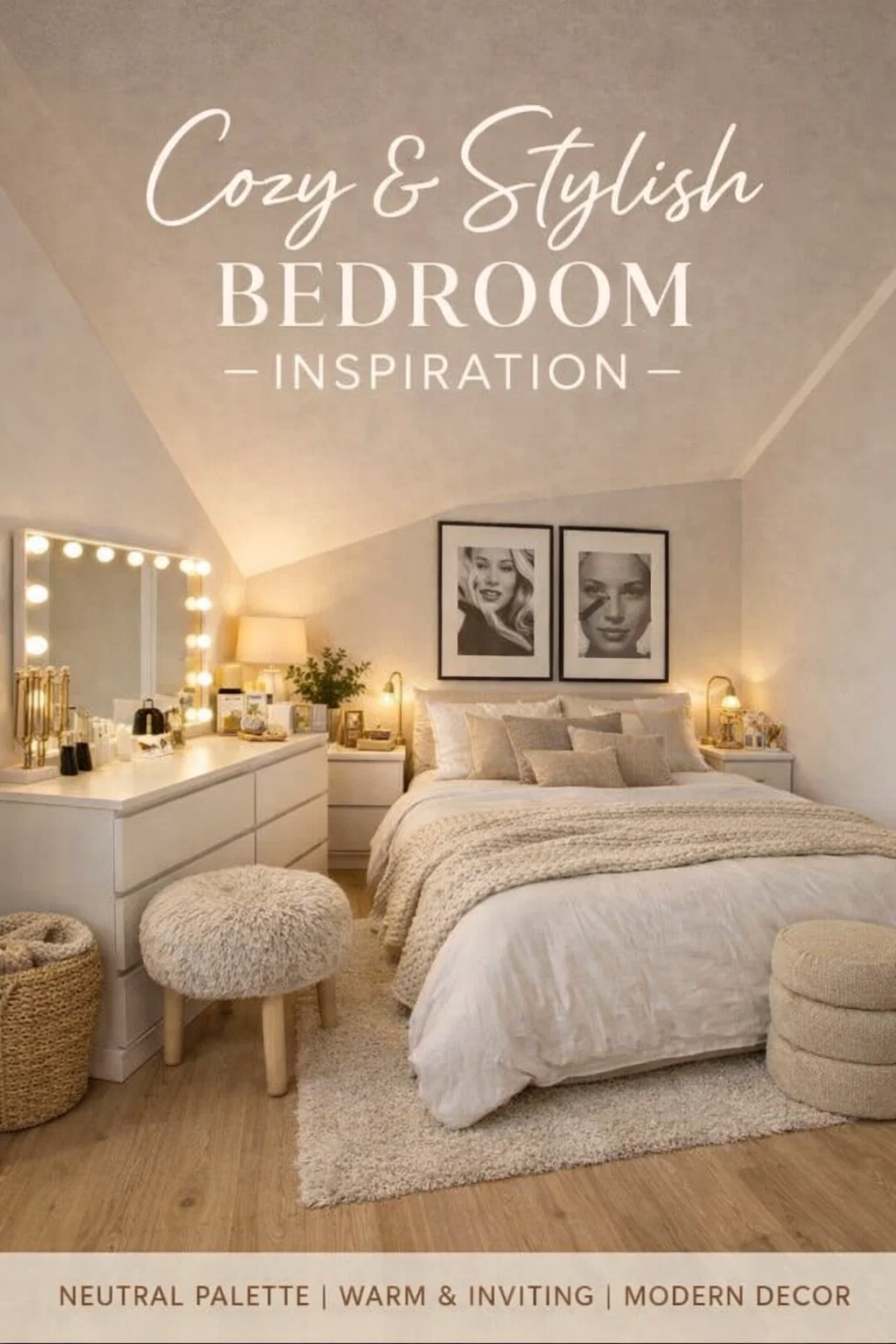
Creating a sanctuary in a small space requires a thoughtful balance of light, texture, and smart furniture placement. The image showcases a masterclass in attic bedroom design, where a slanted ceiling becomes a cozy architectural feature rather than a limitation. By sticking to a monochromatic palette and layering various light sources, this room feels airy, expansive, and incredibly inviting. Whether you are dealing with a studio apartment or a compact guest room, these design principles can help you achieve a high end look without needing extra square footage.
Embracing the Slanted Ceiling Aesthetic
Architectural quirks like sloped walls and low ceilings often present a challenge for traditional furniture. However, as seen in this beautifully curated space, the key is to work with the lines of the room. By placing the bed under the lowest part of the slope, the ceiling acts as a built in canopy, creating an intimate sleeping nook. This approach leaves the taller walls free for functional pieces like dressers and mirrors.
To keep a room with slanted ceilings from feeling cramped, it is essential to use light colors. The creamy off white walls and matching ceiling in this design blur the boundaries of the room, making it harder for the eye to perceive exactly where the walls end and the ceiling begins. This visual trick is one of the most effective ways to open up a small attic space.
The Power of a Neutral Color Palette
Neutral tones are the backbone of a calming bedroom environment. The use of whites, creams, and soft greys creates a cohesive look that feels timeless. In this specific setup, the light wood flooring provides just enough warmth to prevent the white furniture from looking sterile. When you stick to a limited color story, every texture becomes more pronounced, allowing the room to feel rich and layered despite the lack of bold colors.
Creating a Focal Point with a Hollywood Vanity
One of the standout features of this room is the stunning vanity area. A wide white dresser serves double duty as both clothing storage and a makeup station. This is a brilliant space saving hack for small bedrooms where there is no room for a separate desk and chest of drawers.
The large Hollywood style mirror with integrated globe bulbs is not just a functional tool for grooming; it is a major design statement. The symmetrical lighting provides an even glow that eliminates shadows, while the reflective surface of the mirror helps bounce light back into the rest of the room. Placing a large mirror on the wall opposite or adjacent to a light source is a classic interior design move to double the perceived depth of a space.
Functional Decor for the Vanity Top
Organization is key when your dresser is also your beauty station. To maintain the minimalist aesthetic, keep the surface clutter free. Use small trays to group perfumes and skincare bottles, and consider a dedicated jewelry stand to turn your accessories into part of the decor. Adding a small potted plant or a vase of greenery next to the mirror introduces a touch of nature that breathes life into the monochromatic setting.
Layered Lighting for a Dreamy Ambiance
Lighting is the most important element in setting the mood of a bedroom. This room utilizes a layered lighting strategy that covers three main types: task, ambient, and accent lighting. By avoiding a single, harsh overhead light, the space feels soft and multidimensional.
- Task Lighting: The vanity mirror provides focused light for specific activities like getting ready in the morning.
- Ambient Lighting: Small bedside lamps with warm bulbs create a gentle glow perfect for winding down before sleep.
- Accent Lighting: Subtle spotlights or fairy lights can be used to highlight architectural features or artwork on the walls.
The industrial style bedside lamps seen here add a modern touch. Their exposed bulbs and slim frames don’t take up much visual space on the nightstands, which is crucial in a tight layout. Always opt for warm toned bulbs (around 2700K) to ensure the bedroom feels like a place for relaxation rather than a bright office space.
Texture and Textiles: Making it Cozy
In a room where color is kept to a minimum, texture does all the heavy lifting. The bed is the heart of the room, and here it is dressed in layers of high quality linens. A mix of smooth cotton sheets, a quilted duvet, and a chunky knit throw at the foot of the bed creates an irresistible sense of comfort.
The floor is another area where texture plays a big role. A plush, high pile rug placed partially under the bed adds softness underfoot and helps define the sleeping area. Notice how the rug’s color mimics the tones of the bedding, creating a seamless flow from the floor to the furniture. Even the seating, like the faux fur stool and the upholstered ottoman, adds another layer of tactile interest that makes the room feel luxurious.
Choosing the Right Bedding for a Small Space
When selecting bedding for a compact room, avoid busy patterns that can overwhelm the space. Instead, play with different weaves and fabrics. A linen duvet cover offers a relaxed, lived in look, while velvet or faux fur pillows can add a touch of glamour. Mixing different shades of the same neutral color adds depth without creating visual clutter.
Maximizing Storage in Compact Bedrooms
Storage is often the biggest hurdle in bedroom design. This room solves the problem by using furniture that scales well with the space. The long dresser provides ample drawer space without protruding too far into the walking path. Meanwhile, the use of a woven basket in the corner is a stylish way to store extra blankets or pillows that aren’t in use.
Baskets are a designer favorite because they add an organic, earthy element to the room while serving a practical purpose. They hide the mess and contribute to the “boho minimalist” vibe that is so popular in modern interiors. If you have space under the bed, consider using low profile bins to store seasonal clothing, keeping your main drawers dedicated to daily essentials.
Art and Personalization
Just because a room is small doesn’t mean it should be devoid of personality. The twin black and white portraits hanging above the bed provide a sophisticated focal point. By choosing monochromatic art, the pieces blend perfectly with the room’s color scheme while adding a modern, gallery like feel.
When hanging art in an attic room, be mindful of the ceiling height. Centering the frames over the headboard draws the eye upward and emphasizes the height that is available. Simple black frames provide a sharp contrast against the white walls, giving the room a polished and curated appearance.
Bringing in a Touch of Nature
Indoor plants are the finishing touch that every bedroom needs. In this design, a simple sprig of greenery on the dresser and a small plant on the nightstand provide a pop of color. Plants help purify the air and have been shown to reduce stress, making them the perfect companions for a sleep space.
If you don’t have a green thumb, high quality artificial plants can provide the same visual benefit without the maintenance. Look for varieties with realistic textures, like eucalyptus or olive branches, which fit perfectly with a rustic or minimalist decor style.
The Impact of Flooring Choices
The light oak flooring in the image plays a silent but vital role in the overall success of the design. The wide planks and natural grain add a sense of craftsmanship and stability to the room. Light wood floors reflect more light than dark wood or carpet, further contributing to the bright and airy atmosphere. If you are renovating, choosing a light wood or laminate can transform the entire feel of your home, making it seem larger and more modern.
Small Details That Make a Big Difference
Look closely at the hardware and accessories. Small gold or brass accents on the lamps and vanity items add a hint of metallic shine that feels upscale. Even the choice of a simple, leggy stool for the vanity keeps the floor space visible, which is a key trick for making small rooms feel less crowded. Every piece of furniture in this room was chosen for its ability to provide function without adding bulk.
Conclusion: Crafting Your Own Personal Retreat
Designing a small bedroom is about making intentional choices. By prioritizing a light color palette, investing in multifunctional furniture like a vanity dresser, and layering your lighting, you can create a space that feels like a boutique hotel suite. The attic bedroom in the image proves that with the right styling, even a room with challenging angles can become the most beautiful part of the house.
Remember to focus on comfort through textiles and keep organization at the forefront of your layout. When you curate your environment with care, your bedroom becomes more than just a place to sleep; it becomes a sanctuary where you can escape the noise of the world and truly feel at home. Take these ideas, adapt them to your unique style, and start building the cozy retreat you deserve.