
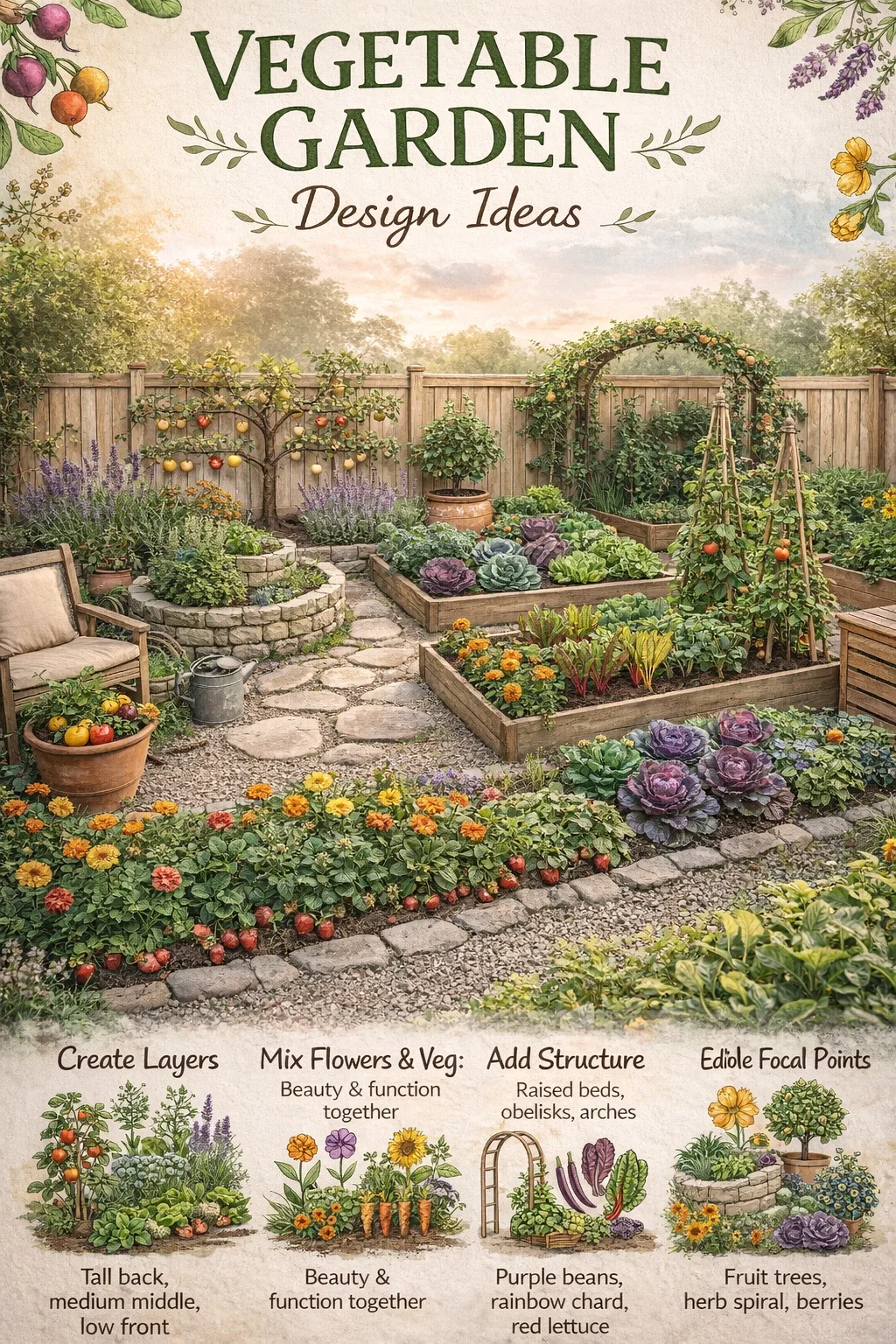
Creating a thriving vegetable garden at your new home is one of the most rewarding projects you can undertake. It is about more than just growing food; it is about designing a functional, beautiful outdoor space that provides fresh produce and a peaceful retreat. When you look at a well planned garden layout, you see a perfect harmony between structured raised beds, vertical interest, and a vibrant mix of colors. This guide will walk you through every step of turning a blank backyard into a productive edible landscape that looks as good as it tastes.
The Foundations of Smart Garden Design
Successful gardening starts with a clear plan. Instead of simply digging holes in the dirt, modern home garden ideas focus on maximizing every square inch through layering and organization. By placing taller elements like fruit trees and climbing structures at the back and shorter plants like strawberry borders at the front, you ensure that every leaf gets the sunlight it needs to thrive. This tiered approach also creates a sense of depth that makes even a small suburban yard feel like a sprawling estate.
Building Better with Raised Veggie Beds
One of the most effective ways to organize a new garden is through the use of raised beds. These structures offer several advantages for the home gardener. They provide excellent drainage, prevent soil compaction, and make it much easier to manage weeds. By using high quality organic soil within these beds, you give your vegetables the best possible start. You can choose wooden frames for a rustic look or sleek metal containers for a more contemporary aesthetic.
Creating Vertical Interest with Obelisks and Arches
If you have limited ground space, the only way to go is up. Incorporating vertical structures like obelisks for climbing beans or arches for squash adds a sophisticated architectural element to the garden. These features break up the flat plane of the backyard and allow you to grow heavy producers in a very small footprint. Beyond their utility, a vine covered obelisk acts as a beautiful focal point that draws the eye upward.
Integrating Beauty and Function
The days of hiding your vegetable patch in a far corner of the yard are over. Modern design encourages “edible landscaping,” where your food sources are integrated into your ornamental garden. This approach uses the natural colors and textures of plants to create a visual masterpiece that remains productive throughout the growing season.
The Magic of Herb Spirals
An herb spiral is a fantastic example of permaculture design meeting backyard aesthetics. By stacking stones or bricks in a winding upward path, you create multiple microclimates in a single square yard. The top of the spiral stays dry and sunny, which is perfect for Mediterranean herbs like rosemary and thyme. As the spiral winds down, the soil becomes moister and cooler, providing the ideal environment for mint, parsley, and chives. It is a stunning circular feature that puts your most used kitchen ingredients right at your fingertips.
The Power of Companion Planting with Flowers
Mixing flowers with your vegetables is not just about looks. Certain blooms, such as marigolds, nasturtiums, and sunflowers, play a vital role in a healthy garden ecosystem. Marigolds are famous for deterring soil pests, while bright sunflowers attract pollinators like bees and butterflies. By interspersing these flowers among your kale and tomatoes, you create a natural defense system that reduces the need for chemical interventions. Plus, the contrast between bright orange petals and deep green foliage is simply breathtaking.
Choosing Colorful and Unique Varieties
When planning your new garden, think beyond the standard green varieties found in grocery stores. One of the greatest joys of home gardening is the ability to grow “ornamental edibles” that are as striking to look at as they are delicious to eat. Rainbow chard with its neon pink and yellow stems, deep purple lettuces, and variegated kale can transform a simple vegetable patch into a tapestry of color.
Espaliered Fruit Trees for Small Spaces
If you have a fence or a blank wall, you have room for an orchard. Espalier is the ancient practice of training fruit trees to grow flat against a support. This technique allows you to grow apples, pears, or even figs in narrow passages where a traditional tree would never fit. In the spring, these trees provide a wall of blossoms, and in the autumn, they offer a bountiful harvest of sun ripened fruit.
Ornamental Kale and Edible Borders
Traditional garden borders often consist of boxwoods or hostas, but why not make your borders edible? A strawberry border is a perfect low growing option that provides white flowers in the spring and sweet berries in the summer. Similarly, ornamental kale offers intricate leaf patterns and shades of purple and blue that hold up beautifully even as the weather turns cold. These choices ensure that your garden remains a visual delight during every month of the year.
Practical Elements for Garden Success
A beautiful garden also needs to be a functional one. Including spaces for maintenance and relaxation ensures that you will actually spend time enjoying your hard work. Every design should account for the “behind the scenes” aspects of gardening that keep the plants healthy and the gardener happy.
Efficient Composting and Tool Storage
Healthy soil is the secret to a high yield garden, and there is no better way to build soil than with your own compost. Tucking a stylish wooden compost bin into a corner allows you to recycle kitchen scraps and garden waste into “black gold” for your plants. Likewise, having a dedicated spot for your shovel, hoe, and watering can keeps the space tidy and organized, preventing the garden from feeling cluttered.
Creating a Spot for Relaxation
Gardening is hard work, so it is important to include a place to sit and admire the view. A simple wooden bench or a set of chairs placed near a potted lemon tree provides a perfect vantage point. Whether you are drinking your morning coffee or watching the sunset, having a comfortable seat in the middle of your edible oasis makes the experience much more meaningful. It turns the garden from a chore into a lifestyle.
Maintenance Tips for New Gardeners
Once your garden is designed and planted, the focus shifts to upkeep. While the initial setup takes effort, a well designed garden is actually easier to maintain in the long run. Follow these simple tips to keep your backyard paradise looking its best.
- Consistent Watering: Vegetables need regular moisture to produce well. Consider installing a drip irrigation system to deliver water directly to the roots, saving time and reducing water waste.
- Mulching: Apply a thick layer of organic mulch around your plants to help retain moisture and suppress weeds. This also adds nutrients back into the soil as it breaks down.
- Pruning and Harvesting: Regularly harvesting your herbs and vegetables encourages the plants to produce more. Don’t be afraid to snip off dead leaves or spent blooms to keep everything looking fresh.
Conclusion: Your Journey to a Greener Home
Starting a new home garden is a journey of discovery. By using a combination of raised beds, vertical structures, and a thoughtful mix of edible and ornamental plants, you can create a space that nourishes both your body and your soul. Remember that a garden is a living thing that will grow and change over time. Start with a solid plan, choose varieties that excite you, and don’t be afraid to experiment with different layouts and colors. With a little bit of patience and a lot of love, your backyard will soon become the favorite part of your home. Whether you are picking a fresh tomato for dinner or simply enjoying the scent of lavender on the breeze, the rewards of a well designed garden are truly endless.