
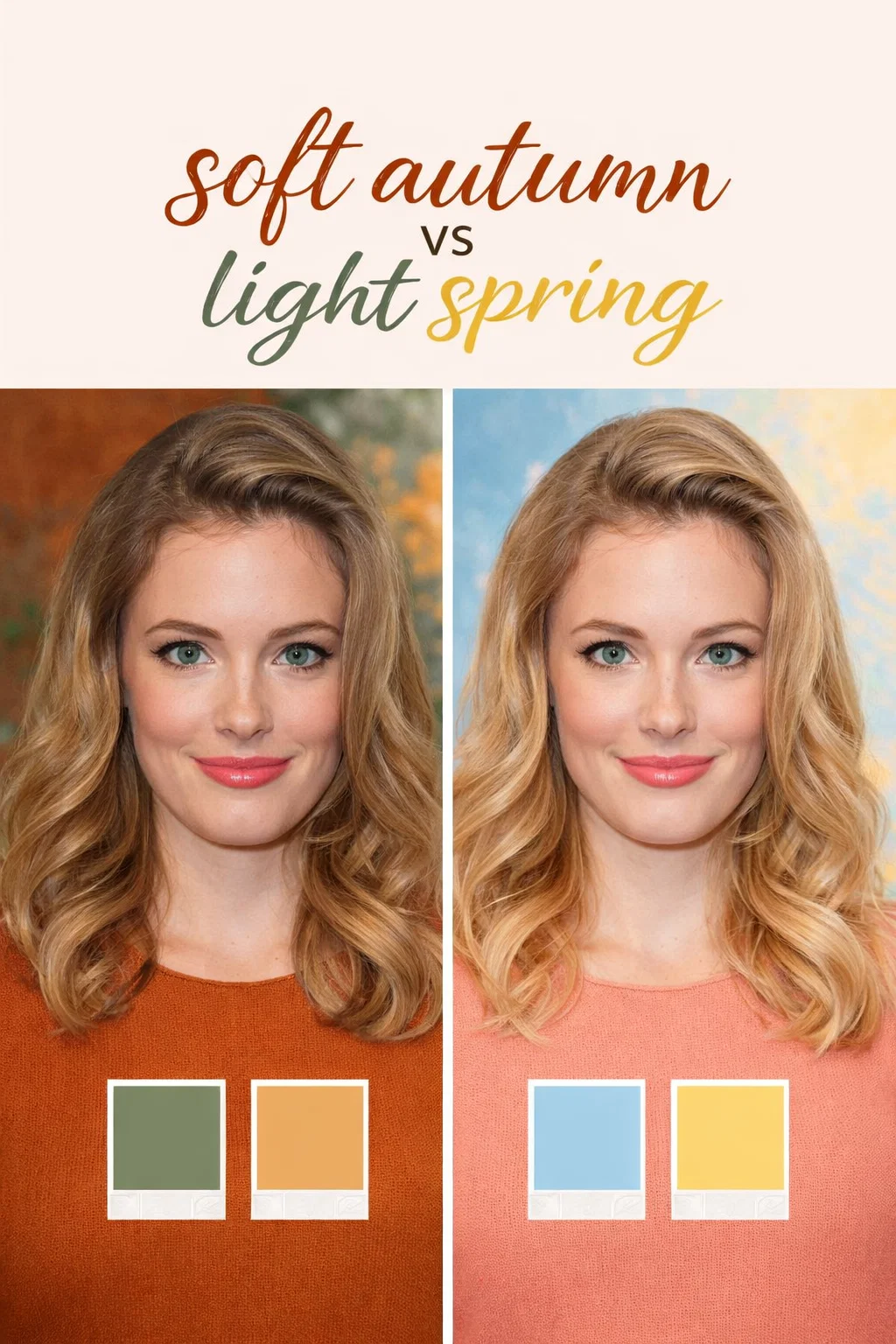
Finding your perfect color palette can feel like uncovering a hidden superpower. When you wear the right shades, your skin looks clearer, your eyes sparkle, and your overall presence feels more harmonious. In the world of seasonal color analysis, two of the most commonly confused sub-seasons are Soft Autumn and Light Spring. Both sit at the intersection of warmth and lightness, yet they offer distinct vibes that can completely change how you approach your wardrobe and makeup routine. Understanding the nuance between these two palettes is the key to mastering your personal style.
The Magic of Color Analysis: Why Sub-Seasons Matter
Color analysis is not just about identifying if you are a warm or cool type. It goes much deeper into the dimensions of color: hue, value, and chroma. Soft Autumn and Light Spring both lean toward the warmer side of the spectrum, which is why people often find themselves stuck between the two. However, the difference lies in the level of “softness” versus “clarity.”
A Soft Autumn palette is defined by its muted, earthy undertones. It is like looking at a forest during a foggy morning in late September. On the other hand, Light Spring is all about brightness and delicacy. It evokes the feeling of the first sunbeams of April hitting a field of wildflowers. While both palettes are relatively light, the energy they project is vastly different. One is grounded and sophisticated, while the other is fresh and energetic.
Characteristics of a Soft Autumn
If you fall into the Soft Autumn category, your primary characteristic is “muted.” Your natural coloring has a low level of contrast. This means your hair, skin, and eyes blend together in a gentle, hazy way rather than standing out sharply against one another.
The Soft Autumn Features
- Skin: Often has a neutral-warm undertone. It might look ivory, olive, or sandy. It does not necessarily have a golden glow but rather a matte, velvety quality.
- Eyes: Usually soft hazel, muddy green, or a warm gray-blue. They often have a “cloudy” or blended appearance rather than a piercing look.
- Hair: Typically ranges from strawberry blonde to golden brown or a “dishwater” blonde that has warm highlights in the sun.
The Soft Autumn Palette
The colors that look best on a Soft Autumn are those that have been “grayed down.” Think of colors that have been mixed with a bit of stone or taupe. Olive green, terracotta, mustard yellow, and toasted almond are staples for this type. These colors wrap the wearer in a cozy, elegant warmth that feels timeless and organic.
Characteristics of a Light Spring
Light Spring is the lightest of all the spring sub-seasons. If Soft Autumn is a fading sunset, Light Spring is a bright sunrise. The primary characteristic here is “lightness,” followed closely by “warmth.” Unlike the muted nature of autumn, spring colors have a bit more “pop” and clarity.
The Light Spring Features
- Skin: Usually very fair with clear peach or golden undertones. Light Springs often have a translucent quality to their skin and may freckle easily in the sun.
- Eyes: Bright and clear. You will often see light blue, clear green, or a pale aqua. The iris usually has a distinct pattern that looks like a sunburst.
- Hair: Light blonde, golden blonde, or a very light golden brown. There is a shimmering, sunny quality to the hair.
The Light Spring Palette
The Light Spring palette is full of “sorbet” colors. Think of peach, apricot, light aqua, and sunny yellows. These colors are clear but not overwhelming. They are high in “chroma,” meaning they are more saturated than the Soft Autumn shades, but because they are so light, they remain delicate rather than aggressive.
Soft Autumn vs Light Spring: The Main Differences
The easiest way to tell these two apart is to look at the “dustiness” of the color. Soft Autumn colors look like they have a layer of dust or incense smoke over them. Light Spring colors look like they have been washed in pure sunlight. If you put a Soft Autumn in a bright Light Spring peach, they might look a bit tired or sallow. Conversely, if you put a Light Spring in a Soft Autumn sage green, they might look “washed out” or gray.
The Contrast Test
Soft Autumns thrive in low contrast. They look incredible in monochrome outfits or “tonal” dressing where different shades of the same muted color are layered together. Light Springs can handle a bit more animation. While they still prefer a lighter overall look, they benefit from a small amount of “clear” contrast to match the clarity in their eyes.
Warmth Levels
Both are warm, but Soft Autumn is a “toasted” warmth. It feels like wood, dried leaves, and clay. Light Spring is a “glowing” warmth. It feels like honey, daffodils, and tropical waters. Understanding this distinction helps you choose the right metals for jewelry as well. While both look great in gold, Soft Autumns can pull off brushed or antique gold beautifully, whereas Light Springs shine brightest in polished, shiny yellow gold or rose gold.
Makeup for the Soft Autumn Woman
When it comes to makeup, the goal for a Soft Autumn is to enhance that velvety, soft-focus look. Highlighters that are too sparkly or lipsticks that are too bright will look “separate” from the face. Instead, aim for products that melt into the skin.
Lips and Cheeks
Look for “nude” shades that have a hint of warmth. Dusty rose, spiced peach, and soft terracotta are perfect. For blush, a matte or satin finish is usually better than a high-shimmer finish. You want the glow to look like it is coming from within the skin rather than sitting on top of it.
Eyeshadows
Stick to earthy tones. Sage greens, warm taupes, and soft browns will make your eyes pop without looking heavy. Avoid harsh black eyeliner at all costs. A soft coffee brown or a deep olive pencil smudged into the lash line will provide all the definition you need while maintaining that characteristic softness.
Makeup for the Light Spring Woman
For a Light Spring, the makeup should feel fresh, dewy, and alive. You want to mimic the clarity found in your natural features. Heavy, matte foundations can often look like a mask on this type, so tinted moisturizers and cream products are your best friends.
Lips and Cheeks
Light Springs look amazing in corals and bright peaches. A glossy finish is particularly flattering because it mimics the “clear” quality of the spring palette. A pop of warm pink on the cheeks can instantly wake up the entire face. Unlike the Soft Autumn, you can handle a bit of shimmer and sparkle.
Eyeshadows
Think light and bright. Champagne, pale gold, and soft mossy greens are excellent choices. Again, black is usually too heavy for a Light Spring. Instead, try a warm grey or a golden brown mascara and eyeliner to keep the look airy and youthful.
Building a Wardrobe for Your Sub-Season
Once you know your season, shopping becomes much easier. You can walk into a store and immediately “scan” the racks for your specific tones. For a Soft Autumn, you are looking for those “expensive-looking” neutrals. A Soft Autumn closet is often filled with camel coats, olive chinos, and cream sweaters. It is a palette that lends itself perfectly to the “quiet luxury” aesthetic.
A Light Spring wardrobe is more playful. You might find yourself drawn to light wash denim, mint green blouses, and apricot sundresses. It is a wardrobe that feels like a permanent vacation. Even your neutrals, like light stone or camel, should have a slight “yellow” or “honey” undertone rather than a “grey” or “flat” undertone.
What if You Sit Right on the Fence?
It is very common to feel like you are a bit of both. Many people find that they can “borrow” colors from their sister seasons. Since Soft Autumn and Light Spring both share a warm undertone and a lighter value, there is a small “buffer zone” of colors that can work for both. If you are undecided, try the “Lipstick Test.” Apply a muted, brownish-pink (Soft Autumn) on one half of your lips and a clear, peachy-coral (Light Spring) on the other. See which one makes your skin look clearer and your eyes look brighter. Usually, one will clearly emerge as the winner.
Embracing Your Natural Glow
At the end of the day, seasonal color analysis is a tool to help you feel more confident. Whether you are a Soft Autumn or a Light Spring, the goal is to celebrate the unique way light interacts with your features. By choosing colors that harmonize with your natural biology, you stop fighting against your appearance and start leaning into what makes you beautiful. So, grab some fabric drapes, stand in front of a window with natural light, and start experimenting. Your perfect palette is waiting to be discovered.
Conclusion: The Path to Color Confidence
Understanding the subtle shift from the muted, earthy elegance of Soft Autumn to the clear, sunny vibrancy of Light Spring can transform your approach to fashion and beauty. While these two seasons share a warm foundation, their unique personalities offer different ways to express your style. By paying attention to the clarity of your eyes and the “dustiness” of your skin tone, you can unlock a wardrobe that feels like it was made specifically for you. Color is a language, and once you learn how to speak yours, you will never look at a piece of clothing the same way again. Happy styling!