
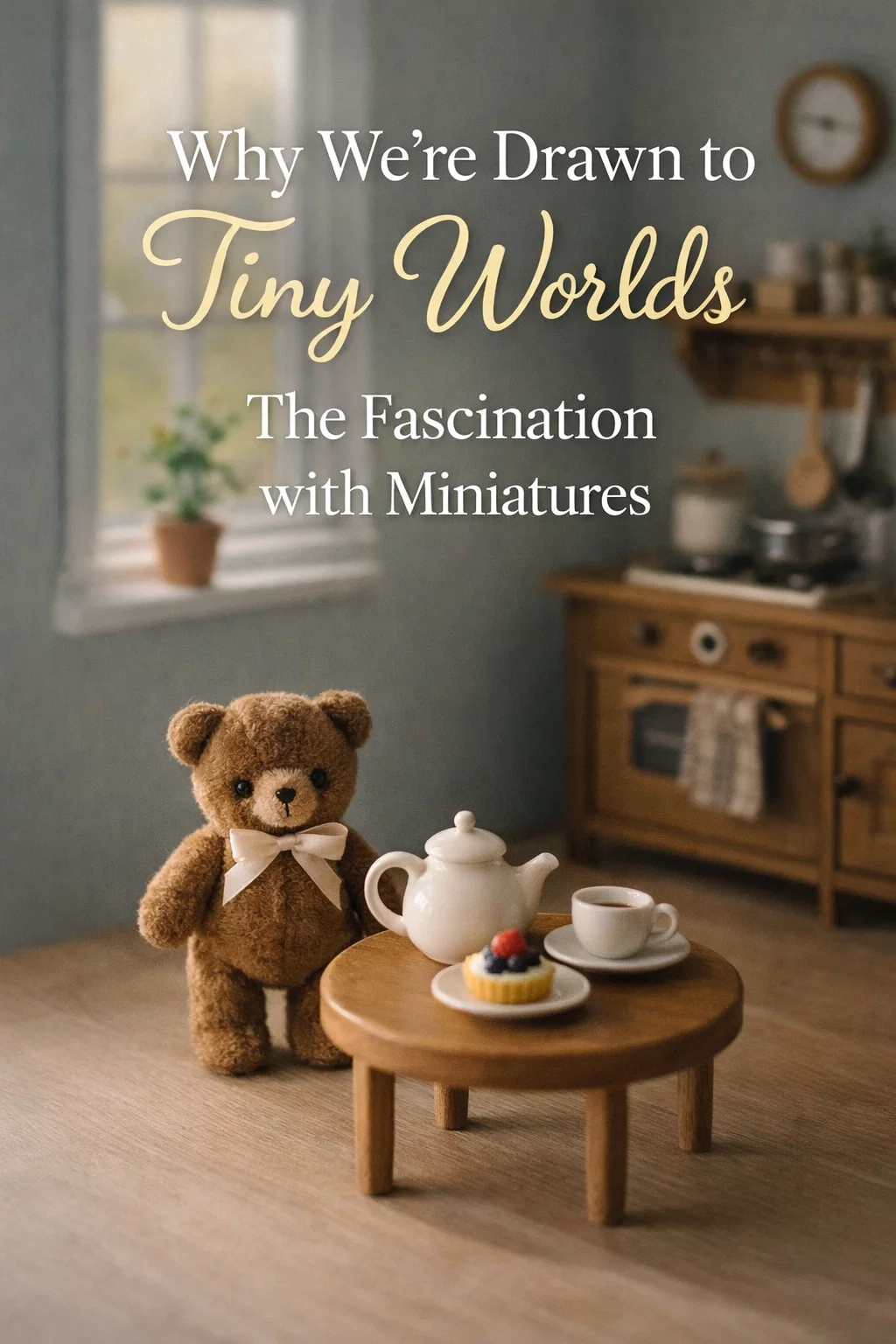
Have you ever found yourself completely mesmerized by a tiny porcelain tea set or a perfectly scaled wooden chair that fits in the palm of your hand? You are not alone. There is a profound, almost magnetic pull that draws us toward miniatures. This fascination goes far beyond simple nostalgia or childhood play. It is a deeply rooted psychological response that touches on our need for control, our appreciation for craftsmanship, and our innate love for storytelling. When we look at a miniature scene, we are not just seeing small objects; we are stepping into a curated universe where everything is orderly, tactile, and undeniably charming.
The Cognitive Appeal of the Small Scale
Psychologists have long studied why humans are so moved by tiny things. One of the primary reasons is the concept of mastery and control. In a world that often feels chaotic and overwhelming, a miniature environment offers a sense of absolute governance. When you look down at a dollhouse or a small-scale diorama, you are viewing the world from a God-eye perspective. You have the power to arrange the furniture, decide the lighting, and dictate the narrative of that space. This provides a mental reprieve from the complexities of daily life, allowing the brain to engage with a simplified, manageable reality.
Additionally, miniatures trigger what is known as the baby schema. Evolutionary biology suggests that we are programmed to find things with small proportions, soft edges, and delicate features inherently cute and worthy of protection. This nurturing instinct extends to inanimate objects. When we see a tiny muffin on a tiny table, our brains register it with the same affection we might feel for a kitten or a small child. It is a visceral, positive emotional reaction that makes us want to lean in and look closer.
Artistry in Every Millimeter
The creation of miniatures is an exercise in extreme patience and precision. Unlike full-sized art, where broad strokes can be used to convey meaning, miniature art requires every single millimeter to be intentional. Makers often spend hundreds of hours recreating the grain of a hardwood floor or the delicate stitching on a floral dress for a doll that stands only a few inches tall. This level of detail demands a unique brand of craftsmanship that bridges the gap between engineering and fine art.
Materials and Techniques
- Polymer Clay: Often used to create hyper-realistic food items like the golden-brown muffin seen in miniature displays.
- Fine Woodworking: Using balsa or basswood to create functional drawers and stable bed frames at a 1:12 scale.
- Textile Work: Sourcing ultra-thin fabrics to ensure that curtains and bedding drape naturally rather than looking stiff and bulky.
When an artist successfully captures the essence of a real-world object in miniature, it creates a sense of wonder. We marvel at the skill required to manipulate such small tools and materials. It is a celebration of human capability and the dedication to finding beauty in the smallest possible places.
Miniatures as a Tool for Mindfulness
In the modern era, the hobby of collecting or building miniatures has become a powerful tool for mental wellness and mindfulness. Engaging with “tiny stuff” requires a high level of focus. You cannot rush the assembly of a miniature cabinet or the painting of a tiny face. This forced slowing down acts as a form of moving meditation. As you focus on the tip of a needle or the placement of a microscopic hinge, the noise of the outside world tends to fade away.
Many enthusiasts find that their miniature worlds serve as a physical manifestation of their inner peace. Decorating a tiny room with boho rugs, minimalist furniture, or rustic accents allows for creative expression without the high stakes and heavy lifting of a real-life home renovation. It is a low-pressure way to experiment with design, color palettes, and layouts, providing a sense of accomplishment that boosts self-esteem and reduces stress.
The Narrative Power of Small Spaces
Every miniature setup tells a story. A tiny bed with a rumpled quilt suggests someone has just woken up. A cup of coffee sitting on a small wooden table implies a quiet moment of reflection. Because these scenes are frozen in time, they invite the viewer to fill in the blanks. Who lives here? What are they doing? Where did they go? This narrative quality makes miniatures an incredible tool for writers and storytellers.
For content creators and bloggers, miniatures offer a unique visual language. They are highly “pinnable” and shareable because they evoke such a strong sense of whimsy. A well-staged miniature photograph can transport a follower to a different world, making it an effective way to engage an audience looking for an escape from the mundane. Whether it is through a blog post about interior design or a social media feed dedicated to tiny crafts, these small objects speak volumes about our desire for beauty and order.
Building Your Own Miniature Sanctuary
If you are looking to start your own journey into the world of small-scale design, the barrier to entry is lower than you might think. You do not need a massive workshop to begin. Many people start with a simple book nook or a single-room kit. The key is to choose a style that resonates with you personally. If you love the cozy, lived-in feel of a rustic cottage, focus on natural wood textures and warm lighting. If you prefer a minimalist aesthetic, look for clean lines and a neutral color palette.
Getting Started Tips
- Start Small: Begin with a single piece of furniture or a small accessory kit before committing to a full dollhouse.
- Use the Right Tools: Invest in a good pair of tweezers, a precision craft knife, and high-quality archival glue.
- Lighting Matters: Small LED lights can transform a dull miniature box into a glowing, magical scene.
The goal is not perfection but rather the process of creation. Each tiny book you fold and each small rug you weave is a testament to your creativity. Over time, these small pieces come together to form a sanctuary that reflects your personality and your dreams.
Why the Trend is Growing
We are currently seeing a massive resurgence in the popularity of miniatures, fueled largely by digital culture. Platforms like Pinterest and Instagram have allowed miniature artists from around the globe to share their work with millions. This visibility has turned a niche hobby into a mainstream movement. People are increasingly drawn to tactile hobbies as an antidote to our screen-saturated lives. Touching real materials, even very small ones, provides a grounding experience that digital interactions simply cannot replicate.
Furthermore, the “tiny house” movement in real-world architecture has mirrored this fascination. We are learning to appreciate the efficiency and intentionality of living small. Miniatures represent the ultimate version of this philosophy. They show us that a space does not need to be large to be meaningful, beautiful, or complete. They remind us to look closer at the details of our own lives and to find joy in the small, everyday moments that we might otherwise overlook.
The Lasting Impact of the Little Things
The psychology of tiny things teaches us that our emotions are not scaled by size. A tiny object can carry as much emotional weight as a large one. Whether it is a family heirloom miniature passed down through generations or a new DIY project you just finished, these objects hold our memories, our aspirations, and our creativity. They are a bridge between the world we inhabit and the world of our imagination.
As we continue to explore the boundaries of art and design, the miniature will always hold a special place in the human heart. It challenges our perceptions, delights our senses, and provides a unique window into the human soul. So the next time you see a tiny chair or a miniature garden, take a moment to stop and look. You might just find that the smallest things offer the biggest inspirations.
Final Thoughts on the Magic of Miniatures
In closing, the world of miniatures is a vast landscape of creativity packed into a very small footprint. It is a hobby that rewards patience, celebrates detail, and offers a unique form of psychological comfort. By shrinking the world, we somehow manage to expand our own sense of wonder. Whether you are a creator, a collector, or simply an admirer, the magic of “tiny stuff” is a reminder that beauty truly is in the details. Keep exploring, keep creating, and never lose your appreciation for the small wonders of life. There is an entire universe waiting to be discovered, one millimeter at a time.