
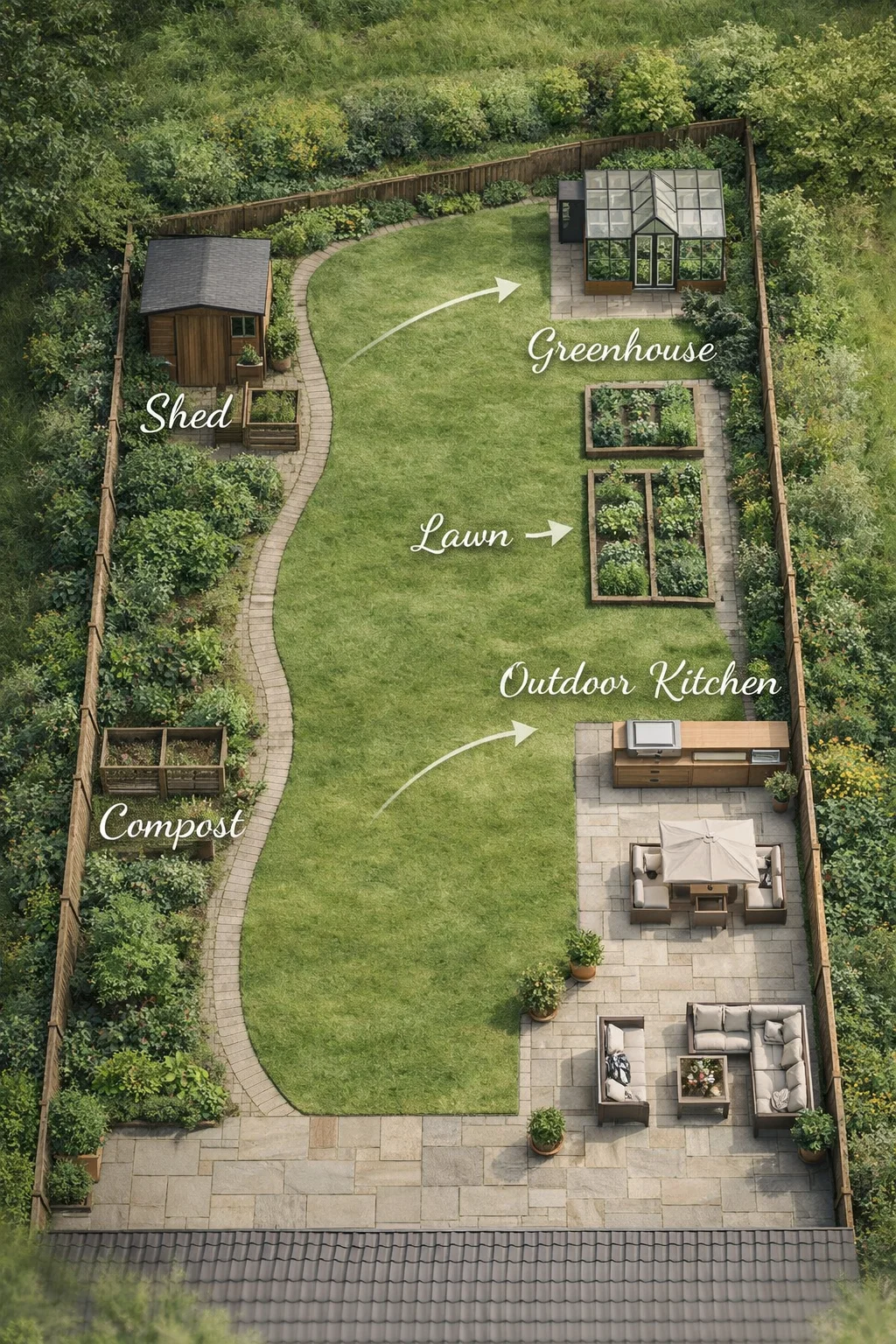
Creating a backyard that serves as both a sanctuary and a functional workspace is a dream for many homeowners. When you look at a well-planned garden layout, you see more than just grass and plants; you see a lifestyle. A thoughtful design allows you to transition seamlessly from harvesting fresh vegetables in your greenhouse to flipping burgers in an outdoor kitchen, all while maintaining a beautiful aesthetic that adds value to your home. This specific layout demonstrates how to balance hardscaping, like patios and paths, with softscaping, such as lawns and garden beds, to create a cohesive outdoor environment.
The Importance of Zoning in Backyard Design
One of the most effective ways to manage a rectangular or narrow lot is through the concept of zoning. Zoning involves dividing your outdoor space into specific rooms based on their intended use. In this design, the yard is split into three primary zones: the utility area, the recreation area, and the production area. By defining these spaces, the yard feels organized rather than cluttered.
The utility zone, located near the house, features a spacious stone patio. This is the heart of social interaction. By placing the outdoor kitchen and seating areas closest to the back door, you ensure easy access to the indoor kitchen for transporting food and supplies. Moving further into the yard, you encounter the recreation zone, represented by a lush, curved lawn. This open space provides visual relief and a place for children or pets to play. Finally, the production zone at the far end houses the greenhouse, raised beds, and shed. This placement keeps the more labor-intensive parts of gardening tucked away, providing a quiet corner for focused work.
Creating Flow with Curved Pathways
A common mistake in backyard planning is using strictly straight lines, which can make a space feel rigid and smaller than it actually is. This layout utilizes a beautiful, winding stone path that leads the eye from the house all the way to the back of the property. The gentle curve of the walkway creates a sense of mystery and exploration, making the walk to the greenhouse feel like a journey through a private park.
From a practical standpoint, a solid pathway is essential for maintaining your garden year-round. It prevents your lawn from being trampled into a muddy track during the rainy season and provides a stable surface for wheeling compost or gardening tools back and forth. Using natural stone or pavers that complement the home’s architecture helps the path feel like an integrated part of the landscape rather than an afterthought.
Designing a Functional Outdoor Kitchen
Outdoor cooking has evolved far beyond a simple charcoal grill in the corner. A modern outdoor kitchen is a focal point for entertainment. In this layout, the kitchen is situated along the fence line, which helps save space while providing a backdrop for cabinetry and appliances. When planning your own kitchen, consider the following elements:
- Countertop Space: Always include more prep space than you think you need. You will want room for platters, cutting boards, and serving dishes.
- Appliances: Beyond the grill, think about including a small refrigerator for drinks or a sink for quick cleanups.
- Durability: Choose materials like stainless steel, stone, or weather-treated wood that can withstand the elements throughout the seasons.
The Living Room Under the Stars
Opposite the kitchen, a comfortable lounging area with a sectional sofa and a fire pit creates a true outdoor living room. This setup encourages guests to linger long after dinner is over. The use of an umbrella over the dining table provides necessary shade during the day, making the patio usable even in the heat of the afternoon. Lighting is another crucial factor here. Adding string lights or low-voltage LED path lights can transform this area into a magical retreat once the sun goes down.
The Heart of the Garden: Greenhouses and Raised Beds
For those interested in sustainability and home-grown food, the back section of this layout is a masterclass in efficiency. A greenhouse is a game-changer for any gardener, as it extends the growing season by protecting delicate seedlings from early frosts and late cold snaps. It also provides a controlled environment for exotic plants that might not survive the local climate otherwise.
Adjacent to the greenhouse are raised garden beds. Raised beds offer several advantages over traditional in-ground gardening:
- Soil Control: You can fill the beds with a high-quality mix of compost and topsoil, ensuring your vegetables have the best nutrients from day one.
- Better Drainage: Raised structures prevent water from pooling around the roots of your plants.
- Ergonomics: Having the soil at a higher level reduces the amount of bending and kneeling required, making gardening much easier on your back and knees.
Managing the Essentials: Sheds and Composting
No functional backyard is complete without a place to store tools and manage waste. The garden shed in this design is tucked into the upper left corner, providing ample storage for lawnmowers, rakes, and bags of potting soil. Keeping these items under cover prevents rust and keeps the rest of the yard looking tidy.
Near the shed, a designated compost area is a vital component of a holistic garden. Composting allows you to turn kitchen scraps and yard waste into black gold for your garden beds. By placing the compost bins near the garden and the shed, you create a closed-loop system where waste is processed and returned to the earth right where it is needed most. Covering the compost area with shrubbery or a small fence can keep it out of sight while it does its work.
Maximizing Small Spaces with Vertical Interest
Even if you do not have a massive lot, you can take inspiration from how this layout uses height. The fence line is softened by a variety of shrubs and trees, which provide privacy from neighbors and act as a windbreak. In the garden section, you could use trellises within the raised beds to grow climbing plants like peas, beans, or cucumbers. Vertical gardening is one of the best ways to increase your yield without taking up more square footage on the ground.
Choosing the Right Plants for Your Layout
When selecting plants to fill the borders of a design like this, consider a mix of perennials and annuals. Perennials provide a reliable structure that returns every year, while annuals allow you to change the color palette and experiment with different flowers each season. Integrating native plants is also a smart move, as they are already adapted to your local soil and weather conditions, requiring less water and maintenance over time.
The Aesthetic Value of a Well-Maintained Lawn
While many modern designs lean heavily on hardscaping, the inclusion of a central lawn area remains popular for a reason. The green grass acts as a cooling agent for the yard and provides a soft texture that contrasts beautifully with the hard stone of the patio and paths. To keep a lawn looking this good, regular aeration and overseeding are necessary. If you prefer a lower-maintenance option, you could consider clover or other ground covers that stay green with less water and no mowing.
Creating a Seamless Transition from House to Garden
The ultimate goal of a backyard layout is to make the outdoors feel like a natural extension of your home. The transition starts at the back door. Using similar flooring materials or color palettes between your interior and the outdoor patio can create a sense of continuity. Large glass doors or windows that overlook the garden allow you to enjoy the view even when you are inside, bringing a bit of nature into your daily indoor life.
Consider how the sun moves across your yard throughout the day. You want your seating areas to be shaded during the hottest hours, while your greenhouse and vegetable beds need maximum sun exposure. This layout cleverly places the taller structures, like the greenhouse and shed, toward the back or sides where they won’t cast unwanted shadows over the lounging areas or the central lawn.
Conclusion: Bringing Your Vision to Life
A beautiful backyard does not happen by accident. It is the result of careful planning, a bit of hard work, and a clear vision of how you want to use your outdoor space. Whether your priority is growing your own food, hosting elaborate dinner parties, or simply having a quiet place to read a book, the principles of zoning, flow, and functionality are universal. By taking inspiration from structured layouts that include a mix of utility and beauty, you can transform any patch of grass into a personal paradise. Start with a solid plan, choose materials that last, and don’t be afraid to let your garden evolve over time as your needs and interests change. Your perfect outdoor retreat is well within reach.