
Stepping out onto your front porch should feel like a breath of fresh air, not a mounting to-do list. For many homeowners, the dream of a lush, vibrant garden often gets sidelined by the reality of busy schedules, family commitments, and the desire to actually enjoy the weekend rather than spending it pulling weeds. The image of a perfectly manicured yet effortless front yard is not just a Pinterest fantasy; it is a completely achievable goal if you know which plants to invite into your landscape. By focusing on hardy perennials and smart ground cover, you can create a high-impact look with remarkably low output.
The Philosophy of Low-Maintenance Landscaping
Low-maintenance gardening is often misunderstood. It does not mean a yard full of gravel or plastic plants. Instead, it is about working with nature rather than against it. When we choose plants that are naturally resilient, pest-resistant, and suited to our local climate, we eliminate the need for constant intervention. The goal is to establish a self-sustaining ecosystem where plants thrive on their own. This approach saves water, reduces the need for chemical fertilizers, and gives you back your Saturday mornings.
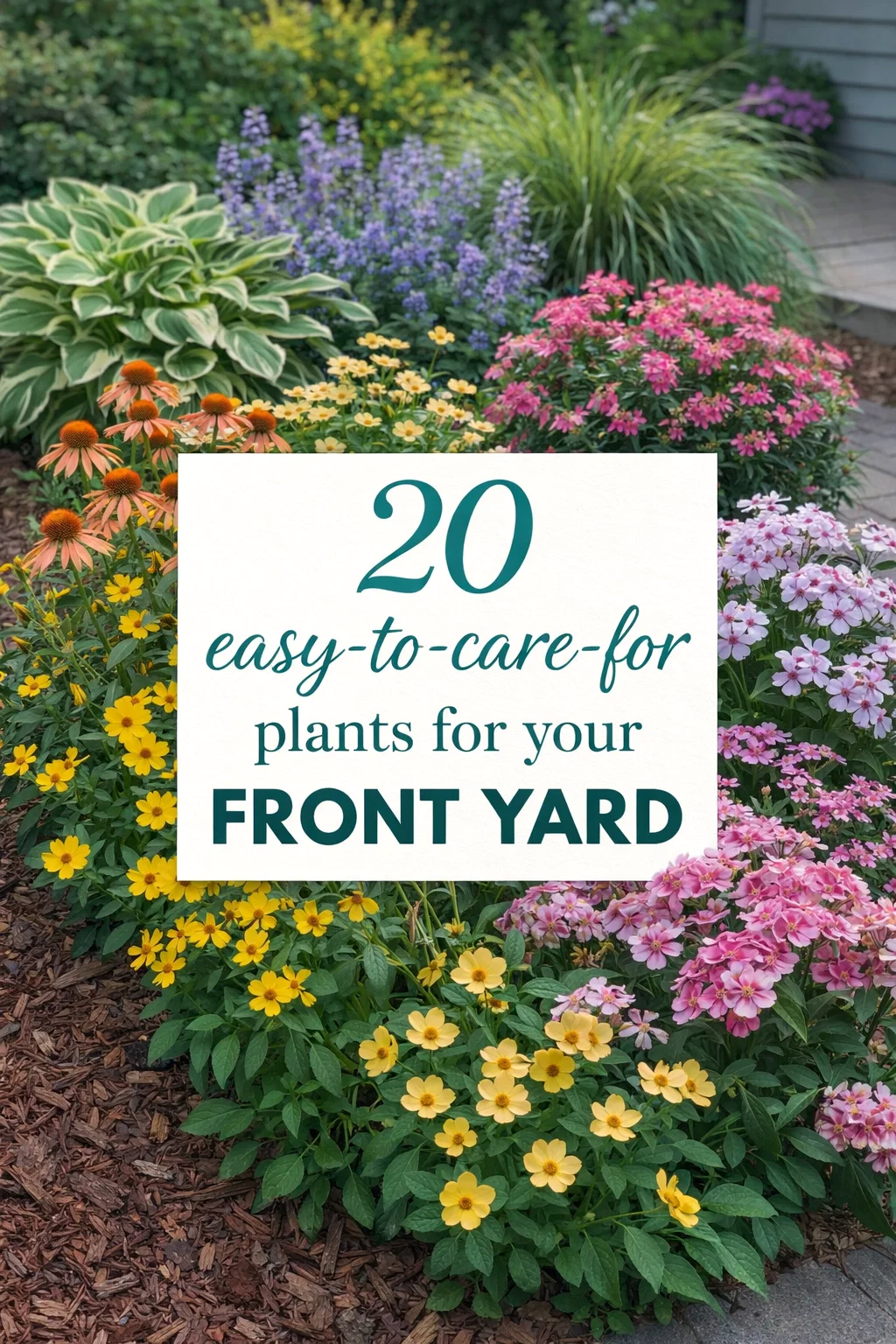
A successful “no-effort” front yard relies on three main pillars: soil health, moisture retention, and plant selection. By laying down a thick layer of organic mulch, as seen in the dark wood chips of our inspiration image, you tackle two of these pillars at once. Mulch suppresses weed seeds and keeps the root systems cool and hydrated. Once the infrastructure is set, the plants do the rest of the heavy lifting.
Why Hostas Are the Foundation of a Carefree Yard
If there were a hall of fame for easy-to-grow plants, the Hosta would be at the very top. These leafy wonders are the backbone of many successful front yard designs because they offer incredible architectural interest with almost zero maintenance. In the featured image, the variegated Hosta with its striking yellow and green leaves provides a bright focal point that lightens up even the shadiest corners of a garden.
Versatility in Shade and Texture
Hostas come in thousands of varieties, ranging from tiny miniatures to giant blue-leafed specimens that can grow several feet wide. Their ability to thrive in partial to full shade makes them perfect for the north side of a house or under the canopy of large trees where grass often struggles to grow. Because they are perennials, they disappear in the winter and emerge every spring, bigger and more beautiful than the year before. They effectively crowd out weeds, acting as a living mulch that protects the soil beneath them.
Minimal Care Requirements
Aside from the occasional watering during an extreme heatwave, Hostas are largely self-sufficient. They are not picky about soil types and rarely require pruning. If they eventually outgrow their space after a few years, you can simply dig them up, split the root ball in half, and suddenly you have two plants for the price of one. It is the ultimate investment for a simple landscaping project.
Adding Pops of Color with Hardy Perennials
While green foliage provides the structure, flowers provide the soul of the front yard. The vibrant pink and soft purple blooms in the foreground of our image demonstrate how a mix of textures and colors can create a professional look without needing a professional gardener. The key is choosing “plant and forget” varieties that do not require deadheading (the process of removing faded flowers to encourage more growth).
The Power of Purple and Pink
Flowers like the ones pictured often belong to the Allium or Heuchera families, known for their resilience. Alliums, in particular, are bulb-based plants that are deer and rabbit resistant due to their slight onion scent. They pop up in late spring or early summer, offering globes of color that dance above the foliage. Similarly, plants like Coral Bells (Heuchera) offer stunning leaf colors in shades of purple, silver, and lime, ensuring your yard looks colorful even when nothing is currently in bloom.
Layering for Visual Depth
To achieve the look in the photo, you want to layer your plants by height. Place the taller, more structural plants like Hostas in the middle or back, and tuck lower-flowering plants in the front. This creates a sense of depth and abundance. When plants are tucked closely together, they create a dense carpet that makes it nearly impossible for weeds to find a spot to grow. It is a biological defense system for your garden.
The Secret Weapon: Wood Chip Mulch
Take a close look at the ground in the image. You will notice a thick, dark layer of wood mulch surrounding every plant. This is not just for aesthetics; it is the single most important element of a simple landscaping front yard. Mulch acts as a protective blanket for your garden beds.
Suppression and Nutrition
A three-inch layer of mulch prevents sunlight from reaching weed seeds, stopping them before they can even sprout. As the wood chips slowly break down over time, they add organic matter back into the soil, feeding your plants naturally. This means you can skip the synthetic fertilizers and still have a garden that looks like it belongs on a magazine cover.
Moisture Control
One of the biggest chores in gardening is watering. Mulch reduces evaporation from the soil surface significantly. This keeps the root zones of your Hostas and flowers moist for much longer, allowing you to go days or even weeks longer between waterings compared to bare soil. It also prevents soil erosion during heavy rains, keeping your garden beds neat and tidy.
Design Tips for a Simple Front Yard
Creating a beautiful front yard does not require an advanced degree in landscape architecture. You can follow a few basic rules to ensure your “no-effort” garden looks intentional and high-end.
- Stick to a Palette: Limit your color palette to two or three main colors. The combination of green, yellow, and shades of purple/pink in the image creates a harmonious and calming effect.
- Group in Odd Numbers: For some reason, the human eye prefers groups of three, five, or seven. When planting your flowers or hostas, avoid straight lines and instead plant them in triangular clusters.
- Mix Leaf Shapes: Contrast is your friend. Pair the broad, smooth leaves of a Hosta with the fine, delicate petals of a wildflower or the needle-like texture of an ornamental grass.
- Define the Edges: Even a wild, low-maintenance garden looks “planned” if it has a crisp edge. Use a shovel to create a clean line between your mulch bed and your lawn or walkway.
Transitioning Your Yard to Low Maintenance
If you currently have a high-maintenance yard, you do not have to overhaul it in a single day. Start by identifying the “problem areas” where grass refuses to grow or where you find yourself weeding every single weekend. Replace those areas with a few large Hostas and a thick layer of mulch. Within a season, you will see the difference in how much less work that specific area requires.
As you gain confidence, you can expand your mulch beds and reduce the size of your lawn. Lawns are actually one of the highest-maintenance features of any home, requiring weekly mowing, edging, and fertilizing. By replacing portions of the lawn with hardy perennial beds, you are trading chores for beauty.
Conclusion: Your Path to a Stress-Free Garden
The beauty of a simple landscaping front yard lies in its ability to provide joy without demanding sacrifice. By selecting the right plants—like the hardy Hostas and vibrant perennials shown in our guide—you create a space that matures and improves with every passing year. You don’t need a green thumb to have a gorgeous home; you just need to choose plants that are as hardworking as they are beautiful.
Remember that the best gardens are the ones that allow you to sit back and enjoy them. Invest a little time in the beginning to prep your soil and choose your “no-effort” varieties, and you will be rewarded with a stunning curb appeal that turns heads while you relax on the porch. Your dream yard is just a few Hostas and a bag of mulch away. It is time to stop working for your yard and let your yard start working for you.