
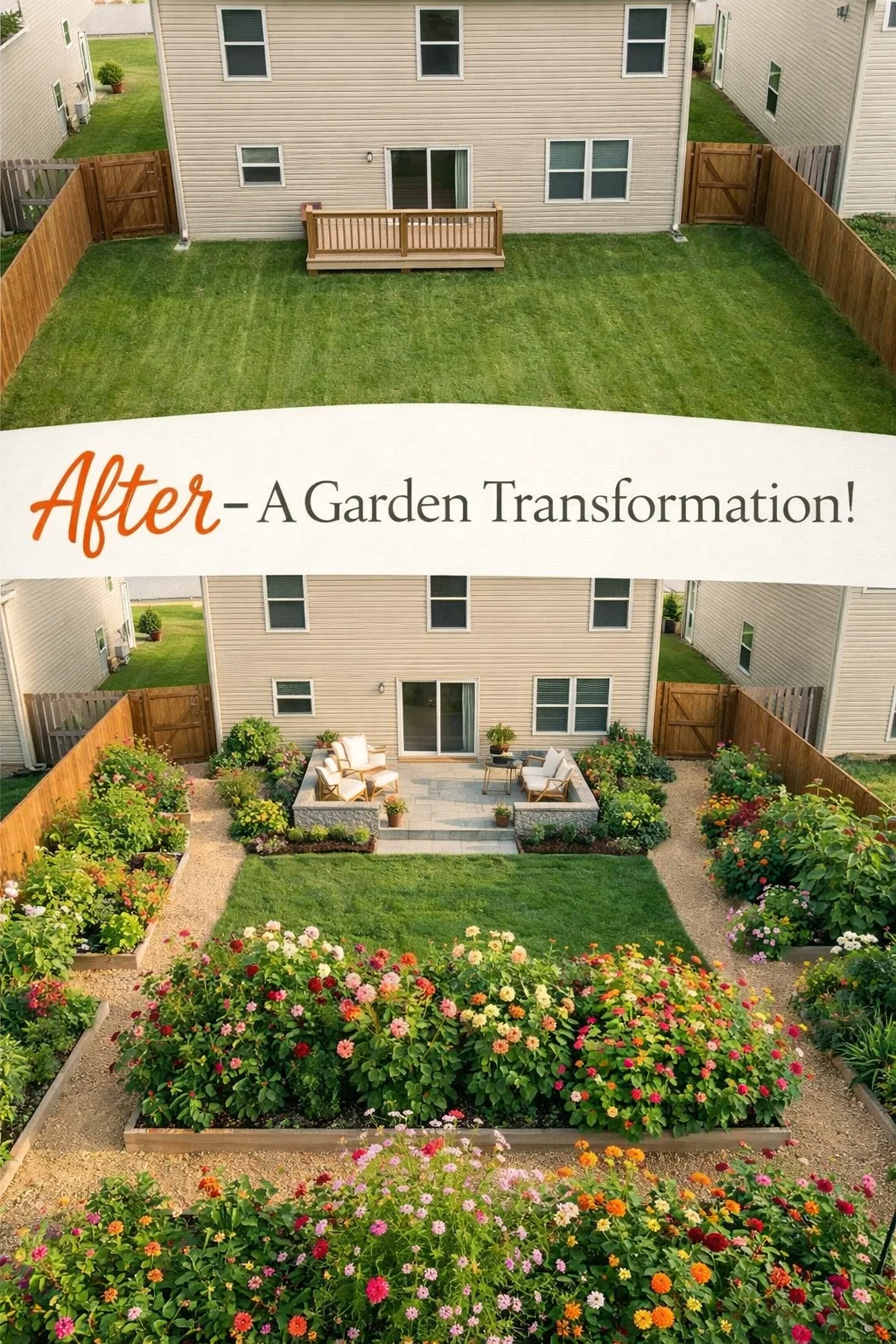
Transforming a standard suburban backyard into a lush, functional paradise is one of the most rewarding home improvement projects you can undertake. As seen in the striking before and after comparison, the journey from a simple patch of grass to a structured garden sanctuary is about more than just planting flowers. It is about defining spaces, creating movement, and establishing a visual flow that draws you outdoors. Many homeowners look at a rectangular lawn and feel limited by its flat dimensions, but with the right layout, even the most basic yard can become a multi-layered retreat.
The Power of Zoning: Creating Outdoor Rooms
One of the most effective strategies for a successful backyard makeover is the concept of zoning. In the before image, the yard is a single, undifferentiated space. While a large lawn is great for pets or play, it often lacks a sense of purpose. By breaking the yard into specific areas, you essentially add square footage to your living environment. The after photo demonstrates this beautifully by replacing a small, high-profile deck with a grounded stone patio. This transition creates an outdoor living room that feels like a natural extension of the home rather than an attached platform.
When you zone your yard, you should consider how you want to spend your time. Do you need a dedicated spot for morning coffee? A large table for family dinners? Or perhaps a quiet corner for reading? By using different materials like stone pavers for the seating area and pea gravel for walkways, you create physical and visual boundaries that guide the eye and the foot. This structure makes the garden feel organized and professionally designed.
Elevating the Design with Hardscaping
Hardscaping refers to the non-living elements of your landscape, such as patios, walls, and paths. In this transformation, the shift from a traditional wooden deck to a modern stone patio completely changes the aesthetic of the property. Stone provides a timeless, sturdy feel that blends seamlessly with the earth. The addition of a low stone retaining wall around the patio serves two purposes: it provides extra seating for guests and acts as a clean border for the surrounding garden beds.
Choosing the Right Materials for Your Climate
When selecting materials for your own backyard layout, it is important to think about longevity and maintenance. Natural stone or high-quality pavers are excellent choices because they withstand weather fluctuations better than wood, which may warp or rot over time. Furthermore, using neutral tones like grey or beige for your hardscaping allows the vibrant colors of your plants to take center stage. The contrast between the cool grey stone and the warm, colorful flowers is what gives a garden that professional, high-end look.
The Art of Layered Gardening
The most breathtaking part of this backyard transformation is the explosion of color and texture in the garden beds. Instead of a single line of shrubs along the fence, the new design features deep, multi-layered borders. This approach is known as drift planting or layering, where you place taller plants in the back and shorter, more delicate varieties in the front. This creates a sense of depth that makes the yard appear much larger than it actually is.
In this specific layout, we see a heavy use of pollinators and cutting flowers like zinnias, roses, and sunflowers. These plants do not just look beautiful; they bring life to the garden by attracting butterflies and birds. By choosing a mix of perennials and annuals, you can ensure that your garden has something blooming throughout the spring, summer, and into the autumn. The dense planting also serves as a natural privacy screen, softening the look of the wooden fence and creating a secluded atmosphere.
Maintaining Visual Interest with Color Theory
Notice how the colors in the after image are not random. There is a deliberate mix of warm reds, oranges, and yellows balanced by soft pinks and whites. When planning your garden beds, think about a color palette that complements your home. Using a variety of shapes, such as the round heads of zinnias mixed with the tall, airy spikes of cosmos, adds a professional level of texture that keeps the space from looking flat.
Practical Benefits of Gravel Paths
Transitioning from a full-grass yard to one with gravel walkways is a brilliant move for both aesthetics and maintenance. In the featured transformation, the light-colored gravel paths serve as a “hallway” between the different garden rooms. This reduces the amount of grass that needs to be mowed and edged, saving the homeowner hours of labor every month. Gravel also provides excellent drainage, preventing puddles from forming near the house or the planting beds during heavy rain.
From a design perspective, gravel adds a satisfying crunch underfoot and introduces a different texture that contrasts with the softness of the lawn and the hardness of the patio. It is an affordable way to add a lot of character to a backyard layout. You can use plastic or metal edging to keep the gravel contained, ensuring the lines remain crisp and clean over time.
Small Backyard Solutions: Making Every Inch Count
Many people assume that you need a massive estate to have a beautiful garden, but this image proves that a standard-sized lot has immense potential. The key to small backyard landscaping is scale. By keeping the central lawn area rectangular and bordered by paths, the yard maintains an open feel while still packing in a massive amount of plant life. The use of containers on the patio also allows for greenery in areas where you cannot plant directly into the ground.
Maximizing Privacy Without High Walls
Privacy is a common concern in suburban neighborhoods. While the fence provides a basic barrier, it is the plants that truly create the feeling of a private oasis. The tall sunflowers and bushy shrubs along the perimeter break up the line of sight from neighboring windows. This “green screen” is often more effective and much more pleasant to look at than a taller fence or a wall. It allows light to filter through while still making the seating area feel tucked away and intimate.
Functional Outdoor Living
A beautiful backyard should be lived in, not just looked at. The transformation focuses heavily on comfort. The patio furniture is arranged to encourage conversation, with a mix of a sofa and individual armchairs. Adding a small coffee table or a fire pit makes the space usable well into the evening. When your backyard layout is comfortable, you find yourself using it as a second living room, which increases the overall value and enjoyment of your home.
Lighting is another crucial element that, while not fully visible in the daylight photo, plays a huge role in functional design. Stringing bistro lights over the patio or adding solar-powered path lights along the gravel walkways can transform the space again once the sun goes down. It allows the beauty of the garden to be enjoyed at night, highlighting the silhouettes of the plants and the textures of the stone.
Sustainable Landscaping Choices
Modern backyard design is shifting toward more sustainable practices. Replacing a portion of the lawn with native plants and flowers is a great way to conserve water and support local ecosystems. Lawns require a lot of fertilizers and water to stay perfectly green, whereas established flower beds with the right mulch can be much more self-sufficient. Using organic mulch in the beds helps retain moisture, suppresses weeds, and eventually breaks down to nourish the soil.
Additionally, by planting a wide variety of flowers, you are providing a consistent food source for bees and other beneficial insects. This holistic approach to gardening ensures that your yard is not just a pretty picture, but a thriving piece of the local environment. It is a win-win for the homeowner and for nature.
Bringing the Vision Together
The journey from a “Before” to an “After” is paved with planning and patience. It starts with a clear vision of how you want to use the space. Whether you are starting with a blank slate of grass or trying to renovate an existing garden, the principles remain the same: define your zones, invest in quality hardscaping, and do not be afraid to plant densely. The result is a backyard that feels like a destination, a place where you can escape the stresses of daily life and reconnect with the outdoors.
Seeing a transformation like this reminds us that our homes do not end at the back door. With some creativity and a bit of dirt under your fingernails, you can turn a simple backyard layout into the highlight of your property. It is an investment in your home value, your mental well-being, and your lifestyle.
Conclusion: Start Your Own Garden Journey
A backyard makeover of this scale might seem daunting, but it can be done in stages. Start by defining the patio area, then move on to the paths, and finally begin the fun process of selecting and planting your favorite flowers. Every small change brings you closer to that final, lush result. Remember that gardens are living things that evolve over time, so your layout can grow and change along with you. Take inspiration from these structured paths and colorful beds to create a space that reflects your personality and meets your needs. Your dream backyard is waiting just outside your door, ready to be cultivated into a stunning reality.