
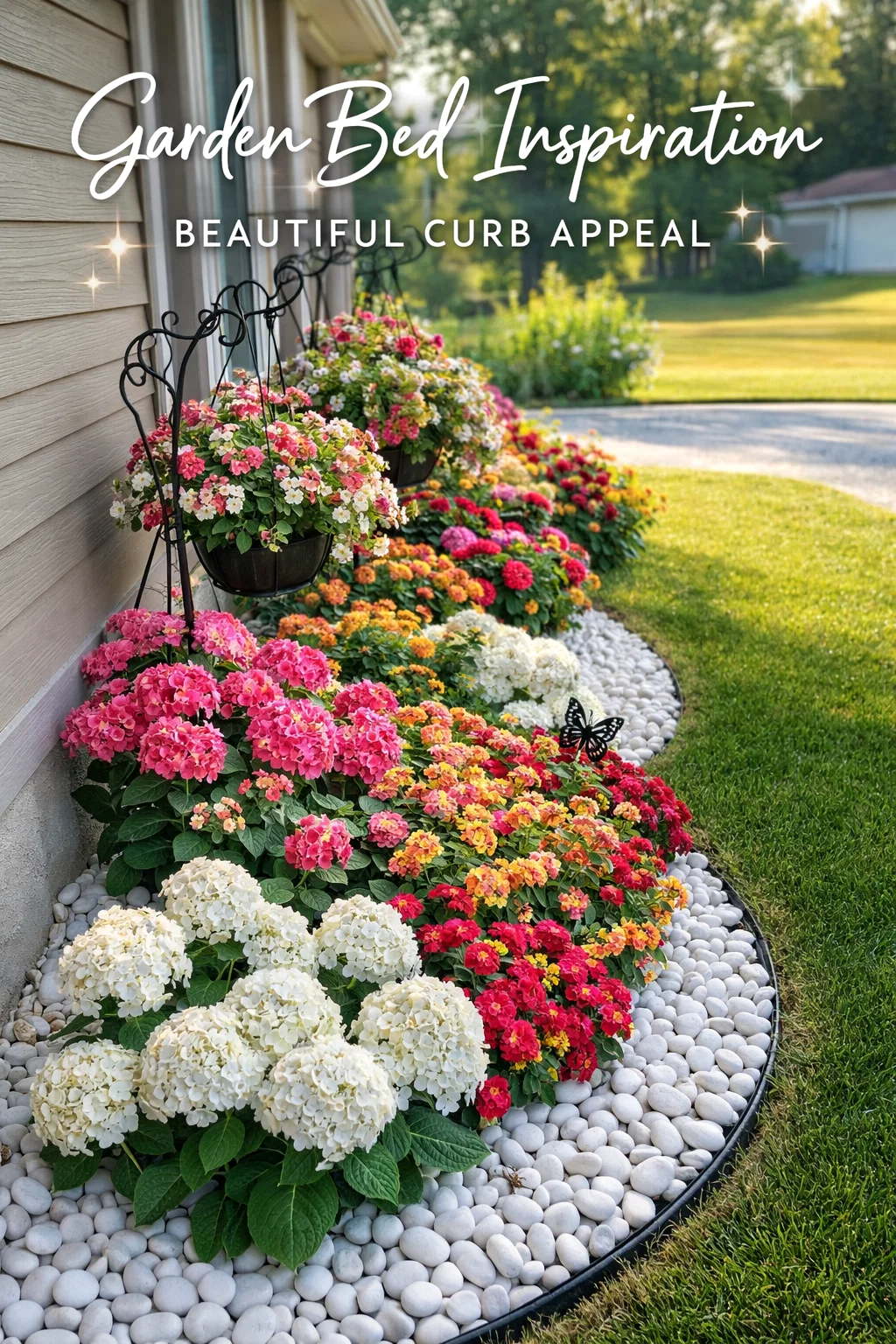
Creating a breathtaking first impression for your home starts with the soil. Your front yard is the greeting card your house presents to the world, and nothing says welcome quite like a meticulously designed flower bed. When you look at the vibrant combination of lush hydrangeas and the crisp, clean lines of white river rocks, you are seeing more than just plants; you are seeing a strategic approach to curb appeal that balances organic beauty with modern structure. This guide will walk you through how to achieve this professional landscaping look, ensuring your home stands out on the block while remaining manageable for your weekend schedule.
The Power of Contrast in Front Yard Landscaping
One of the most striking elements of professional landscaping is the use of contrast. In this specific design, the deep greens of the foliage and the brilliant pinks and whites of the hydrangea blooms are set against a bright field of white river stones. This creates a visual pop that draws the eye immediately. While dark wood mulch is a traditional choice, it often blends into the shadows of the house. White stone, however, reflects light and makes the entire garden bed appear larger and more intentional.
Contrast is not just about color; it is also about texture. The soft, billowy petals of the flowers provide a beautiful counterpoint to the hard, smooth surfaces of the rocks. By layering these different elements, you create a multi-dimensional garden that looks beautiful from the sidewalk and even better up close. This approach works exceptionally well for suburban homes where the architecture might be simple, as it adds a layer of sophistication without requiring a full structural renovation.
Choosing the Right Flowers for Massive Impact
If you want a flower bed that looks full and expensive, hydrangeas are your best friend. As seen in the inspiration image, these plants are prized for their massive flower heads and rich green leaves. They take up significant space, which means you need fewer plants to fill a large area. This is a cost-effective way to achieve a lush look. When planning your front flower beds, consider the variety of hydrangea that best suits your climate and sunlight exposure.
Bigleaf Hydrangeas for Classic Color
The pink and blue varieties most people recognize are often Bigleaf hydrangeas. These thrive in part-shade environments, making them perfect for the side of a house that receives morning sun and afternoon shade. Their ability to change color based on soil acidity is a fun way to customize your garden over time. For the look in our featured image, maintaining a more alkaline soil will keep those pinks vibrant and warm.
Panicle Hydrangeas for Sunnier Spots
If your front yard is baked in sun all day, Panicle hydrangeas are the way to go. These are incredibly hardy and produce cone-shaped flower clusters that often start white and fade to a beautiful “strawberry” pink as the season progresses. They are sturdy, upright, and provide the same dramatic volume seen in high-end landscaping projects.
The Practical Benefits of White River Rocks
While aesthetics are a major driver for choosing river rocks, the practical benefits are equally compelling for the modern homeowner. Traditional mulch decomposes over time, losing its color and requiring a fresh application every single year. This can become a messy and expensive chore. Rocks, on the other hand, are a one-time investment that stays beautiful for years.
Beyond longevity, river rocks provide excellent drainage. During heavy rain, they allow water to seep through to the roots of your plants without washing away the “mulch” onto your sidewalk or driveway. They also act as a natural weed barrier. When paired with a high-quality landscaping fabric underneath, you can significantly reduce the amount of time you spend pulling weeds, allowing you to actually enjoy your garden rather than just working in it.
Designing Your Flower Bed Layout
A common mistake in DIY landscaping is planting in straight, rigid lines. To achieve a professional, organic feel, you should focus on curves. Notice how the border in the image gently undulates, creating a soft edge that leads the eye along the length of the house. This curve mimics nature and softens the hard angles of the home’s foundation and siding.
When placing your plants, use the “thriller, filler, spiller” method, but adapt it for a large-scale bed. Your hydrangeas act as the “thriller” and “filler” due to their size. You can then add smaller annuals or perennials along the edges to “spill” toward the rocks. In our inspiration photo, the plants are grouped by color and height, ensuring that the shorter blooms are in the front while the taller shrubs provide a backdrop against the house wall.
Layering for Year-Round Interest
While the summer blooms are the star of the show, a well-designed front flower bed should look good in every season. This is where the structural elements come into play. Even when the hydrangeas go dormant in the winter, the clean lines of the black edging and the bright white stones provide a neat, intentional look. You aren’t left with a muddy patch of dirt; you have a structured landscape that still looks “finished.”
To enhance this, you might consider mixing in some evergreens. Small boxwoods or dwarf conifers can be tucked between the flowering shrubs. These will hold their leaves and color throughout the winter, ensuring your curb appeal doesn’t disappear when the temperature drops. Adding a few decorative elements, like the wrought iron trellises or hanging baskets seen in the image, adds vertical interest and allows you to swap out seasonal flowers easily.
Installation Tips for a Professional Finish
If you are ready to tackle this project, the secret to success is in the preparation. You cannot simply pour rocks over grass and expect it to look like a magazine cover. Follow these steps for a long-lasting result:
- Clear the Area: Remove all grass and weeds from the intended bed. Use a spade to define a deep, clean edge.
- Install Edging: Use a heavy-duty plastic or metal edging. This is crucial for keeping the grass out of the rocks and the rocks out of the grass.
- Lay the Fabric: Use a professional-grade weed barrier. Pin it down securely so it doesn’t shift over time.
- Plant First: Cut “X” shapes in the fabric to dig your holes and install your plants. This ensures the roots are in the soil while the rest of the ground remains covered.
- Add the Stone: Pour your river rocks at least two to three inches deep. This provides full coverage so the fabric underneath is completely hidden.
Maintenance: Keeping it Pristine
One of the reasons this specific style is so popular among busy homeowners is the low maintenance requirement. However, a little care goes a long way. For the hydrangeas, regular watering is essential, especially during the first year of growth. Using a soaker hose hidden beneath the rocks is an excellent way to deliver water directly to the roots without getting the leaves wet, which helps prevent fungal diseases.
For the rocks, an occasional blow with a leaf blower will remove any fallen leaves or debris that might settle in the crevices. If you notice a few stray weeds popping through, they are usually very easy to pull because their roots haven’t had a chance to anchor deeply into the soil. Every few years, you might want to give the stones a quick spray with a hose to remove any dust and restore their bright white luster.
Creating a Cohesive Outdoor Experience
Your front flower beds shouldn’t exist in a vacuum. To truly elevate your curb appeal, think about how these beds connect to the rest of your property. In the background of our inspiration image, you can see how the manicured lawn and the distant greenery complement the focal point of the garden. If you have a porch, consider adding hanging baskets that mirror the colors found in your flower beds. This pulls the entire look together and creates a sense of harmony.
Lighting is another element that can transform your flower beds after the sun goes down. Small solar-powered spotlights tucked into the river rocks can illuminate the hydrangea blooms at night, creating a magical glow. This not only looks beautiful but also adds a layer of security to your home by lighting up the perimeter.
Final Thoughts on Enhancing Your Curb Appeal
Investing in your front yard landscaping is one of the most rewarding home improvement projects you can undertake. It provides an immediate boost to your home’s value and offers a sense of pride every time you pull into your driveway. By choosing high-impact plants like hydrangeas and pairing them with the clean, modern aesthetic of white river rocks, you create a timeless look that feels both luxurious and welcoming.
Remember that gardening is a journey. Your flower beds will grow and evolve with each passing season. Don’t be afraid to experiment with different color palettes or to add new textures as you become more comfortable with your garden. The foundation of rocks and structured edging gives you the perfect canvas to build upon. Whether you are a seasoned gardener or a complete beginner, this approach provides a foolproof framework for success. Start small, plan carefully, and watch as your front yard transforms into the neighborhood’s favorite view. Save these ideas and start your transformation today!