
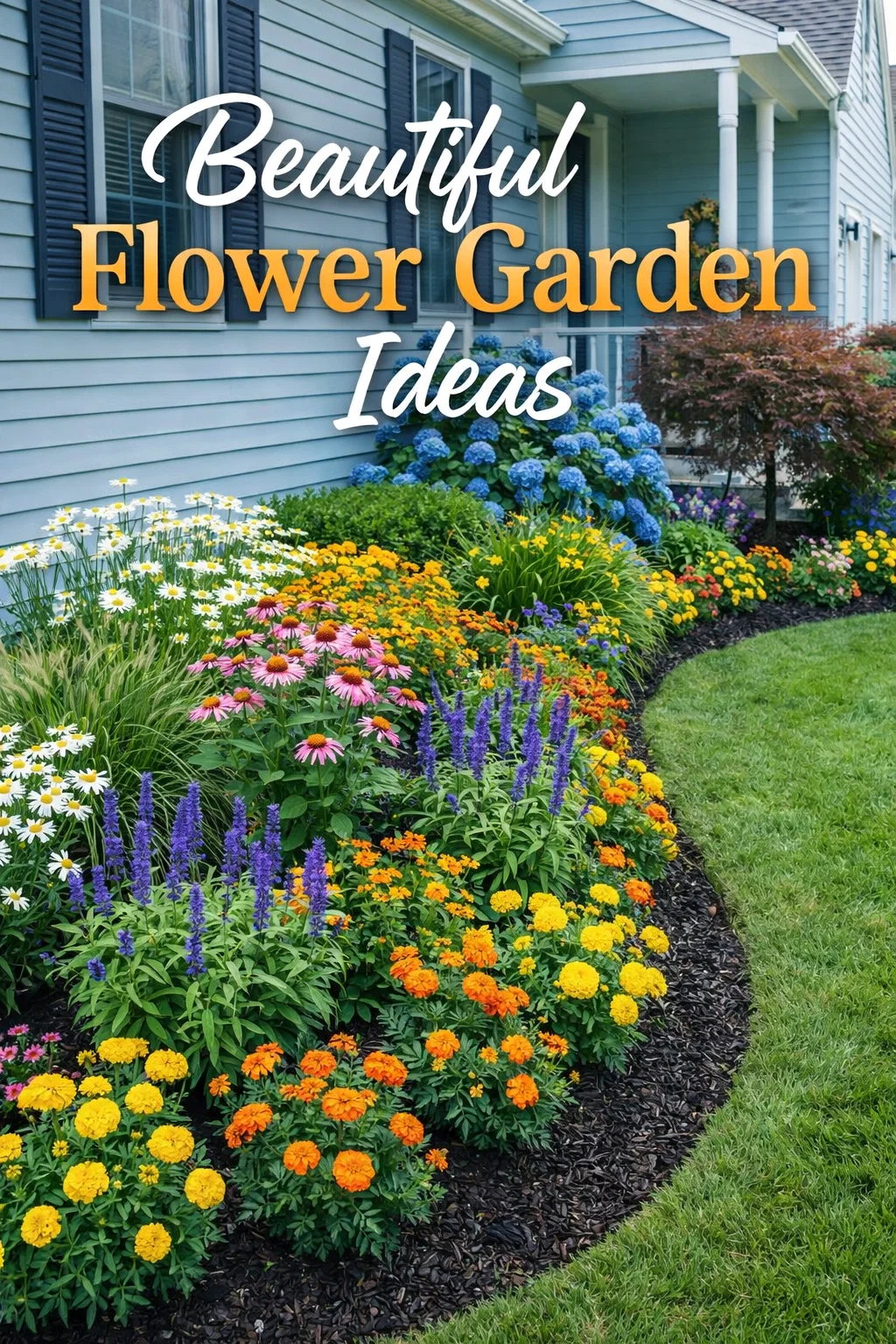
Creating a front yard that stops traffic for all the right reasons does not have to be a complicated or expensive undertaking. As you can see from the vibrant landscape pictured above, the secret to a professional look often lies in the thoughtful combination of color, texture, and layering. A well-designed garden bed serves as the frame for your home, bridging the gap between the architecture of the house and the natural beauty of the lawn. By focusing on a mix of reliable perennials and punchy annuals, you can create a high-impact display that looks like it belongs in a magazine while remaining manageable for the average homeowner.
The Foundations of Great Front Yard Landscaping
Before you pick up a shovel, it is essential to understand that great landscaping is about more than just buying pretty flowers. It starts with the structure of the bed itself. Notice how the garden in the image follows a gentle, organic curve rather than a stiff straight line. This softening of the edges creates a more natural flow that guides the eye toward the entrance of the home. Curving borders are an excellent way to add visual interest to a standard rectangular lot, making the outdoor space feel larger and more intentional.
Choosing the Right Color Palette
One of the most striking features of this particular garden is the intentional use of color. Instead of a chaotic mix of every shade available at the nursery, this design sticks to a cohesive palette of blues, purples, yellows, and oranges. The cool blue of the Endless Summer Hydrangeas and the deep purple Salvia provide a calming backdrop, while the bright yellow Marigolds and orange Zinnas act as highlights that draw the eye. When planning your own yard, try to choose three to four main colors that complement the exterior of your house. Since this home has blue siding, the blue hydrangeas create a monochromatic harmony, while the orange flowers offer a beautiful contrast.
Layering for Depth and Dimension
A common mistake many beginners make is planting everything at the same height. This results in a flat look that lacks energy. To achieve a professional finish, you should always plant in tiers. This technique, often called stair-step planting, involves placing the tallest plants in the back and the shortest ones in the front.
Back of the Border: The Anchor Plants
In the back of this display, we see larger shrubs like the Hydrangea and a Japanese Maple tree near the porch. These serve as the anchors of the garden. They provide height and a sense of permanence. Shrubs are the bones of your landscape, offering structure even when the smaller flowers have finished blooming for the season. They also help hide the foundation of the house, which can often look bare or industrial without greenery.
Middle of the Border: The Fillers
The middle layer is where the texture really comes into play. Here, we see Purple Coneflowers (Echinacea) and Ornamental Grasses. These plants provide a transition between the tall shrubs and the low-growing flowers. Grasses are particularly useful because they add movement; they sway in the wind and provide a different visual weight compared to broad-leafed flowers. This middle section is also a great place for Salvia, which offers those tall, spiked blooms that contrast beautifully with the rounded shapes of other plants.
Front of the Border: The Edgers
The very front of the bed is reserved for low-growing annuals like Marigolds and Zinnias. These are your edging plants. Because they stay low to the ground, they do not hide the plants behind them. Instead, they create a colorful ribbon that defines the edge of the garden bed. Using bright, high-contrast colors at the front of the bed makes the entire landscape feel crisp and well-maintained.
The Importance of Ground Cover and Mulch
While the flowers get all the glory, the ground they grow in is just as important for the overall look. Look closely at the dark, rich mulch used in this garden. High-quality mulch does more than just look good. It serves several vital functions that will make your life as a gardener much easier.
- Weed Suppression: A thick layer of mulch blocks sunlight from reaching weed seeds, significantly reducing the amount of time you spend weeding.
- Moisture Retention: Mulch acts as a blanket, keeping the soil cool and moist. This means you do not have to water your plants as frequently, even in the heat of summer.
- Visual Contrast: The dark color of the mulch creates a neutral background that makes the greens of the leaves and the bright colors of the petals pop. It gives the garden a finished, professional appearance.
Selecting Plants for All-Season Interest
A truly successful front yard landscape looks good from spring through autumn. The garden in the photo is a prime example of mid-summer peak, but a smart gardener plans for the shoulder seasons as well. To achieve this, you want a mix of perennials and annuals.
The Power of Perennials
Perennials are plants that come back year after year. Items like the Coneflowers and Hydrangeas are investments in the future of your garden. While they might have a shorter blooming window than annuals, their foliage and structure are reliable. Once established, perennials often require less water and care than newly planted flowers.
The Impact of Annuals
Annuals are the secret weapon for constant color. Marigolds and Zinnias will bloom their hearts out from the moment you plant them until the first frost hits. They are perfect for filling in gaps and ensuring that your yard always has a splash of color, even when the perennials are between bloom cycles. They allow you to change the look of your yard every year without having to redesign the entire space.
Low-Maintenance Tips for Busy Homeowners
Not everyone has hours to spend in the garden every weekend. Fortunately, you can achieve a look similar to the one in the image with a few low-maintenance strategies. Choosing native plants is the best place to start. Native species are adapted to your local climate and soil, meaning they are more resistant to pests and require less supplemental watering.
Another tip is to use mass planting. Instead of buying one of twenty different types of plants, buy five or ten of the same plant and group them together. This creates a bold statement and makes maintenance simpler because you are dealing with fewer species with different needs. Notice how the yellow marigolds are grouped in clusters rather than being scattered randomly. This creates a rhythm that is very pleasing to the eye.
Enhancing Curb Appeal with Hardware and Lighting
While the plants are the stars of the show, do not forget the supporting cast. The image shows a clean, light blue siding with dark shutters and a classic white porch. These architectural elements provide the perfect backdrop for the garden. You can enhance this look by ensuring your house numbers are modern and visible, and that your porch lighting matches the style of your home.
Consider adding low-voltage landscape lighting along the edge of your garden beds. Uplighting a beautiful tree like a Japanese Maple or placing small path lights along the curve of the bed can make your landscaping look just as stunning at night as it does during the day. It adds a layer of safety and luxury that truly elevates the property value.
Conclusion: Bringing Your Vision to Life
Transforming your front yard into a floral masterpiece is a journey that begins with a single plant and a bit of inspiration. The vibrant garden we analyzed today shows that with a focus on layering, a smart color palette, and the right maintenance habits, anyone can create a professional-looking landscape. Whether you are starting with a blank slate or looking to refresh an old garden bed, remember to play with different heights and textures. Don’t be afraid to mix hardy perennials with cheerful annuals to keep the color flowing all season long. With a little bit of planning and some quality mulch, your home will soon be the envy of the neighborhood. Happy gardening!