
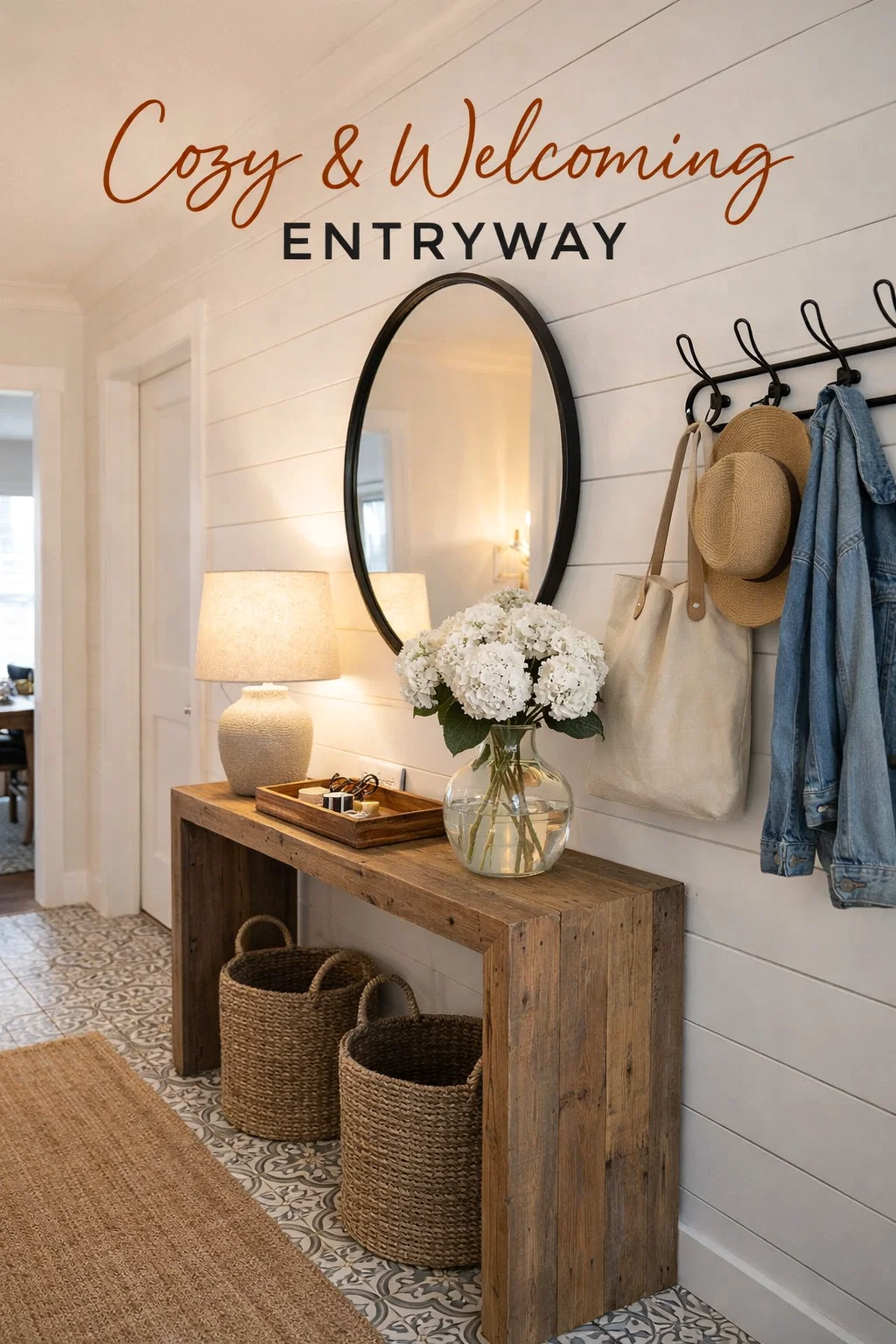
Walking through your front door should feel like a deep breath of fresh air. It is the transition point between the chaotic outside world and your personal sanctuary. If your entryway currently feels like a cluttered landing pad for shoes and mail, you are missing out on a massive opportunity to set the tone for your entire home. The image we are analyzing today perfectly captures the essence of the modern farmhouse aesthetic, blending rustic textures with clean lines to create a space that is both functional and incredibly inviting.
Designing a high impact entryway does not require a massive renovation. It is about the intentional layering of materials, the balance of light, and the selection of pieces that tell a story. From the reclaimed wood of the console table to the delicate texture of the pampas grass, every element in this visual works together to create a cohesive, organic feel. Let’s dive deep into how you can recreate this exact look and why these specific design choices work so well for modern living.
The Foundation: Shiplap and Patterned Flooring
The backdrop of any great room is its walls and floors. In this design, the horizontal shiplap provides a sense of architectural interest without overwhelming the senses. Shiplap has become a staple of the farmhouse movement for a reason. The clean, repetitive lines draw the eye across the room, making narrow hallways feel much wider than they actually are. By painting the shiplap a soft, creamy white, the space remains bright and airy, reflecting both natural and artificial light effectively.
Contrast is key in a neutral palette. While the walls are simple, the floor makes a bold statement with intricate patterned tiles. This specific grey and white Moroccan inspired pattern provides a sophisticated anchor for the room. It hides dirt and wear from foot traffic beautifully, which is a practical necessity for an entryway, while adding a layer of visual complexity that prevents the white walls from looking too sterile.
Mixing Textures for Depth
One of the most common mistakes in home decor is sticking to a single texture. This entryway succeeds because it embraces variety. You have the smooth glass of the vase, the rough grain of the reclaimed wood, the woven fibers of the baskets, and the soft, feathery plumes of the pampas grass. When you mix these elements, you create a tactile experience that feels rich and lived in. If everything were smooth and polished, the room would feel like a showroom rather than a home.
The Hero Piece: The Reclaimed Wood Console Table
Every entryway needs a focal point, and here it is undoubtedly the chunky, U shaped reclaimed wood console table. This piece is a masterclass in minimalist rustic design. The thick timber gives a sense of permanence and strength, while the open space underneath prevents the furniture from feeling heavy or bulky in a tight corridor. Reclaimed wood brings history into a home, showing off knots, cracks, and color variations that mass produced furniture simply cannot replicate.
When choosing a console table for your own space, consider the proportions. This table is narrow enough to allow for easy passage through the hallway but long enough to host a variety of decorative and functional items. The natural mid tone stain bridges the gap between the dark metal accents and the light walls, acting as the perfect color mediator for the room.
Storage Solutions That Look Good
Let’s talk about the baskets. Tucked neatly under the table are two large, woven seagrass baskets. This is where high design meets real life. Entryways are notorious for accumulating clutter, from kids’ shoes to dog leashes. By placing oversized baskets under the console, you provide a designated spot for those items to disappear. It keeps the floor clear while adding another layer of organic texture to the vignette. Always opt for baskets with handles for easy maneuvering and a slightly tapered shape to add a bit of curves to a room filled with straight lines.
Lighting and Reflection: The Round Mirror and Ceramic Lamp
Lighting is the secret sauce of interior design. In this setup, we see a beautiful ceramic table lamp with a textured base and a linen shade. This provides what designers call ambient lighting. Rather than relying solely on harsh overhead fixtures, a lamp creates a warm, golden glow at eye level, making the home feel welcoming in the evening. The neutral tone of the lamp base keeps it subtle, while the linen shade diffuses the light softly.
Directly above the lamp hangs a large, thin framed circular mirror. Mirrors are an entryway’s best friend for two reasons. First, they allow for a quick appearance check before you head out the door. Second, they bounce light from the lamp and any nearby windows back into the space. The circular shape of this mirror is a deliberate choice to break up the “boxiness” of the shiplap and the rectangular console table. Softening those hard edges makes the space feel more harmonious and less rigid.
Styling the Surface: Less is More
The top of the console table is styled with a “minimalist but meaningful” approach. A wooden tray serves as a catch-all for keys and mail, ensuring that the small items we carry every day have a home. Using a tray is a classic styling trick. It groups small, disparate items together so they look like a deliberate collection rather than random clutter.
Next to the tray, a large clear glass jug holds several stems of dried pampas grass. This adds much needed height to the arrangement. The pampas grass brings in a soft, ethereal quality that contrasts beautifully with the heavy wood of the table. Because it is dried, it is a low maintenance decor option that stays looking beautiful for months without needing water or sunlight. It adds a vertical element that draws the eye up toward the mirror, completing the visual triangle of the display.
The Functionality of Wall Hooks
To the right of the mirror, we see a simple set of black iron hooks. This is another example of form meeting function. These hooks provide a place for a denim jacket and a sun hat, items that are used frequently and look great when displayed. By using black metal, the hooks tie in with the thin black frame of the mirror, creating a sense of visual continuity throughout the wall. It proves that even the most utilitarian items can contribute to the overall aesthetic of a room if chosen wisely.
Achieving the Look on a Budget
You don’t need a designer budget to achieve this level of sophistication. Many of these elements are highly accessible. You can often find reclaimed wood at local timber yards to build a simple DIY console, or look for second hand pieces that you can sand down and refinish. Woven baskets are available at almost any home goods store, and pampas grass can often be found foraged or at local craft shops.
Focus on the big wins first. Start with a neutral paint color and a mirror. These two changes alone will transform the brightness of your hallway. From there, layer in your textures. Remember that the goal is not to create a museum, but to create a space that reflects your personality and handles the daily needs of your household with grace.
Bringing Nature Indoors
The use of natural materials like wood, glass, and grass is a hallmark of biophilic design, which suggests that humans have an innate tendency to seek connections with nature. By incorporating these elements into your entryway, you are creating a subconscious sense of calm the moment you step inside. The earth tones used in this image, from the warm browns of the wood to the tan of the hat and baskets, evoke a sense of stability and comfort.
Even the rug in the foreground, a chunky jute or sisal runner, reinforces this connection to the earth. Jute is incredibly durable and perfect for high traffic areas, and its natural golden hue complements the wood console perfectly. It provides a soft landing for feet while adding yet another layer of texture to the floor.
Final Thoughts on Entryway Design
Your entryway is the prologue to your home’s story. It should be a place that welcomes you back and bids you a beautiful farewell every day. The modern farmhouse style shown here works so well because it is timeless. It does not rely on fleeting trends but rather on the fundamental principles of good design: balance, texture, light, and utility.
By focusing on a few key pieces, a sturdy table, a functional mirror, and smart storage, you can turn a transition space into a destination. Whether you live in a sprawling country home or a compact city apartment, these design lessons are universal. Take a look at your own entryway today. Could it use a bit more light? A touch of texture? Perhaps a dedicated spot for your keys? Small changes lead to big shifts in how you feel about your home.
Embrace the beauty of the imperfect and the organic. Let the wood grain show, let the baskets hold the mess, and let the warm light of a lamp lead you in. Creating a beautiful entryway is an act of self care, ensuring that every time you return home, you are greeted by a space that feels exactly as it should: like yours.