
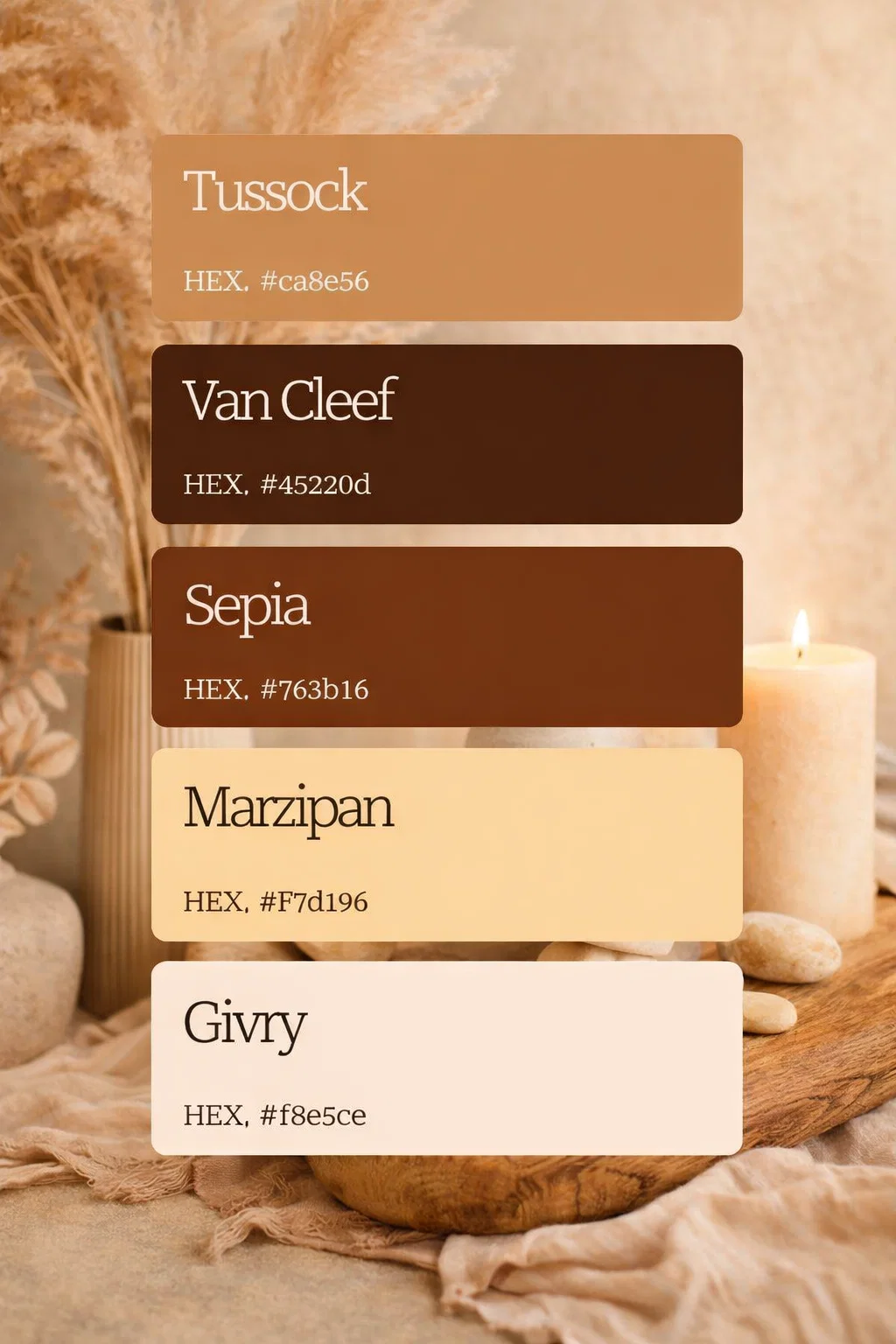
Transforming your creative projects with a natural touch often begins with the perfect color story. The image we are looking at today is a masterclass in organic elegance, featuring a curated sand color palette that bridges the gap between the rugged desert and the serene shoreline. This collection of five distinct hues—Tussock, Van Cleef, Sepia, Marzipan, and Givry—offers a sophisticated range of neutrals that can ground any design. Whether you are a web designer looking for a professional yet warm aesthetic or a homeowner wanting to bring the calm of the outdoors inside, these earth tones provide a versatile foundation that never goes out of style.
The Psychology of Earthy Neutrals in Design
Colors derived from nature, particularly those resembling sand, earth, and clay, have a profound impact on our psychological well-being. These shades are universally associated with stability, reliability, and comfort. When we see a palette like this, our brains immediately connect it to the physical world, which creates a sense of safety and grounding. Unlike bright, synthetic colors that can cause eye strain or mental fatigue over time, sand-inspired tones allow the eyes to rest, making them ideal for environments where focus and relaxation are priorities.
Why Sand Tones Are Trending
In recent years, there has been a massive shift away from the cold, sterile grays that dominated the previous decade. Designers are now leaning into warmth. This palette captures that movement perfectly. The rise of aesthetic movements like organic modernism and Japandi has placed a premium on colors that feel tactile and raw. By utilizing shades like Marzipan and Tussock, creators can evoke a sense of history and permanence that purely digital colors simply cannot match.
Detailed Breakdown of the Sand Color Palette
To truly master this palette, we need to look at each individual color and understand its unique contribution to the overall harmony. Each of these hex codes represents a specific mood and utility within a design system.
Tussock (#ca8e56)
Tussock is the heart of this palette. It is a mid-tone golden brown that mimics the look of sun-dried grass or the darker ridges of a sand dune. In interior design, this color works beautifully as a transition shade. It provides enough saturation to stand out but remains neutral enough to pair with almost anything. It is the color of natural wood and woven baskets, making it essential for adding texture to a visual space.
Van Cleef (#45220d)
Every palette needs a grounding force, and Van Cleef is exactly that. This deep, rich espresso brown provides the necessary weight to prevent the lighter shades from feeling washed out. It is authoritative and sophisticated. In branding, using a color this dark for typography instead of pure black can make a brand feel more high-end and artisanal. It suggests leather, dark soil, and old-world craftsmanship.
Sepia (#763b16)
Sepia brings a nostalgic, vintage warmth to the mix. It has a slight reddish undertone that makes it feel more energetic than a standard brown. This is the color of antique photographs and terracotta. It acts as the perfect bridge between the golden light of Tussock and the deep shadow of Van Cleef. Use Sepia when you want to add a touch of rustic charm or a sun-baked Mediterranean feel to your work.
Marzipan (#f7d196)
Marzipan is the highlight of the group. It is a creamy, buttery yellow-tan that captures the essence of morning light hitting the beach. This color is incredibly inviting. It is often used in marketing to evoke feelings of happiness and approachability without the aggressiveness of bright yellow. It makes for an excellent secondary color for buttons or call-to-action sections on a website.
Givry (#f8e5ce)
Finally, we have Givry, the lightest shade in the collection. This is an off-white with a warm, sandy undertone. It is far more sophisticated than a plain white background. Using Givry for negative space or walls creates a soft, ethereal atmosphere. It allows the other colors in the palette to pop while maintaining a cohesive, airy feeling throughout the composition.
Applying the Sand Palette to Interior Design
The beauty of a sand color palette is that it is almost impossible to get wrong in a physical space. These colors are designed to coexist. If you are looking to refresh a room, consider using Givry for the walls to maximize light. Introduce Marzipan through curtains or rugs to add a layer of warmth. For furniture, Tussock-colored oak or walnut pieces provide a natural middle ground, while Sepia and Van Cleef are perfect for accent pieces like leather armchairs, picture frames, or decorative ceramics.
Creating Depth with Textures
Because these colors are so closely related, the key to making them look professional is texture. Since the colors do not provide massive contrast, the materials must do the work. Imagine a room with Givry linen sofas, Tussock jute rugs, and Van Cleef velvet pillows. Even though the colors stay within the same family, the variety of surfaces makes the room feel rich and layered rather than flat or boring.
The Sand Aesthetic in Digital Branding and Web Design
For digital creators, this palette is a goldmine for lifestyle, wellness, and sustainable brands. If you are building a website for a skincare line or a yoga studio, these tones communicate purity and organic health. The contrast between Givry as a background and Van Cleef for text ensures high readability while maintaining a soft, premium look that is easy on the eyes during long browsing sessions.
SEO and User Experience Benefits
Believe it or not, your color choice impacts your SEO indirectly through user experience. A palette like this reduces bounce rates because it is visually pleasing and calming. When users feel comfortable on a page, they stay longer, which signals to search engines that your content is valuable. Using these warm neutrals can make your site feel more “human” and less like a corporate template, building instant trust with your audience.
Photography and Social Media Styling
If you are an influencer or a social media manager, staying within a specific color story is the secret to a cohesive grid. This sand palette is exceptionally popular on platforms like Pinterest and Instagram. By ensuring your photos contain these hues—whether through the clothing you wear, the locations you choose, or the filters you apply—you create a recognizable brand identity. These colors photograph beautifully in “golden hour” light, enhancing the natural glow of any subject.
- Consistency: Using these five colors across your stories and posts makes your profile look curated.
- Engagement: Warm tones are statistically proven to receive more likes and shares than cool or dark tones on social platforms.
- Versatility: These colors work across all seasons, from the bright beaches of summer to the cozy knits of winter.
Ways to Experiment with This Palette
You do not have to use all five colors at once. Depending on the mood you want to create, you can lean into different sections of the palette:
The High-Contrast Duo
Pairing Givry with Van Cleef creates a sharp, modern look. This is excellent for minimalist editorial layouts or high-end fashion branding. It is clean, bold, and incredibly legible.
The Sun-Drenched Trio
Combining Marzipan, Tussock, and Sepia creates a very warm, energetic feel. This is ideal for food photography, travel blogs, or any project that needs to feel vibrant and full of life.
Conclusion: Embracing the Timelessness of Sand
The sand color palette featured in our image is more than just a collection of HEX codes; it is a tool for storytelling. It tells a story of nature, time, and tranquility. By integrating Tussock, Van Cleef, Sepia, Marzipan, and Givry into your creative repertoire, you are choosing a path of understated luxury and organic beauty. These colors do not shout for attention; instead, they command it through their harmony and balance. As you move forward with your next design project, remember that the most powerful palettes are often those that remind us of the world beneath our feet. Take these tones, experiment with their various combinations, and watch as they breathe new life into your work. Save this palette, study its transitions, and let the warmth of the sand inspire your most beautiful creations yet.